Category Archives: ranching

Sleepless In Fredericksburg

Recently and on several occasions our dogs uncharacteristically  and noisily have awakened us during the course of a night. When we have one of these disturbed nights, the number of nocturnal awakenings may run to five or six episodes. I might add it is impossible to ignore the high pitched, demanding yelp of a young Border collie. Two dogs then head for the back door and bound out in full attack mode. Only last night did the reason for their strange behavior and our resulting sleeplessness come clear to us.

Trudy and I were awakened last night by our six month-old Border collie, Bella, and our seven year-old Border, Buddy. For some reason Trudy went out into the yard with the dogs and observed them charging the fence, barking furiously.

It was then that Trudy heard what it was that had upset them- the yapping and howling of a band of coyotes. Indoors the coyote sounds are inaudible to humans, but our dogs with their acute sense of hearing must have heard them. Trudy estimated five to six coyotes although making estimates from their howls are often inaccurate.

So it went the remainder of the night with Bella and  Buddy demanding to go outside. Incidentally our third dog, Jack, of indeterminate pedigree (when asked what he is, Trudy responds, “he’s a small brown dog”) never left the comfort of our bed. Jack likes his creature comforts and is loathe to leave the pillow-top mattress short of his bladder nearly bursting. Suspect Jack heard the yapping and howling but determined that he would stay back and act as the rear guard. I imagine the impish canine thinking, well I’ll just wait here snuggled down in the blankets at the foot of the bed in case the coyotes come charging through the back door.

Fortunately coyotes have not been a common occurrence on our ranch. Once though shortly after moving full-time to the ranch, I was awakened in the wee hours by Bandit, our senior Border collie, howling back sounding just like a coyote. He had his head thrown back, his neck arched, and managed a convincing coyote howl and from a distance of not more than a foot from my ear. Needless to say, I awoke with quite a start.

I don’t worry much about our livestock and predators. Mama cows take good care of their calves and can fend off coyotes. Likewise horses protect themselves well and are safe from coyotes. Neighbors who raise sheep and goats have not fared as well. Last year twelve lambs (the entire crop) were taken by predators (most likely coyotes). Since then our neighbor rancher has invested in a Llama and a donkey.

I have another friend whose old Labrador retriever was mauled several years ago by a pack of coyotes. Floppy was torn up pretty good and had to visit the veterinarian. While coyotes usually are only 30 pounds or so, they are wild and fight in packs.

A few years ago we had watched the sunset from the other side of the valley and were sipping a bit of the grape when suddenly out of the darkness came nearby coyote howls. Our three Border collies who had been dozing at our feet immediately charged off into the dusk, giving us a very bad moment. As it turned out the coyotes fled before the three charging,  overly protective Borders; however, the outcome could have been much worse.

So at least we now know what it is that is disturbing the two dogs. Frankly their howls do not even appear to affect Jack’s sleep. Jack is the proverbial lump in the bed. If anyone has an answer other than me sitting in a chair by the fence with a rifle and a spotlight, please let me know. You see, I, like Little Jack, also appreciate my creature comforts.
A Snow and a New Calf

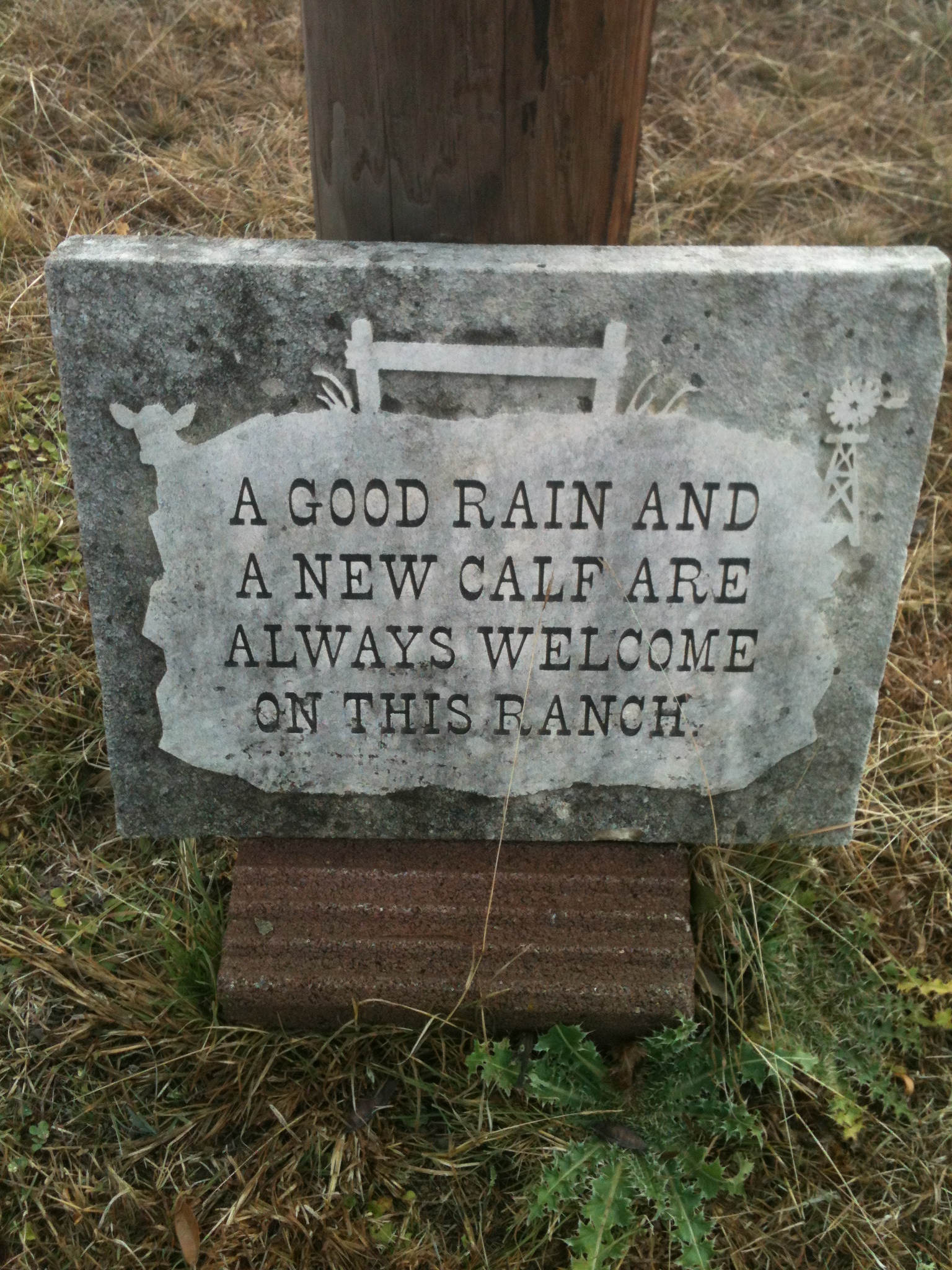
We have a small sign at the entrance to our ranch that says a good rain and a new calf are always welcome. Since calves are the mainstay of cow/calf operations and rain makes the grass grow, the sign makes sense.IMG_0067Well the other night to our amazement we received a couple of inches of snow. This is rare around Fredericksburg. As our cows seem to always wait until the weather is at its absolute worst , the next morning I predictably found one of our mama cows with a brand new bull calf. What a night to deliver a calf. Somehow the little fella came through the cold night just fine. Calves are IMG_0062really hardy.

The calf appropriately is all white- unusual since we cross black baldy mamas with a Charolois bull. The calves usually turn out brown or gray. Nevertheless, this one was white which seemed appropriate enough as he was born during a snowstorm. So now when we refer to this little bull calf , we call him Snowy Calf.

I have a not very good picture of Snowy Calf below. This was taken over a barbed wire fence preventing me from getting very close (probably good as mama cow might not have been in a very good mood. They are notoriously protective of new calves.IMG_0065

Maybe I need to modify the sign to read a good rain or a good snow and a new calf

Curly- Our Ferdinand

Meet Curly

Meet Curly

Curly is a bull. More specifically Curly is our four year old Charolois bull. He has an interesting personality quirk. Ever since we bought him when he was eighteen months of age, Curly has acted differently from our prior Charlois bull or from leased bulls who have visited our ranch. You see, Curly bonds and bonds strongly with the occasional calf.

Initially I assumed the togetherness came from occasional young bull (steer) calves as they followed Curly about the pasture. Curly after all is a big bull weighing about 2000 pounds and clearly has his way in the pasture. Young bull calves might have looked up to the big guy and have wanted to learn from the alpha male.

Curly Is A Large Charolois Bull

Curly Is A Large Charolois Bull

Later when we isolated two steers to feed them out (don’t share this with Alissa, my tender-hearted daughter-in-law, the teacher, whom I told these were special calves rewarded for exemplary behavior with special feed and private pasture). Curly would daily wander away from the herd and head straight for the pasture where the steers were kept. There he would hang around for most of the day at times foregoing the feeding of the herd with range cubes. He would nuzzle the calves and lay contently just outside their pen. He never tried to break down the fence nor did Curly seem upset with me for penning his friends. I have seen Curly’s bonding behavior with both steers and heifers, making the hormonal urges of a bull seemingly irrelevant for explaining this unusual behavior.

I have come to view Curly’s behavior as kin to that of Ferdinand the Bull. You recall the 1938 short animation by Walt Disney of an especially gentle bull who liked to sit under a cork tree and smell the flowers. Well Curly to my knowledge doesn’t smell flowers but he is surprisingly docile like Ferdinand. He approaches me open mouthed when I feed, wanting me to stuff range cubes directly into his cavernous maw. While I have at times given into the temptation, something about such close contact with such a huge and potentially dangerous animal is off putting to say the least.

Open Wide

Open Wide

Now I know I am anthropomorphizing here as did Walt Disney in his short video. Perhaps other explanations exist for Curly’s bonding with calves. Perhaps he wants to round up “the strays” in the pen and herd them into the larger herd. Might this provide an explanation? Nevertheless, this doesn’t wash with me. Why would he lick on the calves, nuzzle them, and hang around when it is clear the fence prevents their following him.

In any event, Curly has proved incredibly gentle. He doesn’t wander off (read ferociously butt his way through fences) like our prior bulls. Instead he will stand at our perimeter fence and meekly gaze at neighbor cows or nuzzle them through the fence. Curly is known to take his turn at babysitting young calves. Typically one mama cow will stay with a group of young calves for protection while the other mothers graze. Never before had I witnessed a bull taking a turn at babysitting, well at least not until I met Curly.

These are the maunderings of a rancher, especially one with a lifetime of interest in exploring behavior. Perhaps I have too much time on my hands. Any other thoughts on Curly’s predilections would be welcomed. Please leave a comment.

Cockleburs and Velcro

by Tom Hutton

My typical morning routine includes feeding and currying the horses. Of late I have had to spend extra time painfully (for me not the horse) removing prickly cockleburs from forelocks, manes, and tails. These tenacious burrs have become so numerous and work their way in to such an extent that at times our horses have the appearance of wearing hair curlers.

This got me to thinking about Velcro. A little googling finds that a Swiss engineer named Georges de Mestral in 1941 invented Velcro. He was inspired after taking a hunting trip to the Alps and having to contend with burrs in his dog’s fur and on his clothing. He placed a burr under a microscope and found  that each spine had a hook, making them stick to virtually anything. This inspired him to fashion Velcro from which I assume he made enough money to fill a Swiss bank vault.

The cocklebur (Xanthium) that I must contend with in Texaas is native to the Americas and eastern Asia. I can only guess that the recent

Just a few of the Cockleburs removed from our horses

Just a few of the Cockleburs removed from our horses

drought in our area somehow relates to the heavy crop of these burrs.

Meaning of Medicine Spirit

Bluebonnets & Paints

by Tom Hutton


My interests lay in humanistic medicine and life in the Texas Hill Country. Our ranch is named Medicine Spirit Ranch for the following reasons:

The beauty of the Texas Hill Country has always created strong bonds between the land and its people. Over the centuries, Native Americans, Europeans, and Americans have fought to occupy and harvest its bounties.

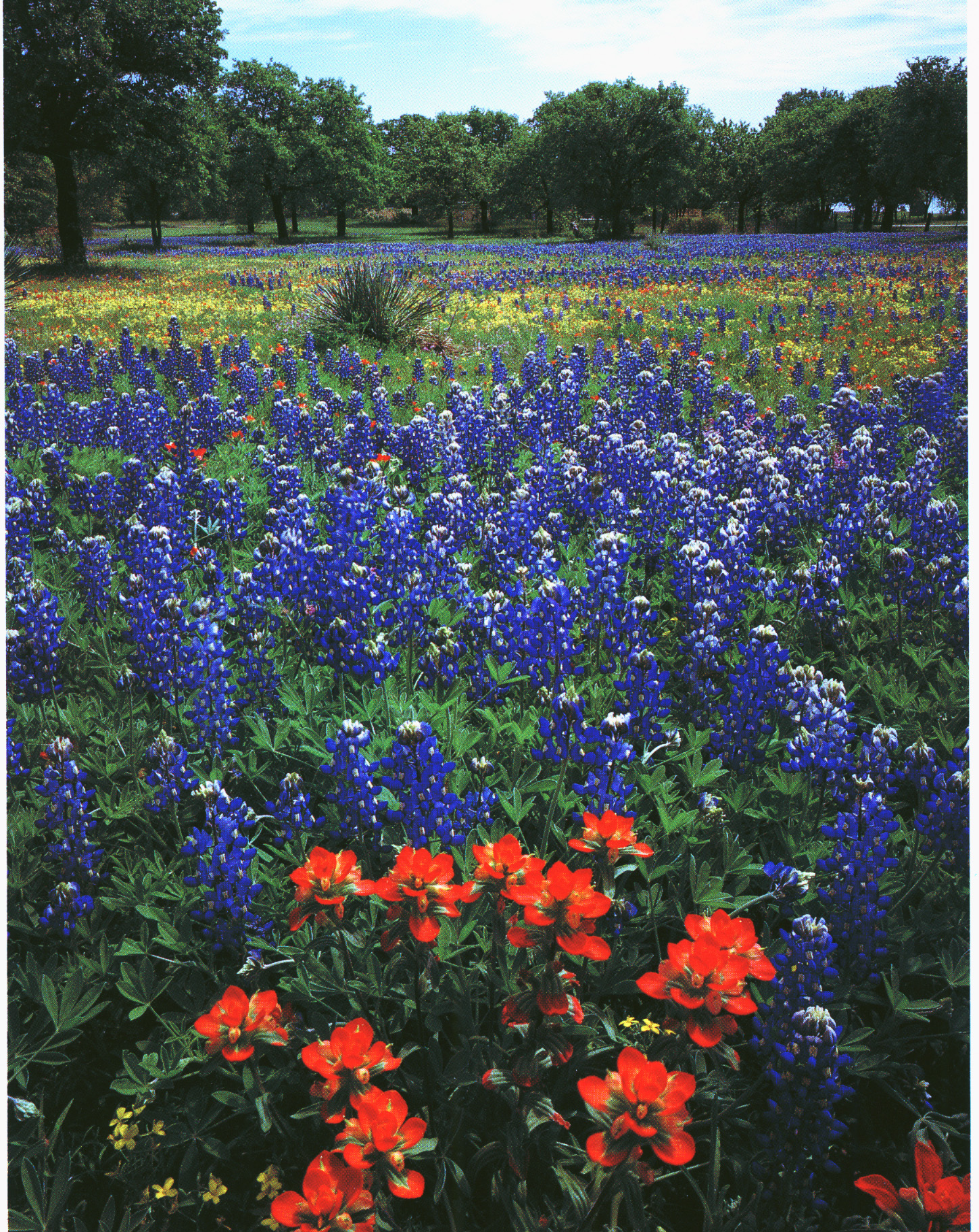
Native Americans believed this land possessed “strong medicine” that supported the body and enriched the spirit. The gentle breezes, fields of wild flowers, inspiring terrain, and plentiful wildlife  continue to heal the hurts of

A buck on a misty morning

mind and body.

The current stewards of this land, in recognition of these strong healing properties, respectfully name this ranch, Medicine
Spirit.