
The news of terrible flash floods in the Texas Hill Country, most notably in the Kerrville area, are now well known around the world. Many friends and family members from across the country and as far away as Australia have checked with us to be sure we are okay. For those of us who live in the Hill Country, the impact has been personal, painful, and concerning. Our ranch is only 22-miles from Kerrville. Rain totals on Friday at Medicine Spirit Ranch measured six inches on top of already saturated soil from earlier rains this week. Today, we have had almost another three inches thus far, creating flash floods. We are unable to get off our hill due to multiple flooded low water crossings. The water at the base of our hill is raging and would sweep my pickup away if I were foolish enough to attempt a crossing.
Our lives at the ranch have been only minimally impacted with our inability to ford low water crossings, cancellation of Fourth of July parades and fireworks, and concern over blow out fences where streams flow into and out of our ranch land. That is not true for many unfortunates in the Hill Country. No doubt fences are down and stock will wander. Round ups are in my future when feasible.
My major concern has been with the poor folks in Kerr County some of whom have lost their lives, houses, and property. Many people living in our area and some of our family members have had children or other relatives attend Camp Mystic in Hunt, Texas. Our local representative to Congress, August Pfluger, had two daughters at Camp Mystic who fortunately have now been evacuated.
I’ve spent time in the past on the banks of the Guadalupe River in Kerrville. People had gathered for the Fourth of July celebration and had been enjoying the festivities. At 2:30 am and in a matter of minutes the river rose 30 feet and swept away campers, cars, pets, and people. As I write this some 80 people have been declared deceased with 11 girls from Camp Mystic are still missing. The count will inevitably go up.
While living in the Texas Hill Country is idyllic, flash floods have long been a threat. The reasons for flash floods are multiple. The soil is thin in the Hill Country and retains water poorly. I’ve always been surprised the day following a good rain that the ground often will be dry. Also the hilly and rocky terrain and steep canyons cause rapid shedding of ground water into shallow creeks and gorges. The humid air from the Gulf and from the Pacific Ocean can meet a front moving down from the Great Plains and give rise to torrential rainfall. Such was the situation that has given rise to our flash floods that began three days ago.
The flash floods in the Texas Hill Country are recurring. The last big flash flood with loss of life was in 1987 when the Guadalupe River rose 27-feet in a matter of a few hours. Extreme weather has become more frequent and worse with global warming. The warming causes the air to hold increased water vapor that on meeting cooler air gives rise to torrential downpours and raging streams and rivers.
Federal, and State emergency services are at work. Even faster has been the local response. For example today our church took in countless jugs of water and many bags of personal items to distribute to the needy. These packages will leave shortly for the affected area. Our Rotary District has already established methods for donating money and plans to send many Rotarians to the flood sites for clean up purposes. Everyone seems to be mobilizing in some way to lend a hand during this tragedy. Texans are resilient and events such as these sad events give rise to uncommon cooperation and generosity.
Finally I’ll add a few random thoughts. Prior to the torrential rain, the sky took on a definite purple cast. Both Trudy and I noticed the strange color of the sky that in the past has been associated with thunderstorms, hailstorms, and tornadoes. The sky had an ethereal appearance.
Also this afternoon after checking Live Oak Creek and finding it flooding, I found an unusual number of animals roaming around the top of the hill. I saw a gray fox run across the road. This was an unusual sight to see a fox in the middle of the day. Secondly, I saw a turtle arduously crawling up the ranch road from the creek toward one of our stock tanks (read pond). It had traveled over 200 yards to that point. Finally, I spotted the largest herd of deer I’ve ever witnessed atop our hill. No doubt these animals sought high ground to escape the raging water below.
Upon returning from checking the status of the creek and immediately after spotting the large herd of white tail deer, I parked the pickup, heaved a dejected sigh, and let out the Border collies. Duke, our young Border/Aussie cross jumped out like his tail was on fire, ran across the yard, traversed several cattle guards and disappeared from sight. Without a doubt Duke decided to exercise the deer because later on his return he was panting excitedly. Well at least Duke found a bright spot for the flash floods! Somehow he had lightened my grief somewhat.
Received notice that my blog has been featured on FeedSpot as one of the top Ranch Life Blogs. I am gratified for the recognition and express my appreciation for this honor.
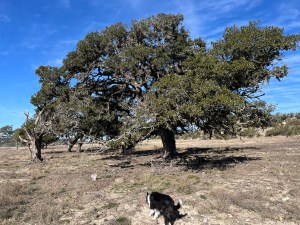
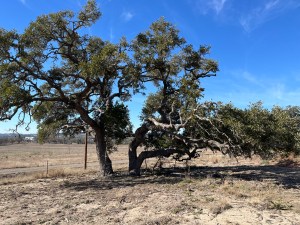

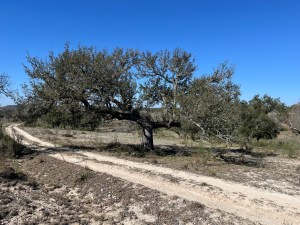


 Views From Medicine Spirit Ranch