Tag Archives: Medicine Spirit Ranch

Bandit Our First Border Collie- Part 5: Intruder

While driving across my ranch one early morning several months following retirement, I discovered my neighbor’s exceptionally large White Park bull standing amidst my small, young heifers. This jarring discovery became my first true ranch emergency and called for greater skill than than this neophyte rancher possessed at the time.

My inexperienced Border collies, Bandit and Mollie, surprisingly resolved this frightening situation for me, and by so doing revealed previously well hidden talents. The incident also provided me with a greater understanding of Bandit’s destructive and irritating behavior while feeling restricted in a city.

Bandit represents what can happen to anyone who is poorly suited for a particular place and then becomes transformed when moved to a more conducive environment.

This is a fitting final story about Bandit for this blog series, as he affected our lives so greatly. His story may inspire humans other than ourselves to seek changes in their lives and environments in which they have failed to bloom.


Towering above my black cows stood a giant, ghostly white bull. Its massive white head was accented by black ears, nose, and black-rimmed eyes. The bull was thick, muscular and three times the size of my young, first time heifers.

“Oh damn,” I murmured. “Now what?”

I  glanced around for my black Angus bull that I had recently leased to breed my first time heifers, but found it nowhere in sight. I realized that if this white behemoth were to breed my heifers the offspring would be much too large to deliver, putting the lives of my young heifers at risk. I felt a state of near panic rising up within me. The welfare of my young cows depended on me- the clueless city guy who was brand new to cattle ranching.

 After shoving two intensely interested Border collies deep within the truck, I opened the door and bailed out of my pickup. If freed I feared my two rookie collies might cause a stampede, leaving either the dogs or the cattle as casualties. I soon spotted a mangled section of fence not far from our old and falling down pole barn. Barbed wire dangled uselessly from broken cedar posts that lay scattered on the ground. The gouged and scraped dirt beneath the broken fence identified where the intruding bull had entered my ranch.

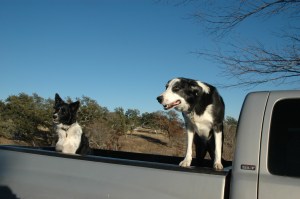
Mollie and Buddy want to help

Bulls are territorial animals. My herd bull would have confronted the the intruding bull at the perimeter fence and would have violently defended his domain. I instinctively knew that my small, leased Angus bull  would have had no more chance to repel the larger white bull, than would a destroyer pitted against a battleship.

I picked up a small limb from the ground and scuttled in the direction of the herd as fast as poorly conditioned legs would allow. My hand repeatedly gripped the rough bark of the stick, milking the stick for a plan to expel the intruding bull.

With my attention fixed on the bull, I failed to notice an exposed Live Oak root. I caught my foot on it, lost my balance, lurched forward, and struck the ground hard. My right hip absorbed the initial blow, causing a searing pain to explode down my leg and into my low back. My head next hit, smacking into a cow patty. As I pushed myself up from the ground, the pungent smell of cow dung filled my nostrils. Rage welled up within me. I scraped dung from cheek and glasses, regained my balance, and limped onward; anger supreme over pain. By then I had lost all semblance of common sense.

I shrieked, “I’m getting you, you trespasser! Can’t sneak onto my ranch!”

What I expected to accomplish with my limp along, futile advance was unclear, but lacking a plan to remove the bull, bravado was all I could muster. The bull threatened my small kingdom and challenged my role as protector of these young cows. To be sure, bulls were not the only territorial animals on the Hutton ranch that day.

My herd complete with the offending bull grazed in a pasture nearby the cattle pens. The herd stood a hundred yards removed from my now abandoned pickup, providing a degree of separation from my dogs, but I could still hear their barking coming from within the truck .

When I drew within twenty yards of the bull, the great white bull raised its massive head and slowly turned toward me. Its baleful, unblinking eyes fixed on me; a stare so powerful and so frightening that it stopped my movement. The bull’s coal black eyes seemed to project malevolence. I observed the immense thickness of his neck, thicker than a man’s chest. After taking a deep breath and steeling my resolve, I crabbed forward, all the time visually measuring the distance to the relative safety of the cattle pens in the event that the bull were to charge.

The bull lowered its massive head and slowly scraped his enormous hoof along the ground, throwing dirt up under its massive belly. This aggressive display again momentarily halted my forward progress. I observed how the bull’s dirt-caked nose dripped and how drool streamed from his maw. I could hear the bull’s low-pitched sounds, as if coming from a bass speaker, but so deep it was hard to imagine the sounds emanating from an animal rather than some mythological beast in a subterranean cavern. Evolution designed this warning to frighten away other bulls, predators, and foolish, neophyte ranchers like me.

Mercifully, the bull did not charge, leaving me to share my story. Perhaps surprised at seeing a yelling, flailing, limp along man, carrying but a small stick, he chose instead to fall back. The bull likely did not have fear me as much as viewing me as an inconvenience, like a pestering swarm of  flies.

Over the next twenty minutes, I attempted without success to separate the intruding bull from my herd. Despite repeated efforts, the bull stubbornly remained among my heifers. Despite the coolness of the morning, I soon found myself sweating and felt my shirt sticking to my back. My lungs began to burn, and more than once I was forced to bend over with hands on knees to recover from my efforts. My limited physical activity of a physician had certainly not prepared me for such physical exertion.

Once, I briefly separated the bull from the heifers, only to have him circle around me and quickly rejoin the cows. I felt irritated and and even a little embarrassed by my failure. Bulls, I learned, moved surprisingly fast to be such large animals.

Defeated, exhausted, and still smarting from my fall, I limped back toward my pickup. By then the earlier rosy glow above the eastern hills had developed into a breaking dawn. But the additional light provided me no further illumination as to how to rid the bull from the ranch. I turned toward the bull in a parting gesture- in case any neighbors across the fence happened to be watching- and yelled, “Just you wait, you’ll make the biggest meatloaf in history, make the Guinness Book of Records!”

Despite my bluster, I felt diminished and outsmarted by this roving ruminant. My boots scraped along the ground. I felt embarrassed- with my many years of education, outwitted and outrun by a dumb bovine.

While approaching the pickup, I heard howling from within it. When I raised my eyes, I saw my pickup visibly rocking. Bandit and Mollie’s wailing seemed to demand their release. Mollie had by then jumped over the seat and careened from side to side, banging forcibly into the car doors. She used her body like a small battering ram in her attempt to free herself.
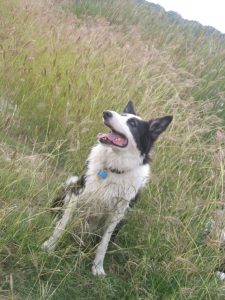
Did someone say cows?

Bandit with his well practiced destructive ways had meanwhile shredded the back seat. Stuffing from the macerated seat had spread throughout the cab and the white seat stuffing made the interior resemble a snowstorm. A tuft of stuffing even crowned Bandit’s head like snow atop a mountain peak. Momentarily I stood dumbfounded, looking at the swaying truck and the dog-inspired mayhem within. I learned yet another painful ranch lesson- never leave the Borders in the pickup with nearby cows.

It became ever so clear the dogs demanded their opportunity at moving the bull. But realistically how could small, inexperienced dogs help against this giant marauder? I thought Bandit and Mollie could be hurt or even killed. The risk was too great to consider. I felt anguish, torn by fear for my dogs yet tormented by my responsibility for the young heifers and lack of a viable plan to evict the bull. Good reasons existed for not releasing the dogs, as they could be kicked, stomped, or butted by the giant bull. Their frenzied desire to participate in their Border collie birthright, however,  struck me as oddly compelling, and I had no better option.

I grasped the door handle but stood frozen by indecision. The dogs could do no worse than my sloppy misadventure, having driven the intruder still farther from the broken fence line.

Peering through the window of the pickup, I asked, “You want to help?”

In response deeply emotive howls erupted from within. Their tails beat a staccato against the seats, their eyes burned with an intensity not previously seen. Their bodies quivered. I pushed the button on the door handle, cracked the truck door ever so slightly, only to have it blown open, as two yelping Border collies erupted from the pickup like two demons escaping Hades.

“Go get the bull! Get him!” I yelled after them, my voice larded with desperation.

The dogs, like low flying cruise missiles, sped off in the direction of the intruding bull.
They raced across the pasture. Mollie, the younger and faster of the two, reached the bull first. As she neared Mollie cut her stride, dropped her head, eyed the bull, and began slowly to circle him. When an opening arose, Mollie darted between the bull and the cows. She crouched down, awaiting Bandit’s arrival. The bull lowered its head and watched Mollie intently.

Bandit’s appearance was not long in coming and consisted of a headlong, yapping, suicidal charge straight at the bull. His kamikaze-like onslaught caused the giant bovine to spin around to face his new attacker. In the last instant, Bandit veered off, barely escaping the bull’s head butt. This diversion of the bull’s attention provided Mollie the opportunity to surge forth and bite at the bull’s hind legs.

The bull appeared surprised and then perturbed by the double onslaught. He twisted his massive body around to determine the source of the bite and momentarily focused his malice on Mollie. He clattered a huge, hoof over the rocky soil. He bellowed a deeply pitched warning. The bull then retaliated with several ferocious kicks that narrowly missed my circling dogs. My spirits sank. Had I been foolish to release my dogs? A dog’s skull would be crushed by landing a single kick from this massive bovine.

To my surprise, my usually docile pets had transformed into snarling, vicious animals. They fixed wolf-like stares on the bull. They snarled, revealing gleaming white canines. My fear for my dogs’ safety became mixed with incredulity at their agility and bravery. Mollie and Bandit repeatedly darted at the bull, dodging his flying hooves. The efforts of the giant bull kicked up a dust cloud that at times obscured my view of the dogs. I felt loathing for this bull. He threatened the well-being of my heifers but now sought to kill my rookie herders. My heart pounded in my chest.

The bull shifted his glare between Bandit and Mollie, his eyes never leaving my determined dogs. Then the bull lifted his head and, surprisingly, took a tentative step backward. The dogs, sensing his hesitancy, stepped up their attacks as if choreographed, demonstrating a fury that left the bull appearing bewildered. While the dogs appeared to be dodging and diving haphazardly, it became apparent their efforts were forcing the bull to retreat.

By then I had arrived close enough to the mêlée to smell the musky aroma of the bull. I stationed myself on the opposite side of the bull from the downed fence. I brandished my stick- a stick that in the presence of the dogs drew increased respect. Together the dogs and I edged the bull slowly across the pasture toward the distant breech.

After several more minutes, we managed to move the bull about a hundred yards away from the herd. It was when circling from opposite directions that the unexpected happened. The dogs with eyes fixed on the bull collided full force after running into each other. This sent both dogs sprawling in the dirt. For an instant, both Borders lay almost motionless on the ground, legs splayed awkwardly.

On seeing this unexpected opportunity, the bull whirled around and reversed his course and headed back toward the heifers. He swept by me, ignoring my windmilling arms, leaving me standing helpless in his lumbering wake. He had thundered by me so close that I smelled his rank odor and could have reached out and touched his broad back. The dogs quickly reacted, regaining their feet. Bandit stretched a painful limb, as if testing it. Soon both dogs were again afoot and raced back into the fight.

Mollie closed to a spot directly behind the bull where she bit and grasped his tail. In the next instant, I saw Mollie, attached Bulldog-style, rocketing behind the galloping bull looking like a miniature black and white caboose attached to a runaway locomotive. When the bull slowed, Bandit charged and sensing an opportunity, bit down on his broad nose, leaving behind a bloody gash. Bandit’s attack temporarily distracted the bull from the tenacious tail-grasping Mollie.

The bull, now bleeding from his nose, appeared flummoxed. He stepped away from Bandit and then proceeded to buck like a rodeo bull. By so doing the bull’s tail whip-like flung Mollie high into the air. She fell to the ground some twenty feet away, her back awkwardly pressed against a water trough.

My heart sank. Was she hurt? Would she be all right?

As if to answer, Mollie sprang up, shook herself, and raced back across the dusty paddock toward the bull. The collies outran the bull and placed themselves between the bull and herd. At the dogs’ urging the bull again turned back and with collies in close pursuit moved toward the broken fence. He eventually began to run directly for the broken fence line. The dogs, arcing from side to side trailed the trundling, ghost-like bull, herding him always onward.
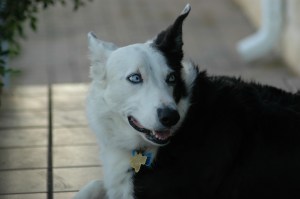
Where did the bull go?

The bull thundered by the pickup, circled around the corrugated aluminum barn, and crossed the caliche ranch road with his giant hooves causing crunching sounds. The bull then in full gallop with an occasional desultory kick at the pursuing dogs headed for the broken fence and to safety from the pursuing dogs. Despite my best efforts, I fell behind the faster moving bull and dogs. But I was able to view the bull as he jumped through the yawning breach and into the pasture of the neighboring ranch.

I arrived at the breach in the fence where I found Bandit and Mollie pacing like two guard sentries. Both gazed in the direction of the disappearing marauder. I collapsed to my knees, sucking in huge quantities of air. I threw my arms around their furry necks, hugged them fiercely, and buried my face in their pungent, silky coats. Bandit and Mollie had accomplished what only minutes before had seemed utterly impossible.

Bandit, happy at last at the ranch where he never again chewed up furniture

From deep within these collies had come an instinct to separate the foreign bull from the herd and to drive him to the broken fence line. Moments before the dogs had acted ferociously, but they had transformed again into my pets. Their eyes still shone and tongues dangled haphazardly. Bandit and Mollie seemed to comprehend the magnitude of their accomplishment and appeared alive in a way I had never before witnessed.

Still too winded to speak, I embraced my incredible dogs. I scratched their ears. I hugged their necks I feet the softness of their fur against my cheeks. Raspy tongues licked my face and ears. Pride swelled within me. I felt exultant, as my burden had suddenly and miraculously been lifted. Bandit and Mollie, my two courageous Border collies, had provided a present, as dear in their giving as in my receiving.

Eventually my breathing became more normal and I was able to speak. I cupped their warm, damp muzzles in my hands. The dogs stared back at me, their eyes gleaming. They appeared expectant. With my first words, I uttered the time honored, but ever so parsimonious Border collie congratulation.

”That’ll do Bandit.”
“That’ll do Mollie.”

If you have not had the chance to read my latest book, Hitler’s Maladies and Their Impact on World War II: A Behavioral Neurologist’s View (Texas Tech University Press), I invite you to do so. The book explores an important aspect of the Hitler story and World War II that has not been well studied. Many of Hitler’s catastrophic errors including the premature invasion of the Soviet Union in June 1941, the slowness of German forces to counterattack at the Battle of Normandy in 1944, and the highly risky Battle of the Bulge in late 1944 into 1945, can be better understood, knowing the sizeable impact that Hitler’s physical and mental conditions had on these vital battles.

Also, consider picking up a copy of my earlier book, Carrying The Black Bag: A Neurologist’s Bedside Tales (Texas Tech University Press). Please join me on my personal journey as a physician and meet my patients whose reservoirs of courage, perseverance, and struggles to achieve balance for their disrupted lives provide the foundation for this book. But step closely, as often they speak with low and muffled voices, but voices that nonetheless ring loudly with humanity, love, and most of all, courage.

A Memorable Object At Our Ranch

  •  

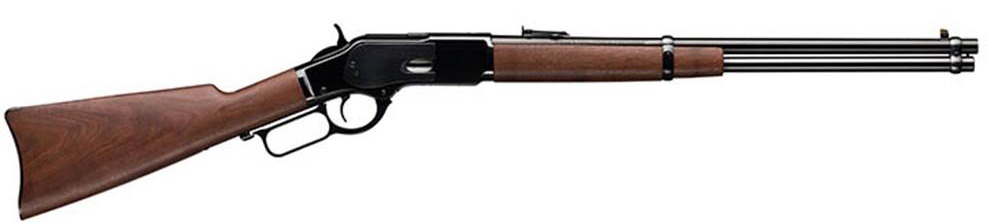
Hanging above the fireplace at Medicine Spirit Ranch is an object with special meaning for me- a Winchester Model 1873 Carbine. It is not that this model gun that is said to have won the West is so rare or valuable, but rather because it represents a tangible connection to my great grandfather, Thaddeus Septimis Hutton. The carbine is one of the few connections I have to this relative about whom I wish I knew more. The Winchester pictured below is better polished but otherwise looks like the Hutton Family rifle.

Thad Hutton, or Pappy as he was called later in life, bought the carbine for his use as a cowboy in Texas. The Hutton Family rifle was made in 1881 and is the second model of the 1873 Winchester. It weighs 7 3/8 pounds, has a short overall barrel length that is perfect for a saddle gun, and has a magazine that holds twelve rounds. This model of Winchester 1873 was manufactured in New Haven, Connecticut from 1879 to 1884. According to family lore, this Hutton carbine was one of the earliest of its type to enter the State of Texas.

This model 1873 was the rifle that put Winchester on the map of the West, trotting along with the equally formidable Colt revolver tucked into the belt of the frontiersman. The Winchester carbine is said to have killed more game, more Native Americans, and when the Native Americans awoke to its virtues, more US Soldiers than any other type of rifle. The development of powerful repeating rifles in the 1860s and 1870s of which the Winchester 1873 was the most popular, meant that hardy young Americans could penetrate the West, provide food, and exist in a hostile environment.

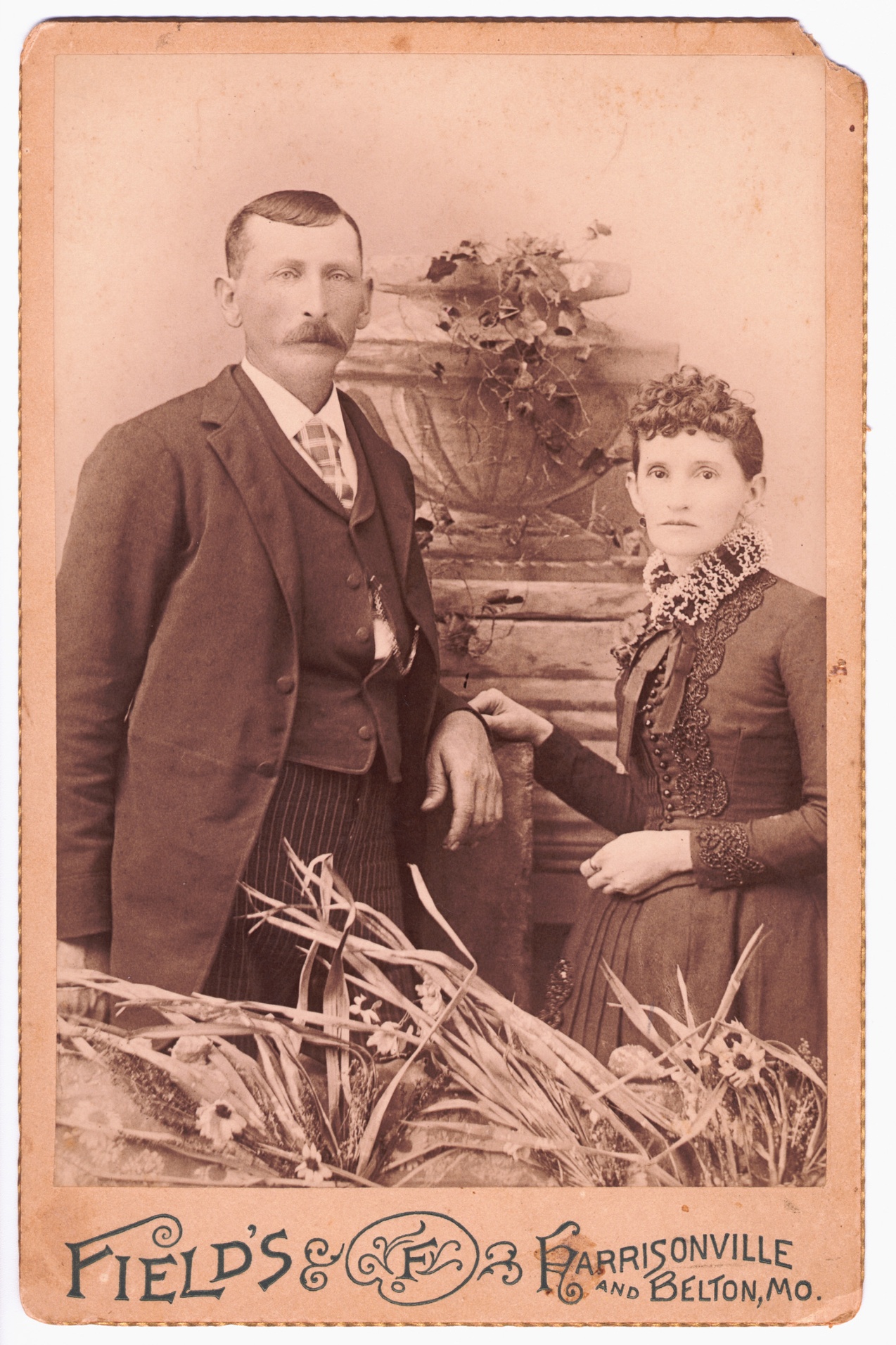
Thad Hutton left the Kansas City area around 1874 and struck out for Texas. He married Elizabeth Ragan in Palo Pinto County, Texas on November 1, 1876. Thad was a tall, affable cowboy while Betty was a diminutive Irish lass who reportedly possessed a sharp tongue. The wedding was performed by an itinerant preacher who came through the small town of Gordon near where they lived. Their first son, Thaddeus Leslie Hutton, was born two to three miles north of Gordon on May 11, 1878. Thad’s occupation on the birth certificate was listed as “cowboy.” He was at the time 29 years old and Betty was 24. The picture below was taken years after their marriage.

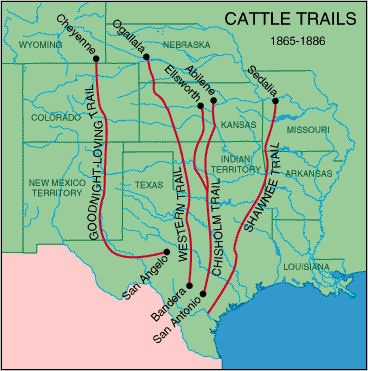
Not long after Leslie’s birth, Thad and Betty moved further west, relocating near Seymour, Texas. The reason for the move is  unknown, but a strong hint exists in that the Great Western Trail traversed Seymour, leading to Dodge City, Kansas. Dodge City was the major railroad terminus for Texas cattle and this booming western cow town developed quite a reputation. Did Thad ride the trail to Kansas as a drover, pushing large herds of Texas Longhorn cattle up the trail? Did he interact with any famous lawmen and gunfighters of the era including Wyatt Earp, Bat Masterson, and Wild Bill Hickok? What were his recollections, if any, of Dodge City, called the wickedest city in the country and home to the Long Branch Saloon and China Doll brothel? Unfortunately this possible family history has all been lost to history. What is certain is that had Thad Hutton ridden the Great Western Trail, his 1873 Winchester carbine would have accompanied him on his long and arduous journey.

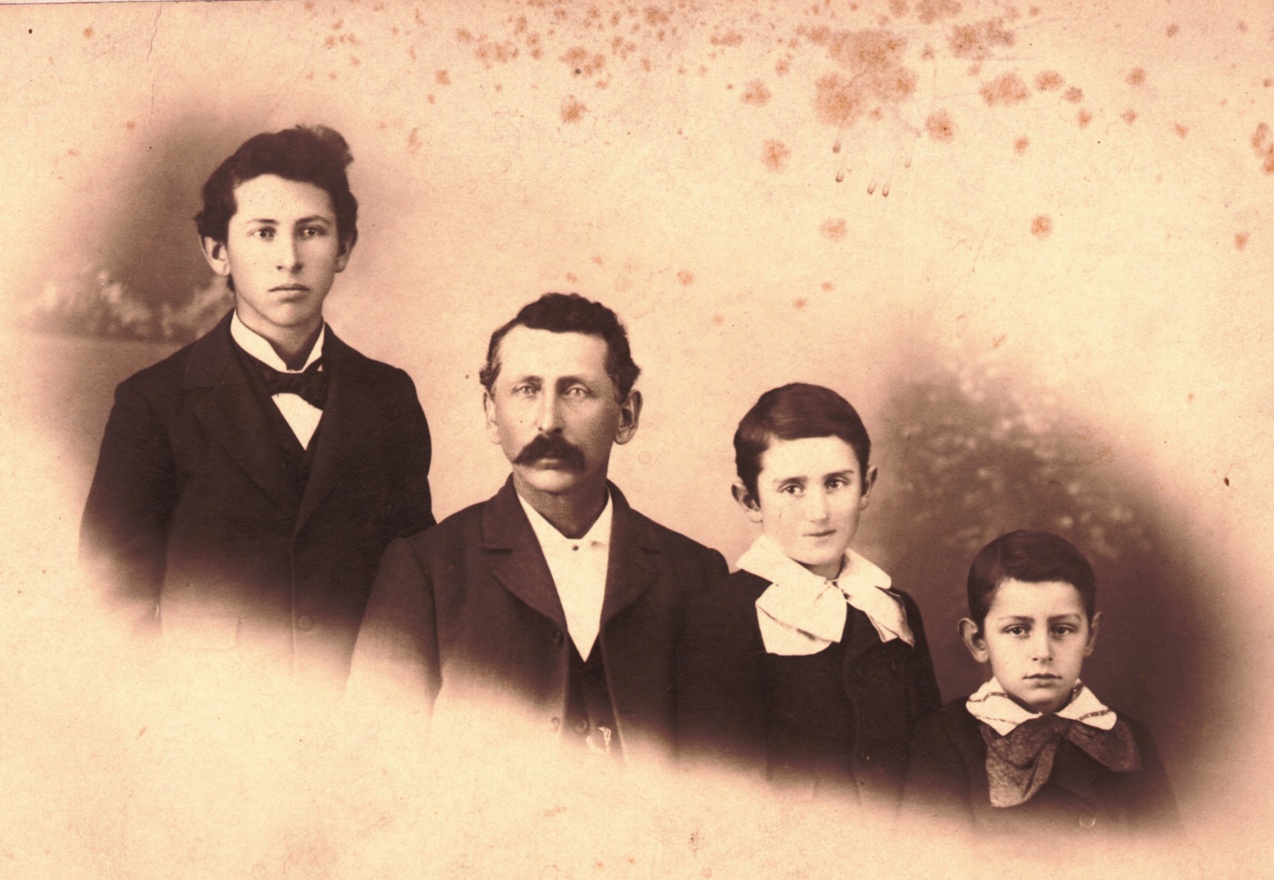
What is known for certain is that while in Seymour Thad worked on the P8 Ranch. Apparently this ranch no longer exists as no record of it can be found. While in Seymour three children were born to Thad and Betty including Emma Jane Hutton on March 9, 1880, Margaret Mary Hutton on October 5, 1881, and George Earl Hutton on August 30, 1885. My grandfather John Francis Hutton was not born until 1887 when by then Thad and Betty had left Texas and settled in Garden City, Missouri. Below are pictured Thad and his three sons.

One day while hunting wild cattle in Texas, Thad had a memorable experience. Thad and his friend, a Mr. Reid, found four head of wild cattle in a thicket. The hunters managed to separate one young bull from the remaining cattle. Thad at the time was carrying only an old shotgun but had exhausted his ammunition by shooting into the thicket in an attempt to scare the wild cattle out into the open. The men had gotten off their horses and the young bull, seeing the men on foot, got his fighting blood up. Thad reached into his pocket but found he had exhausted his supply of ammunition. By this time the bull had decided to charge Thad. Mr. Reid gave Thad some rifle balls that Thad put down the barrel of his shotgun following a load of gunpowder. He did not know if the shotgun would even fire loaded this way or would fire with any degree of accuracy. The infuriated beast snorting and galloping with head down drew near. Thad raised his gun and squeezed the trigger. The bull had drawn within ten yards of Thad when the shotgun fired, driving a rifle ball into the forehead of the bull. It fell mortally wounded. The meat from that wild bull fed the hunter’s families for a long time thereafter.

Another incident occurred in 1887 involving the Hutton 1873 Winchester when Thad and Betty had moved back to Missouri. The .44/40 saddle gun was loaned to a neighbor who needed a gun to kill a beef. Several days later the neighbor came to return the rifle and was asked how it had worked. The neighbor replied, “Sure it killed the beef all right, but that gun’s too dangerous to have around this country. The bullet went through his head and whistled on out across country. I’m wondering if I killed anything else besides the beef.”

Perhaps on hearing this story and learning of the power of the carbine Adele Hutton demanded of her husband, Howard, that the gun could only remain in the household if it were disabled. Apparently the firing pin was removed or damaged in such a way as to satisfy Mother as the gun remained in the house. Great Grandfather Thad’s gun was later passed on to me.

This 1873 Winchester saddle gun currently is encased above a fireplace at Medicine Spirit Ranch. It returned to our Texas ranch well over 100 years after it had departed Texas. It is a tangible tie to my great grandfather, Thad Hutton about whom I wish I knew more. I am proud to own this rifle of his and one day look forward to passing it on to my offspring.

Blog Piece by Heather Cox Richardson


This May 1, 2021 offering is from Heather Cox Richardson who writes an excellent blog on a daily basis that focuses on political matters. Her work is well researched, reasoned, well written, and recommended. She can be found at https://heathercoxrichardson.substack.com.

Heather Cox Richardson is an American historian and professor of history at Boston College, where she teaches courses on the American Civil War, the Reconstruction Era, the American West, and the Plains Indians.[1] She previously taught history at MIT and the University of Massachusetts Amherst.[2]

Richardson has authored six books on history and politics. She is a founder and editor at werehistory.org, which presents professional history to a public audience through short articles. Between 2017 and 2018, she co-hosted the NPR podcast Freak Out and Carry On.[3] Most recently, Richardson started publishing “Letters from an American”, a nightly newsletter that chronicles current events in the larger context of American history.[4][5] The newsletter accrued tens of thousands of subscribers making her, as of December 2020, the most successful individual author of a paid publication on Substack.[6]

Her offering this time, however, is an entirely different topic, that being 10 famous American horses. I hope you enjoy this fine offering and credit Heather Cox Richardson and Michael S. Green for authorship.

Horses and humans have a long and close working relationship, surpassed only by dogs and mankind. While not used as extensively as they once work for work, horses continue to hold a fascination for many. I know Medicine  Spirit Ranch would not be the same without our riding horses, Fancy and Dandy. Of the following famous horses, my favorite is Secretariat. Which one is yours?

May 1, 2021

Heather Cox Richardson

May 1


In honor of this year’s Kentucky Derby (won today by Medina Spirit), I’m posting a piece my friend Michael S. Green and I wrote together a number of years ago on Ten Famous American Horses. It has no deep meaning… it’s just fun. It remains one of my favorite things I had a hand in writing, and I’m pleased to have an excuse to share it.

I’ll be back on the usual beat tomorrow.

1) Traveller

General Robert E. Lee rode Traveller (spelled with two Ls, in the British style) from February 1862 until the general’s death in 1870. Traveller was a grey American Saddlebred of 16 hands. He had great endurance for long marches, and was generally unflappable in battle, although he once broke both of General Lee’s hands when he shied at enemy movements. Lee brought Traveller with him when he assumed the presidency of Washington and Lee University. Traveller died of tetanus in 1871. He is buried on campus, where the safe ride program still uses his name.

2) Comanche

Comanche was attached to General Custer’s detachment of the 7th Cavalry when it engaged the Lakota in 1876 at the Battle of Little Bighorn. The troops in the detachment were all killed in the engagement, but soldiers found Comanche, badly wounded, two days later. They nursed him back to health, and he became the 7th Cavalry’s mascot. The commanding officer decreed that the horse would never again be ridden, and that he would always be paraded, draped in black, in all military ceremonies involving the 7th Cavalry. When Comanche died of colic in 1891, he was given a full military funeral (the only other horse so honored was Black Jack, who served in more than a thousand military funerals in the 1950s and 1960s). Comanche’s taxidermied body is preserved in the Natural History Museum at the University Of Kansas.

3) Beautiful Jim Key

Beautiful Jim Key was a performing horse trained by formerly enslaved veterinarian Dr. William Key. Key demonstrated how Beautiful Jim could read, write, do math, tell time, spell, sort mail, and recite the Bible. Beautiful Jim performed from 1897 to 1906 and became a legend. An estimated ten million Americans saw him perform, and others collected his memorabilia – buttons, photos, and postcards – or danced the Beautiful Jim Key two-step. Dr. Key insisted that he had taught Beautiful Jim using only kindness, and Beautiful Jim Key’s popularity was important in preventing cruelty to animals in America, with more than 2 million children signing the Jim Key Band of Mercy, in which they pledged: “I promise always to be kind to animals.”

4) Man o’ War

Named for his owner, August Belmont, Jr., who was overseas in WWI, Man o’ War is widely regarded as the top Thoroughbred racehorse of all time. He won 20 of his 21 races and almost a quarter of a million dollars in the early twentieth century. His one loss – to “Upset” – came after a bad start. Man o’ War sired many of America’s famous racehorses, including Hard Tack, which in turn sired Seabiscuit, the small horse that came to symbolize hope during the Great Depression.

5) Trigger

Entertainer Roy Rogers chose the palomino Trigger from five rented horses to be his mount in a Western film in the 1930s, changing his name from Golden Cloud to Trigger because of his quick mind and feet. Rogers rode Trigger in his 1950s television series, making the horse a household name. When Trigger died, Rogers had his skin draped over a Styrofoam mold and displayed it in the Roy Rogers and Dale Evans Museum in California. He also had a 24-foot statue of Trigger made from steel and fiberglass. One other copy of that mold was also made: it is “Bucky the Bronco,” which rears above the Denver Broncos stadium south scoreboard.

6) Sergeant Reckless

American Marines in Korea bought a mare in October 1952 from a Korean stable boy who needed the money to buy an artificial leg for his sister, who had stepped on a land mine. The marines named her Reckless after their unit’s nickname, the Reckless Rifles. They made a pet of her, and trained her to carry supplies and to evacuate wounded. She learned to travel supply routes without a guide: on one notable day she made 51 solo trips. Wounded twice, she was given a battlefield rank of corporal in 1953 and promoted to sergeant after the war, when she was also awarded two Purple Hearts and a Marine Corps Good Conduct Medal.

7) Mr. Ed

Mr. Ed was a talking palomino in a 1960s television show by the same name. At a time when Westerns dominated American television, Mr. Ed was the anti-Western, with the main human character a klutzy architect and the hero a horse that was fond of his meals and his comfortable life, and spoke with the voice of Allan “Rocky” Lane, who made dozens of “B” westerns. But the show was a five-year hit as it married the past to the future. Mr. Ed offered a gentle homely wisdom that enabled him to straighten out the troubles of the humans around him. The startling special effects that made it appear that the horse was talking melded modern technology with the comforting traditional community depicted in the show.

8) Black Jack

Black Jack, named for John J. “Black Jack” Pershing, was the riderless black horse in the funerals of John F. Kennedy, Herbert Hoover, Lyndon Johnson, and Douglas MacArthur, as well as more than a thousand other funerals with full military honors. A riderless horse, with boots reversed in the stirrups, symbolized a fallen leader, while Black Jack’s brands – a US brand and an army serial number – recalled the army’s history. Black Jack himself was buried with full military honors; the only other horse honored with a military funeral was Comanche.

9) Khartoum

Khartoum was the prize stud horse of Jack Woltz, the fictional Hollywood mogul in Mario Puzo’s The Godfather. In one of the film version’s most famous scenes, after Woltz refuses requests from Don Vito Corleone to cast singer Johnny Fontane in a movie, Woltz wakes up to find Khartoum’s head in bed with him… and agrees to use Fontane in the film. In the novel, Fontane wins the Academy Award for his performance. According to old Hollywood rumor, the story referred to real events. The rumor was that mobsters persuaded Columbia Pictures executive Harry Cohn to cast Frank Sinatra in From Here to Eternity. As Maggio, Sinatra revived his sagging film career and won the Oscar for Best Supporting Actor.

10) Secretariat

Secretariat was an American Thoroughbred that in 1973 became the first U.S. Triple Crown winner in 25 years. His records in the Kentucky Derby, the Preakness Stakes, and the Belmont Stakes still stand. After Secretariat was stricken with a painful infection and euthanized in 1989, an autopsy revealed that he had an unusually big heart. Sportswriter Red Smith once asked his trainer how Secretariat had run one morning; Charlie Hatton replied, “The trees swayed.”


Buzzards and Vultures

What a joy to publish a guest blog piece  from a friend and true expert on bird behavior. The honor is even greater and more personal as Dr. Rylander was one of my principal professors when I attended college and majored in Zoology. What a surprise when Dr. Rylander and I learned that following our retirements that we had both chosen Fredericksburg, Texas, as a place to live. He is the author of Behavior of Texas Birds, published by the University of Texas Press.

One of the nearly constant sights over our ranch is the presence of vultures languidly circling high above. Little did I understand the differences of the two types of vultures that we see, although always being amazed by their graceful flight and efficient clean up of roadkill along our rural roads. Dr. Rylander makes their presence more meaningful and enjoyable to view than I had ever considered. Enjoy!


Guest Blog Piece by Kent Rylander, Ph.D.

Growing up on a farm during the late 1940’s, my brother and I called them “buzzards” – those large, black, hawk-like birds that soar in circles high overhead, or that stand on the highway by a road kill and fly away lazily if cars approach too closely. Even today most farmers in Denton County call them buzzards, and some still shoot them because they think they’re hawks or that they transmit diseases.
Later, when our parents gave us a field guide, we learned the preferred name, “vulture,” a term ornithologists introduced to distinguish our vultures from the unrelated African buzzards. We also learned that two species occur in Texas, the Turkey Vulture and the Black Vulture.

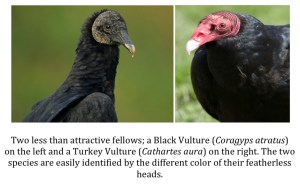
Black Vulture on the left and Turkey vulture on the right


Overhead these two vultures might appear to be the same species because they are so similar in general appearance. However, a closer look reveals that the Turkey Vulture is very light on the wing and rocks gently back and forth as it effortlessly soars for hours; it rarely needs to flap its wings. In contrast, the Black Vulture’s body appears too heavy even for its broad wings. Indeed, Black Vultures must flap and glide just to stay aloft even at high altitudes where thermals are strong.


The “personalities” of these two species are related to their different body types. Both have keen eyesight and regularly search for carrion while they soar high above the ground, but they differ in an important way. The Turkey Vulture’s large wing to body ratio allows it to fly low over the ground and locate small animals such as snakes and rodents. It also has a sense of smell, which almost all birds, including the Black Vulture, lack because olfaction is useless for an animal that spends most of the time in the air.


More than a century ago Audubon claimed he demonstrated olfaction in Turkey Vultures by placing a dead animal under a sheet next to a realistic painting of a carcass. A vulture flew down to the painting but ignored it, then pulled the carcass out from under the sheet.


Although Black Vultures can’t locate small carcasses because they must fly high to stay aloft, they compensate for this limitation by watching Turkey Vultures forage low over the ground. When a Black Vulture sees a Turkey Vulture feeding on a small carcass, it drops down and drives the Turkey Vulture away. The Turkey Vulture seems to accept being bullied by its much heavier and stronger relative, even when both are at a large carcass.


Is the Black Vulture more aggressive because its size enables it to be a bully, or is it basically just a more aggressive animal?


The answer to this question lies with the young, fluffy white fledglings, which hatch and live in small caves in cliffs and rock formations. When a person approaches a Turkey Vulture fledgling, the young bird cowers and retreats to the back of the cave; but when a Black Vulture fledgling is approached, it hisses and lunges at the intruder.


So when we look up and see Turkey Vultures and Black Vultures soaring together, ostensibly cooperating while looking for a well-deserved meal to share, we know that, thanks to their genetics, they’re not foraging together because they’re friends.

Buddy’s Last Tail Walk

It’s a sad day on the ranch. Buddy’s walking, continence, and comfort level continued to deteriorate. This dog who was born on our ranch (in my closet actually), herded the cattle with great skill, miraculously broke up bull fights, and has now died on this ranch will be missed. Buddy’s pain led to mournful yelps these last weeks. But he died surrounded by his pack of dogs and humans while proudly overlooking his domain from his station in the back of the pickup. I feel compelled to write this sad note for all who knew Buddy personally and for those of you who knew him only through this blog. He was quite a dog!

By this morning the dark clouds of Hurricane Hanna had spread over south and central Texas including Medicine Spirit Ranch. No moisture has fallen to the ground as yet from the gray, ominous clouds, in contrast to that on our cheeks. Just after being laid to rest in a grave beside his mother, Mollie, the sun briefly broke through the dark sky, illuminating his still body like a spotlight. Interpret that as you will. Buddy died peacefully and at a time that was appropriate.

Buddy’s incredible herding skills moving cattle will be remembered. But even more so, we will miss his love for family. His bravery in the face of large animals was unsurpassed. He was the most loyal being I’ve ever known. For reasons known only to Buddy, he sought me out wherever. He was my constant companion. He laid beside me in the bed for six weeks when I was recovering from my own back injury. He was aptly named.

Perhaps such devotion, if in a human, would be seen as cult-like. Nevertheless, I cannot help but feel flattered by his allegiance and devotion to our family. Of course this is a Border collie trait, but Buddy showed this behavior in spades.


Buddy will be missed. What a dog!

Buddy as a younger dog. That’ll do Buddy.

Tailwalking Buddy

Not that many years ago, a Border collie puppy named Buddy was born beneath a row of slacks that hung within my closet.

Alissa, our daughter in law, holding Buddy as a puppy

This puppy along with two other older Border collies would one day drive off a pack of marauding coyotes that, under cover of darkness, had stolen up behind Buddy’s human companions.This was the puppy who eventually would grow into an adept ranch dog capable of breaking up fights between huge bulls and of skillfully moving a cattle herd across our ranch.

A young Buddy

This was the patient dog who spent six weeks at my side while I, not so patiently, waited out a painful back injury. This was the puppy that would eventually grow into a wise old dog and who has now entered his dotage. In short, Buddy has now grown old.

Six months ago Buddy passed his 14th birthday. While his eyesight and hearing are not as keen as they once were, his major physical limitation relates to his mobility. You see, his rear end tends to give away, causing him to unceremoniously plop down. His collapse is usually followed by his soulful eyes pleading for a bit of help to regain his four footed stance. Trudy or I will then help him to his feet and allow him to get underway. We have found that by holding onto his tail and slightly elevating it, he is far more capable of walking without falling. This maneuver seems to aid Buddy’s balance and walking. We refer to this as tailwalking Buddy.

For a dog as independent-minded as a Border collie, it is surprising that Buddy accepts our tailwalking, but Buddy has a way of accepting gracefully his limitations that accompany his aging. I never thought acceptance would become one of his traits along with his intelligence, herding ability, and loyalty to his human companions.

Buddy also must now wear a belly band and incontinence pad. We suspect Buddy’s leakage also relates to his old spinal cord injury.

Notice the belly band around Buddy

Our method proves effective but requires us to buy large amounts of incontinence products at the grocery store and order his male belly belts online. Together this combination of items has saved spotting around the house. Again Buddy accepts the belly belt and pad without seeming to question. When he enters the house he waits patiently just inside the door for Trudy or me to fasten into place his padded doggie belt. (I worry as to what the store clerks must think about Trudy buying such large quantities of male incontinence pads! Fredericksburg is, after all, a fairly small town.)

Trudy and I have made other modifications around the house including elevating Buddy’s dog bowl to make it easier for him to eat, placing runners in our tiled bathroom to facilitate Buddy making it to his elevated dog bowl without falling down, and lifting Buddy into and out of the padded bed of my pickup.

We are unclear as to why Buddy shows progressive walking impairment. We do know that years ago Buddy suffered a spinal cord injury from a ruptured disc that briefly left him with paralyzed hind limbs. We suspect this is the likely cause, worsening now with his advancing age. With patience and rehab Buddy following his original injury gained a normal gait although never achieving full strength in his hind legs. Border collies also may develop hip dysplasia that could also be a contributing factor.

Trudy tailwalking Buddy


At times Buddy whimpers, yelps, and pants, all symptoms that suggest he is in pain. Learning this our veterinarian prescribed pain pills. These pills have helped. Nevertheless, nighttime is the worst time for Buddy. Trudy and I have spent many nights letting Buddy in and out of the house, requiring us to tailwalk him up and down the stairs to the yard, laying on the floor attempting to comfort him (he sleeps under the bed), and providing middle of the night snacks. Our list of interventions is short but repeatable. It is also exhausting.

A recent addition of a second pain medicine has provided further benefit. Nevertheless, on a daily basis we seem to see an overall worsening of Buddy’s mobility. His decline inevitably brings up the wracking question as to how long we should proceed with our Buddy routines in light of Buddy’s  discomfort. If Buddy stopped eating, lost his zeal to travel in the pickup, or no longer showed his love of life, the decision would become much easier. For now Trudy and I will help our aging Buddy dog to travel around the house and yard by holding his tail and dutifully trailing along behind him. Metaphorically speaking, is not this what Buddy has always done for us?

I’m here for you my human companions

Tom and Buddy


Winter At Medicine Spirit Ranch

The work changes with the seasons at Medicine Spirit Ranch. In many ways winter is the busiest time of year because we must keep the animals supplied with hay and supplemental protein.

Also we carry out tasks more suited for winter months. For example, the small evergreen juniper saplings, referred to locally as “cedar”, visually contrast better in winter from the tall brown grass. This makes it easier to find the cedar in winter and to apply a set of loppers to the task. The cedar is most unwelcome on ranches, because it demands huge amounts of water and competes with the various grasses needed for our grazing animals.

Also we repair fences during the winter. The fences become stretched from cows leaning over them and deer jumping through them. Also feral hogs have made their unwelcome appearance and will likely create still more fencing problems. Ugh!

We horses need our protein pellets every day. Now don’t be late!

We work on equipment during the winter that typically is in heavy use during the warmer parts of the year. We cut dead trees and clear drainage pipes under ranch roads. The daily cattle feeding is greater during the winter than during the remainder of the year as we keep them supplied with hay in the form of giant (900 pound) bales. We also feed the cattle range cubes on a daily basis to supplement their protein needs.

The horses on the other hand receove their protein containing feed every day year round whereas the cattle don’t during the non-winter months. Given the excitement and jousting for the range cubes by the cattle, we refer to it as “cow candy.”

So why do the horses get supplemental feed every day of the year and we don’t?

This past week we’ve been repairing a well in one of our pastures. This job proved arduous, as we had to dig up a 45-gallon container that was buried in the ground. The container stores water and moves it to a nearby water trough. We found a leek at the connection that fed into the bottom of the tank. Unfortunately after replacing the pump motor, replacing the water container and some  PVC connections,  and then reburying the tank, we sprung yet another leak. It seems the large water container sank deeper into the hole, re-breaking the PVC pipe. A second attempt at this fix hopefully has addressed the problem. We’ll see. So far, so good.

Curious how the cattle stood around the developing pond resulting from the leak and gawked at our inability to fix their water trough. I am pretty sure Number 36, a.k.a. “the Tongue” was chuckling. Cheeky cow! She is my nemesis.

We continue to vaccinate calves for black leg (a bacterial infection) and periodically take a load of yearlings to market. Six calves have been born within the last week or so. They are so cute at this age. See their pics below.

We never seem run out of tasks on the ranch despite the season. Nevertheless, I can hardly wait for Spring to arrive.

Morning Symphony

Trudy and I continue to “camp out” in our guesthouse while our home undergoes renovation and restoration. Because of a flood, our wooden floors required replacing and we had to move out for three weeks. While we were at it, we decided to do a bit of updating as well. Fortunately we had a guesthouse to move into rather than having to move to a motel (a dog friendly one, of course). We plan on moving back to our usual house in just a few days. Hoorah!

While we have felt frustration over our inability to access certain items, my morning routine has remained unchanged. It begins with a canine symphony, or should I call it a canine cacophony?

You see, after I shower and begin to dress for the day, my two Border collies, Bandit and Bella, begin barking like crazed dogs. They become so excited by the prospect of going out onto the ranch. They are not at all patient


“Two-footed humans sure move slowly!”

.

Jack, our little brown dog, appears nonplussed by the whole matter. If anything Jack places himself between the Borders and me, attempting to prevent the overly excited collies from jumping up  while I totter about on one leg, putting on my jeans.

I am a good dog in the morning, not like those noisy Border collies.”

I’ve found that the barking of the Border collies cannot be suppressed. I try repeatedly to shush them verbally, but to no avail. I even resort to gently squeezing their jaws together. Nothing works. Bella, bless her little canine heart, has even taken to nipping at my legs (very disconcerting for me), if I don’t move along at her desired pace. She clearly herds me in the direction of the pickup and becomes visibly frustrated if I need to double back.

Unfortunately, even on reaching the pickup, the morning symphony of dog barking doesn’t stop. My good neighbor and friend, Tom Norris, says he can always tell where I am on the ranch because of the dogs’ barking. You see, sounds carries very well in Live Oak Valley.

I suppose my dogs’ barking is a new form of G.P.S., i.e. godawful pet sounds! Or maybe it should be C.P.S, Canine Positioning System. Eventually the dogs stop barking, although I suspect it may be because of doggie hoarseness.

My frequency of blog posting (and FB posting) has slowed lately. This absence results from the time I’ve  devoted to writing another book. I am entering the final phases of finishing my next book (well prior to sending it off to potential agents and publishers and the lengthy process that is sure to follow). My book is tentatively titled Hitler: Prescription for Defeat.

The book seeks to answer the “Holy Grail” of questions about Hitler- that is, what was it that affected his reasoning to the extent that he made such colossal blunders in judgement toward the end of World War II. The premise of my book is that Hitler’s failing health and abnormal personality largely explain his errors in judgment and aided the Allies in achieving victory. The book goes into Hitler’s major and minor illnesses along with describing his unusual personality characteristics and how these aspects worked against him. His health is spliced into a number of the major battles of World War II. Wish me luck!

I have  received feedback from my beta readers on Hitler: Prescription For Defeat and have made the necessary edits. I feel so grateful for the time and expertise of Janet, LaNelle, Tom, and Madeline for carrying out this helpful task. Thank you. Extra sets of eyes prove very useful!

By the way, if you haven’t had a chance to read my first book, Carrying The Black Bag: A Neurologist’s Bedside Tales, I hope you will pick it up at your favorite bookstore or order a copy. The book has won awards, and received generous comments from Amazon readers. These reviews on Amazon are extremely welcome and encouraging.

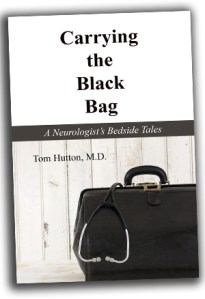
Carrying the Black Bag book

My absolute favorite feedback about Carrying The Black Bag came in the form of a picture from a family member who was at the time training as a Pediatric surgical nurse.

This young reader gave me a great morale boost by reading my book between surgical cases

Taylor McNeill, a surgical nurse and dear niece, reading my book between cases

The days at Medicine Spirit Ranch are lengthening and warming, and it won’t be long until Central Texas looks like the picture below. Spring with the wildflowers is hard to beat!

Bluebonnets and Paints

Wrong Way Tom and Trudy

In reflecting on 2018, I’ve concluded that Trudy and I must have gone the wrong way or must have taken the wrong path in our lives. Let me explain.

At the beginning of the 20th century 90% of the population of Texas lived in the rural areas and only 10% lived in the cities. By the end of the 20th century these percentages had reversed with 90% of the population of Texas living in urban areas and only 10% living in the country. This trend toward urbanization goes unchecked thus far in the 21st century.

Meanwhile Trudy and I left behind our former homes in the cities (Dallas-area, Lubbock, Houston, Minneapolis, even Moscow and London) where we had lived our entire lives. Instead we went the wrong way and adopted a rural lifestyle living in the countryside outside Fredericksburg ,Texas. Clearly we moved counter current to the usual demographics, but why.?

Moreover, we chose to live on a cattle ranch and raise cattle at a time when the cattle industry has  swooned from the greatness of earlier times when cattle allowed Texas to become a wealthy state. We certainly don’t claim the same lifestyle as the frontier ranchers in Texas who lived in fear of marauding Indians, struggled against nature using primitive tools, and made their ranch rounds via horseback rather in a pick up. No, our experiences don’t compare to the difficult frontier days that were depicted in the western movies, but that doesn’t mean our lives are without challenges as this blog has at times depicted.

Buddy and Bella: “No way is this the wrong way. This ranch life is what we were bred for.”          Photo by Ramsey

Little Jack: “Hey Pick Up Man, had you not gone the wrong way, I wouldn’t have lived out my story at Medicine Spirit Ranch”


And while some would argue the western myth with its exciting cattle drives and western heroes springs more from Hollywood fantasy than reality, it still fills a void, a yearning, if you will, for a simpler life of raising and moving stock, enjoying good neighbors, and experiencing a simpler, less hectic lifestyle. These are the activities we have enjoyed since moving to Medicine Spirit Ranch.

Perhaps springing from the innate narcissism common in writers, I’ve chosen to share our experiences on this blog. I’ve shared earlier stories of caring for remarkable people who developed neurological disorders, and, in so doing, shared extraordinary experiences that reveal much of what is good about human nature. These stories are in my book, Carrying The  Black Bag: A Neurologists Bedside Tales.  

Carrying the Black Bag book

available online or favorite bookstore

I am proud to say it has won several awards:

In a way writing books in the digital age also runs counter culture. Nevertheless, i can think of nothing more pleasing than sharing stories  in the hope my readers will gain a modicum of benefit from them.

I am working hard on a second book that time will tell whether it sees the light of day. I have tentatively titled it, Hitler: Prescription For Defeat. In it I’ve tried to bring my medical skills (retired though they may be) to bear on Adolf Hitler’s little known, but serious health issues. Too little attention has been devoted, in my opinion, to how his poor health impacted his leadership in World War II, inadvertently affected the great battles, and assisted the Allies in defeating Nazi Germany. Hopefully 2019 will see me finish the book and move forward toward publication. I’ll soon the manuscript to several wonderful folks willing to serve as my beta readers/ Any encouragement you might offer would be appreciated, or else any advice to move onto other subjects.

Looking forward to 2019, “wrong way Tom and Trudy” will continue to live our rural lifestyle. We’ll continue to enjoy our “wrong way” lifestyle” as well. Also Tom will continue to blog about his observations and experiences at the ranch and elsewhere. And in the meantime from Views From Medicine Spirit Ranch, I extend to you my fondest wishes for your personal successes in 2019. Happy New Year!

Flash Floods in the Texas Hill Country

Only a few weeks ago I wrote a blog piece on the terrible drought and now we have floods! Such is the weather in Texas. As the old saying goes, “If you don’t like the weather in Texas, just wait a few minutes!”

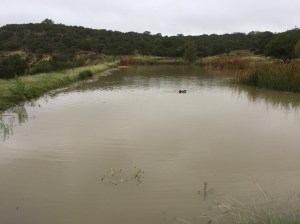
For the last two days we’ve been largely stranded on our hill outside of Fredericksburg. Several times I’ve gone down the hill only to have the flooding of Live Oak Creek prevent my from leaving the ranch. This happened after the ground had been thoroughly saturated and then another 10 inches or so of rain fell. The thin soil  can’t absorb that much water, so it runs off into the streams at a rapid clip. On a positive note my stock tanks are now full. It’s been a long time since I could say that. See below

It is surprising how strong the current can be, as its been known to wash out fences and sweep away cars and trucks. Trudy and I have gained a healthy respect for flash floods and try not to tempt fate. Our schedules are not that precious. See debris line below, showing earlier extent of the flood and white water other side of low water crossing.

Our dogs have reacted in different ways. The dark, rainy days suggest Jack’s favorite past-time- napping. See below. Jack likes his creature comforts, especially snoozing on a pillow top mattress on our bed with his little head on a feather pillow.

Jack: Rainy days make me sleepy. For that matter sunny days do too.


Our senior Border collie, Buddy on the other hand becomes anxious during storms. As always he is goal directed animal if there ever was one. He begins to look s for a job to perform. Below you will see what the flash flood caused with Buddy. As you can see he has prepared for a still worse flood, waiting in his pool float, umbrella overhead, and goggles at the ready. Buddy always has a plan.

“Let that water rise, I’m ready for it!”