
Our pets have shorter lives than humans, making it possible for us to observe their transitions across their aging spectrum. We can view them mature, grow old, and die. This can be instructive. For me, I’m staring at a formidable eighty years old at my next birthday and am sobered by the fact that by virtually anyone’s standard, I am now old. Despite physically feeling healthy and reasonably vigorous, I cannot completely shut out the concern about the not so stealthy approach of the old man.
As I stare into the formidable aging abyss, I find comfort from the actions and examples of my aging and deceased pets. Allow me to explain.
Mollie was a female Border collie that we acquired shortly before moving to the ranch almost twenty-five years ago. She was a Border collie from working stock and in her youth was a terrific herder. She could also run at an amazing clip. The latter trait was shown one day when I observed her run down a grown white tail deer. Molly had chased the white tail doe across a large pasture and was gaining ground on it when the deer in her panicked state attempted jumping a fence. Instead of clearing the fence, the deer trampolined off the barbed wire fence, landing in front of the paws of my semi-crazed, tongue wagging, blue eyed dog. Of interest to me was that Mollie made no attempt to attack the deer but merely waited for the deer to regain her feet. Soon the all out chase was on again with my deliriously happy hound in fast pursuit.

I mention this anecdote, as it strangely reminded me of my own youth and my own ability to run fast. Watching Mollie brought back proud memories. Of course I was not able to run down deer but was sufficiently agile to be offered track and field scholarships for the sprints and broad jump. Now fast forward twelve years from Mollie’s youth to her older years when she had been diagnosed with cancer. I recall on her last day of life, she wanted to go for her walk even if it proved to be a short one. There was no “give up” in that dog. Mollie lived her life fully, squeezing out all the activity and pleasure she could.
The following night Mollie began as usual sleeping on the floor next to my side of the bed. Sometime during the night, she apparently got up, walked about thirty feet down the hallway, laid down, and peacefully died. I found her cold, lifeless body the next morning. She had stayed engaged with life up until the very end of her life. Is there not a lesson to be learned here?
I’ve been advised by friends on the verge of selling their property in the country and moving to town to consider the same. Another friend questioned my continued efforts in golf lessons and time spent on the practice range, as it was his opinion that our golf games were never likely to improve. He may have been right about the golf scores, but that is not how I roll. Mollie comes to mind. She didn’t roll that way either, so why should I?
Please understand that I am not in denial about getting older, but I’ll do everything I can to fully enjoy my late years. I’ve had cataracts taken off and lens implant placed with excellent results. No more glasses! Recently I suddenly lost most of the hearing in my right ear and required a hearing aid for my left ear and essentially a microphone for my right ear to transfer sounds to my left ear. While the result is far from perfect, it allows me to remain engaged with life. My stamina isn’t what it used to be. Actually it is no where near the same. A nap after lunch has transitioned from a rarity to a necessity. And by the way my loyal, two-year old dog, Duke, never fails to join me for a nap, despite his characteristic boundless energy.
My current thirteen-year old and virtually blind Border collie, Bella, has also demonstrated graceful acquiescence to her aging. One difference in Bella is that when I now stop the pickup for a walk, she remains behind in the cab of the truck while young Duke and I go for a walk. She learned on her final walk several months ago that her limitations were simply too great and that she became too exhausted. Now Bella waits patiently in the truck for us to return, in the interim no doubt sneaking in an extra nap.
Bella has learned the extent of her physical abilities and has adapted to them with a sensible grace. She is accepting of those physical limitations that she can no longer perform. Doing so with calm acceptance and grace is what I’ve observed from my Bella and strive to learn. Yup! No more ladders for me!

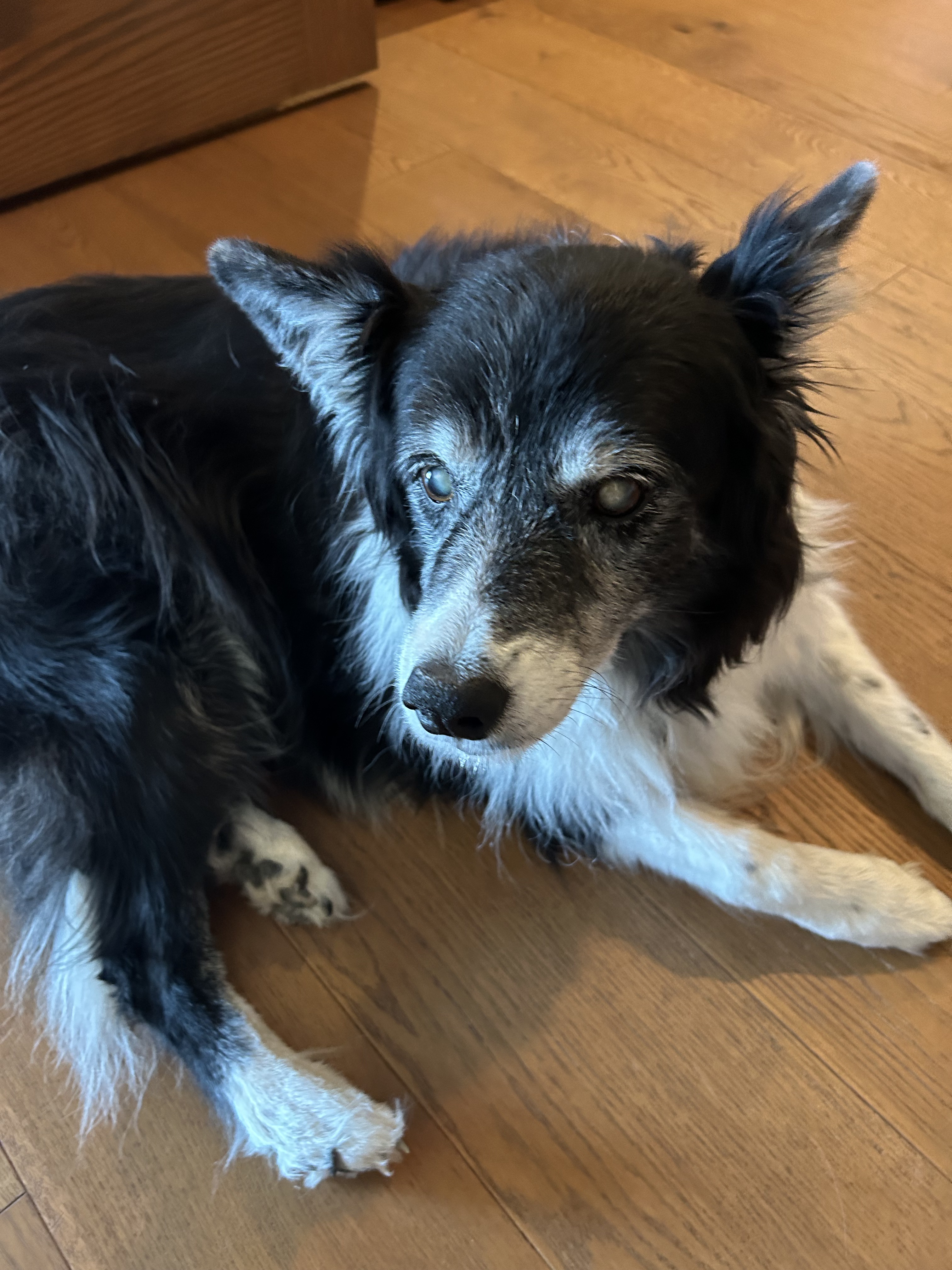
The top picture is of the mature Bella and the lower picture is of the old Bella
On that most uncomfortable of all subjects, death, I’ve also learned from my Border collies. Our first dog Bandit who proved responsible for transferring us from a hectic city life to a bucolic ranch life, became old, severely infirm, unable to walk, and finally compassion required that we put him down. He had dearly loved the ranch with its abundant wildlife, scenic views, and cattle to herd.
When finally we deemed it time to let our old Bandit die with his dignity still intact, I placed him in the bed of the pickup, a spot where he had spent so many happy hours. I strategically parked the pickup so that Bandit had a view from the top of the hill and could sense the cattle grazing below. On a warm day with the gentle breezes and amid the songs of birds, our veterinarian facilitated the peaceful passing of our noble Bandit dog.
While the moment was incredibly sad for me, and I bawled my eyes out, I can think of no better way for our beloved pets or we as humans to die than surrounded by natural beauty, memories of outstanding accomplishments, and surrounded by those he/she loved. I can only wish that a graceful ending of my life will occur and that we humans might become as accepting of the inevitable as were my Bandit and Molly.
Perhaps you have observed your pets and gained wisdom from them about life’s mysteries. If so, please let me know what you have learned and share here with other blog readers and pet lovers.
If you have not had the chance to read my latest book, Hitler’s Maladies and Their Impact on World War II: A Behavioral Neurologist’s View (Texas Tech University Press), I invite you to do so. The book explores an important aspect of the Hitler story and World War II that has not been well studied. Many of Hitler’s catastrophic errors including the premature invasion of the Soviet Union in June 1941, the slowness of German forces to counterattack at the Battle of Normandy in 1944, and the highly risky Battle of the Bulge in late 1944 into 1945, can be better understood, knowing the sizeable impact that Hitler’s physical and mental conditions had on these vital battles.

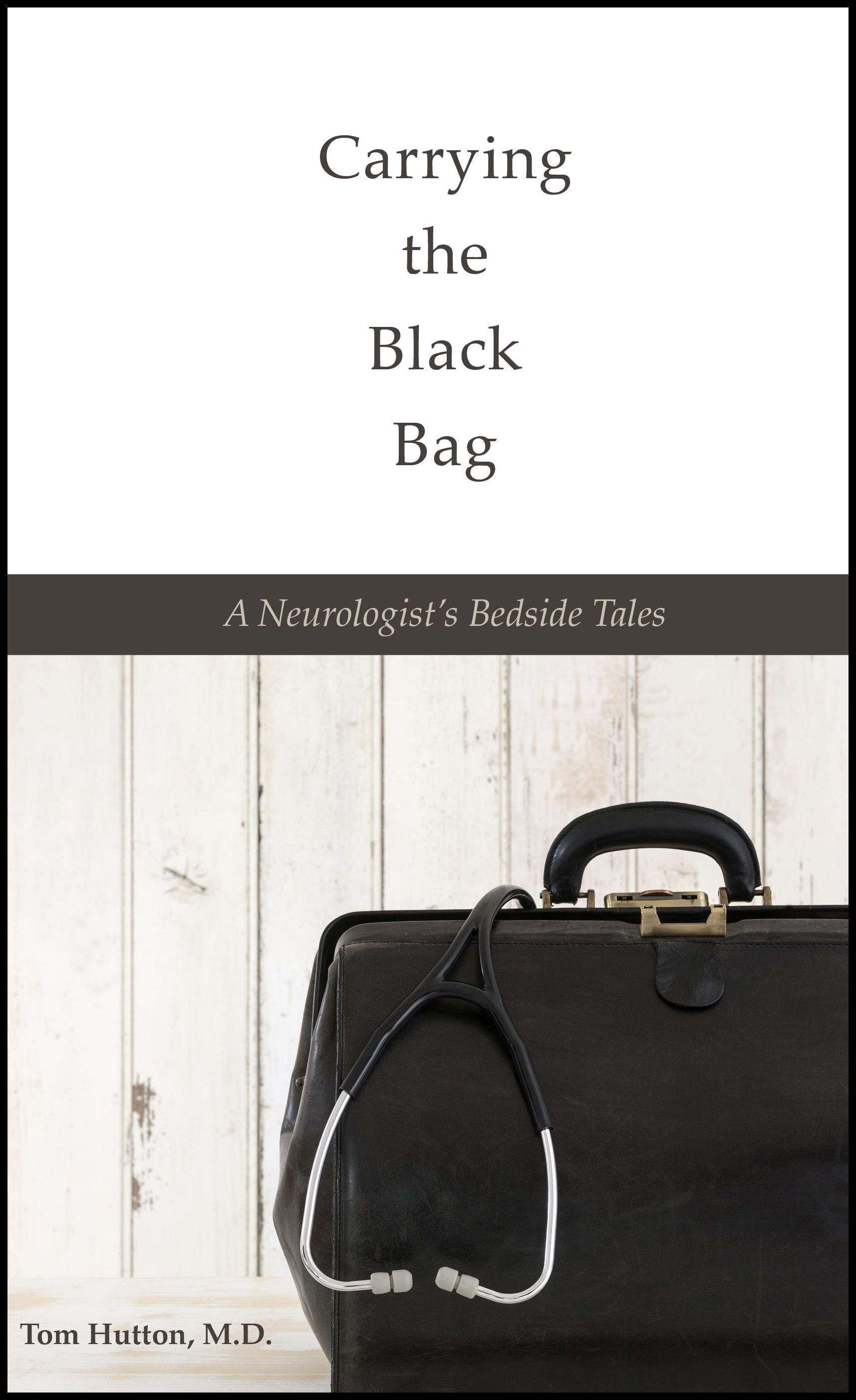
Also, consider picking up a copy of my earlier book, Carrying The Black Bag: A Neurologist’s Bedside Tales (Texas Tech University Press). Please join me on my personal journey as a physician and meet my patients whose reservoirs of courage, perseverance, and struggles to achieve balance for their disrupted lives provide the foundation for this book. But step closely, as often they speak with low and muffled voices, but voices that nonetheless ring loudly with humanity, love, and most of all, courage.


 Views From Medicine Spirit Ranch