
A couple of years ago, we planted a Century plant in the entrance garden of our front yard as a focal point. It’s striking appearance commands a serious glance on entering our yard. Scientifically, the Century plant is classified as Agava americana and rather than actually living 100 years, as its common name would imply, it usually lives 10-30 years.
The century plant is native to Mexico and the southwest US and is utilized in making tequila and has also been used to make a sweetener and even soap. It’s flowers are pollinated by hummingbirds, bees, butterflies, and bats- all of which are plentiful at Medicine Spirit Ranch. Being unfamiliar with this desert plant what began several weeks ago has been shocking and has taken us by total surprise.
One morning we noticed from deep within the the plant, a large stalk had begun to grow. The stalk grew over a few days and weeks to a striking height of 16 feet 4 inches. Stalks of the century plant have been known to grow even taller at thirty feet or even fifty feet in height. The stalk took on the appearance of a giant asparagus stalk and true to form, the century plant is in the same botanical family as asparagus (Asparagaceae).
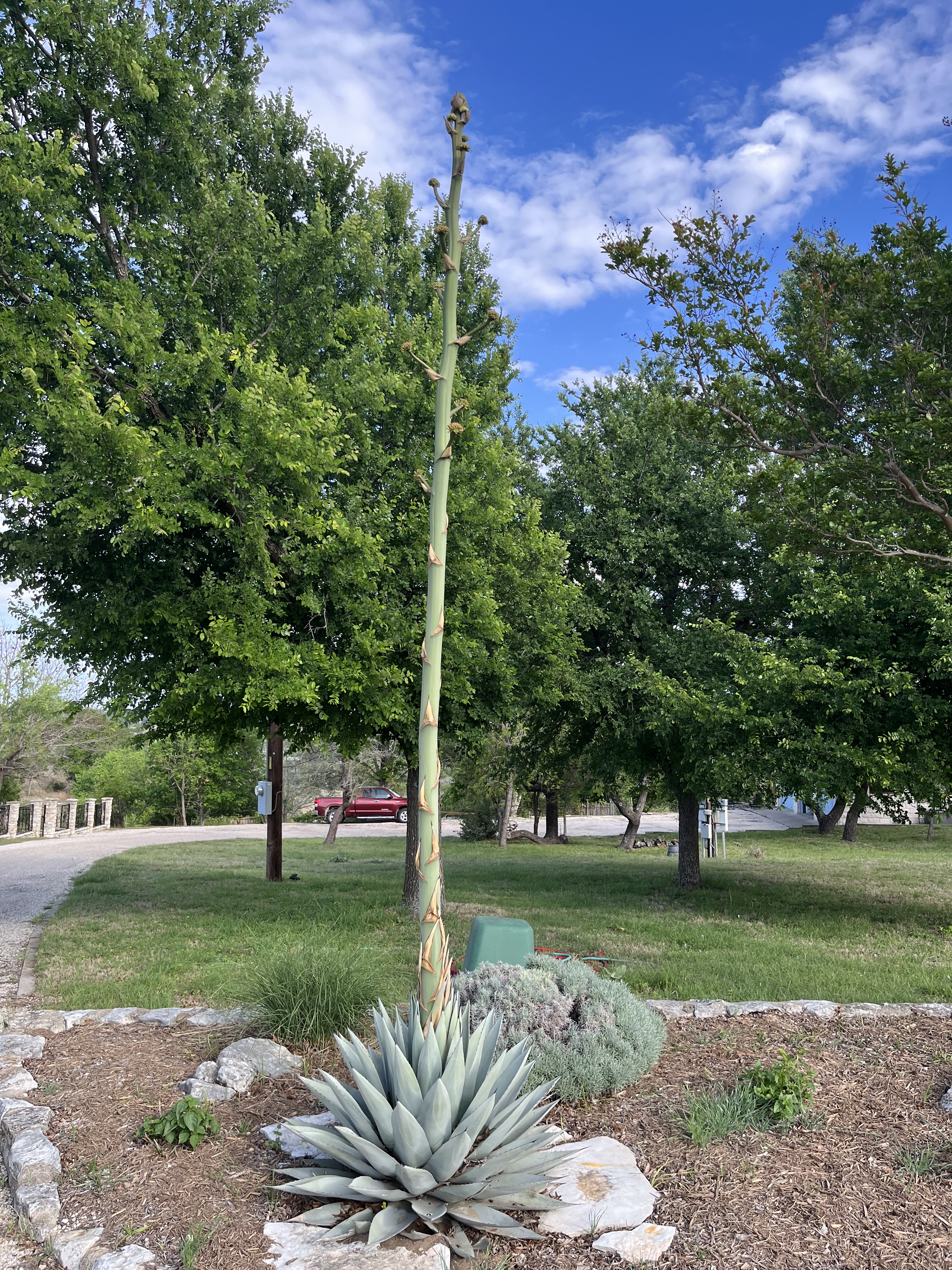
The continued rapid growth of the impressive stalk reminded me of the classic English Fairy tale Jack and the Beanstalk, and I fantasized that our Century plant stalk might eventually reach the clouds as had Jack’s. I thought, surely there wasn’t going to be a giant with riches at the top of the stalk!
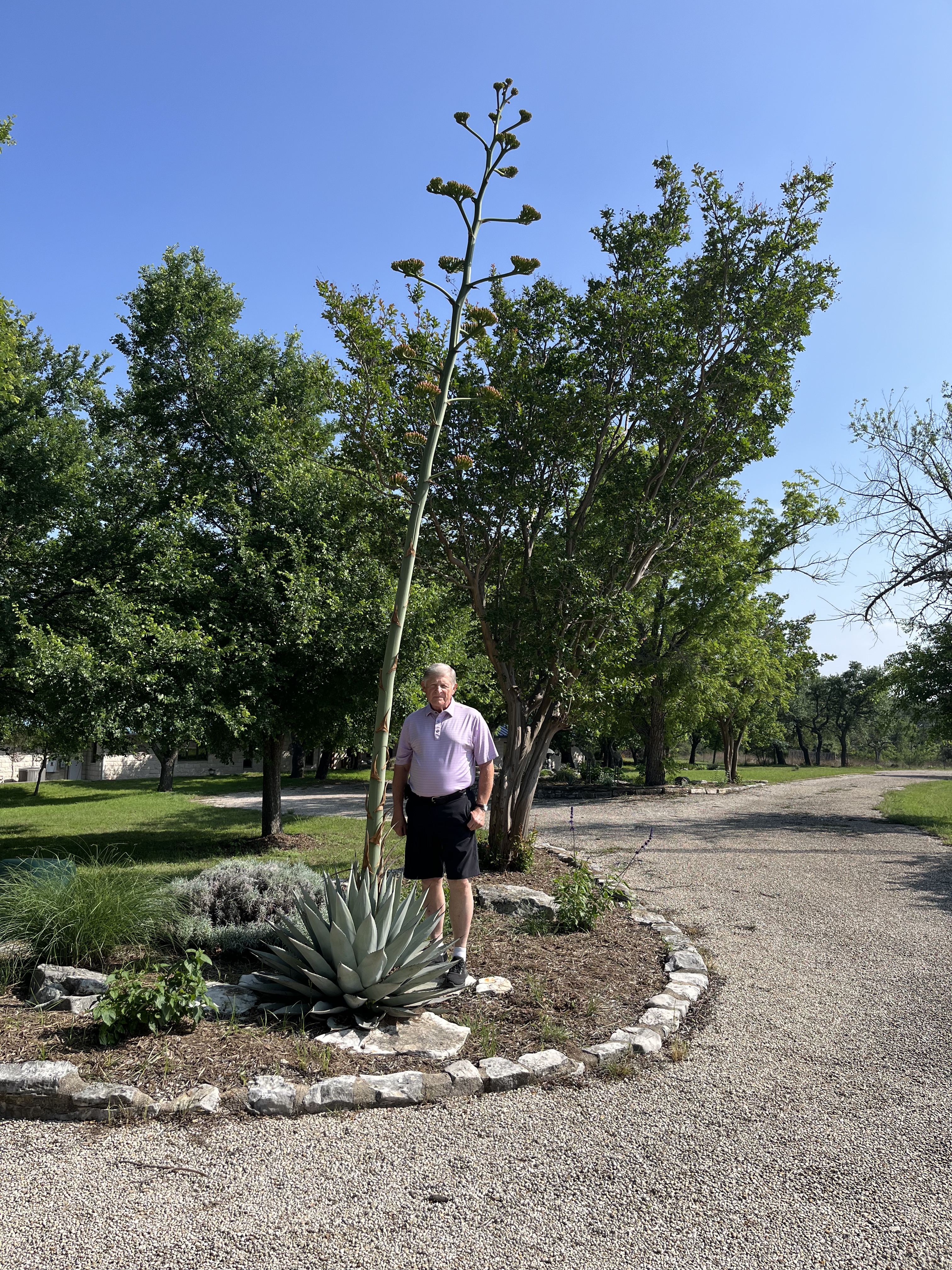
Me standing next to the stalk to demonstrate the height of the stalk
And like the giant stalk that Jack chopped down, killing the giant, our Century Plant stalk will also lead to the death of the mother plant. The Century plant uses all its energy stores to bring about the impressive growth of the stalk, leading to exhaustion and death of the plant. The Century plant represents a great sacrificial story with the mother plant sacrificing its very life to propagate future Century plants. At the base of the dying Century plant there appears buds or “Pups” from which newer plants will grow. The buds can be left in place or transplanted to a different area.
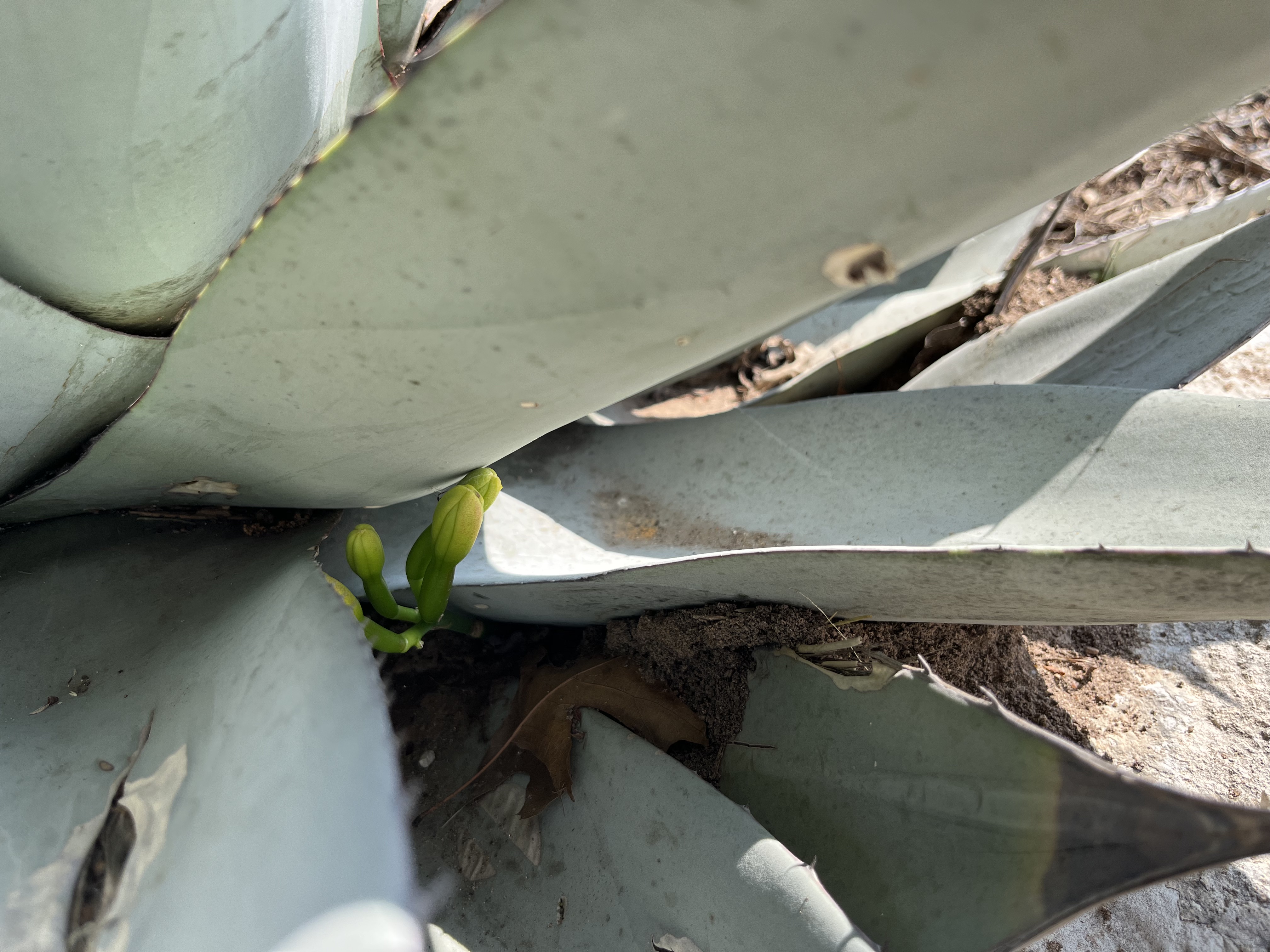
Note the yellow buds which are the “pups” from which new Century plants can be grown
This event reminds me of the sacrifice human mothers often make for their children, giving up much of their time and effort for child rearing. Fortunately, with modern medicine human child birth is no longer the substantial risk to the life of the mother that it once was.
We have been amazed by our Century plant and in learning its life cycle. Just when we think we have learned about living on a Texas ranch, something new literally pops up!

