Not long ago I was asked to provide my recollection of working with the great Soviet Neuroscientist, Alexander Romanovich Luria. Since Academician Luria had such a profound effect on my life and on the field of psychology, I thought my recollections might prove of some interest to the readers of my blog.
Introduction-
Looking back on my professional career, my most exhilarating experience was the remarkable academic year spent at the University of Moscow with Professor A. R. Luria. This brilliant and caring man accomplished so much in his life and did so amid challenging circumstances. My fellowship with Professor Luria solidified my interest in brain/behavior relationships and provided impetus to share selected patients’ stories in the manner he demonstrated in his remarkable books, The Man with a Shattered World and The Mind of a Mnemonist.
The U.S.-U.S.S.R. Health Exchange program in 1974-75 offered me a life changing opportunity to study with Academician Alexander Romanovich Luria in his laboratory at the N. N. Burdenko Institute for Scientific Research in Neurosurgery. I cherish his memory, his kindness, his wisdom, his patience, and for teaching me his method of practicing neuropsychology.
Background of the U.S.-U.S.S.R. Health Exchange Program-
The U.S.-U.S.S.R. Health Exchange Program came into being on May 22, 1972, when President Richard Nixon and General Secretary Leonid Brezhnev signed the treaty at the first SALT (Strategic Arms Limitation Talks) summit. My exchange followed in 1974-75 and proved both challenging and enriching.
Previously, the internationally well-known and distinguished Professor William Fields of the University of Texas Health Science Center in Houston had reviewed the status of Soviet Neuroscience. During his visit to Moscow, Dr. Fields had been introduced to the leading Soviet Neuroscientist, Professor A. R. Luria. Dr. Luria in addition to providing an overview of Soviet Neuroscience also requested from Dr. Fields that he send one of his neurology residents to learn the principles of Lurian Neuropsychology.
On his return to Texas, Dr. Fields, not having a residency program at the time and knowing I was soon to enter a neurology training program at the University of Minnesota, proposed I accept this unique educational opportunity.
Gaining approval to participate in the U.S.-U.S.S.R. Health Exchange Program proved challenging. Additional administrative alignment had to occur at the Department of Health, Education, and Welfare prior to the initiation of the exchange program. My splitting my residency to participate in the exchange program presented a huge hurdle that eventually was overcome.
Shortly after my arrival in Moscow, I learned the Burdenko Institute in the absence of advanced imaging studies depended heavily on electroencephalography and rather primitive angiography. Neuropsychology also played a substantial clinical role in identifying the location of brain tumors. Lurian neuropsychological assessment proved helpful to the Burdenko Institute’s neurosurgeons for carrying out and directing their operations.
Fond Remembrances-
One of Professor Luria’s most endearing qualities was his personal warmth and concern for others. On our arrival at Sheremetyevo airport, three very tired Huttons were met by Bella Kotik, who has now become Professor Bella Kotik-Friedgut and authors a chapter in this volume. In 1974 she was a graduate student in neuropsychology in Luria’s laboratory at the Burdenko Institute. Bella spoke English well and had been dispatched by Alexander Romanovich (the honorific of first name and patronymic was the most formal and appropriate way in Russian to address respected individuals) to help us manage immigration, wind our way through Soviet officialdom, provide transportation, and help settle in at our long-term hotel, The Hotel Warsaw.
The U.S.-U.S.S.R. Health Exchange was such a recent development in 1974 that no permanent housing existed for exchange families. This lack of housing left us no better option but to live in a specific hotel room where exchange westerners had always been housed. The room was L-shaped and large, with a double bed, couch where our son could sleep, a wardrobe, a table, a few chairs, a large bathroom, entrance hall, and a radio and television that proved ideal sites for implanting surreptitious listening devices. Recall my exchange occurred at the height of the Cold War, and, after all, we were from the United States of America.
Early on Professor Luria opened his home to us and provided the opportunity to gain an appreciation for how he lived. Professor Luria’s small flat was neatly kept and nicely decorated with mementos. It lay only several blocks from the Kremlin. He welcomed us warmly and served champagne and caviar to mark the special occasion. The Professor and his dear wife served a lovely meal. Professor Luria also explained his plans for the upcoming year and sent us home with full stomachs and with many of our questions answered.
The Professor also pledged to find a suitable daycare for our son who was at the time a year and a half old. This task Alexander Romanovich accomplished with flare, putting young Andy is a model Russian daycare facility that was a frequent stop for Intourist buses. We laughed when Andy’s daycare teacher shared that whenever a busload of American tourists visited the daycare that Andy would be asked to walk with the teacher to the bus and wave the bus off with a goodbye by saying, “Do svidaniya.” I soon became envious of our son’s ease and rapid acquisition of the Russian language. Such was the kindness and personal concern that Alexander Romanovich showed us during our stay in Moscow.
Perhaps Alexander Romanovich’s greatest personality trait was his personal warmth and concern for others. During that first visit to his flat, he addressed our apprehensions, coddled Andy, and acted more like a doting grandfather than a gifted and world renown neuroscientist. I quickly understood why his students treated Professor Luria with such respect and affection.
During my sojourn in Moscow, I learned that during the terrible years of the Stalinist purges, Alexander Romanovich had slept with a packed suitcase beside his bed. Psychology was feared by the Soviet officialdom because it was viewed as offering a separate philosophy from Communism. Luria fully expected a fateful knock on his door from the Soviet security services. For a degree of protection, Alexander Romanovich had befriended two high government politicians (I was told they sat on the Politburo) with less than stellar reputations but who were politically influential and provided a safeguard.
Also like his close colleague and friend, L. S. Vygotskii, Luria’s being a Jew had presented challenges for his societal acceptance and his professional advancement. After learning of Luria’s desperate years during the Stalinist purges and his cultural challenges to developing neuropsychology, our living in a one room hotel room with an eighteen-month-old child, cooking on hot plates, and dealing with the frustrations of an underdeveloped exchange program, did not seem bad after all.
Beginning in the 1920s Luria began carrying out his groundbreaking work, but psychology was at the time viewed in the Soviet Unione as a suspect science and a potentially competitive ideology to Marxist Leninism. Early on Professor Luria steered away from an initial flirtation with Freudian psychology, as this was politically unacceptable given the politics of the day. Luria then moved toward the study of the most basic elements of psychology including the anatomy and physiology underlying behavior. This type of psychology was viewed as more consistent with dialectical materialism and led to neuropsychology becoming the dominant and perhaps only form of psychology in the Soviet Union as other schools of psychology were suppressed.
According to Professor Luria, the Burdenko Neurosurgical Institute was the largest Institute of its kind in the world. Its size and emphasis on brain tumor evaluation and treatment allowed him a remarkable opportunity to study many patients with localized brain lesions. This availability of clinical material afforded him the opportunity to develop further his understanding of brain/behavior relationships. Years earlier the immense tragedy of brain injured soldiers during World War II had also afforded Luria with an immense number of study patients on which to establish his principles of neuropsychology.
Professor Luria’s laboratory in 1974-75 was staffed by 3-4 Ph.D.’s or M.D.’s (one or two neurologists), and 4-5 post-graduate students. One of the more junior post-docs was Natasha who appeared to have been assigned as my “guardian angel.” Her English was only slightly better than my Russian but, she was helpful with communication as well as locating various items that Trudy needed. Bella who had met us at the airport and with whom I became friends was a more advanced graduate student and continued to look after us.
My attempt to learn Russian from a previous University of Moscow instructor had proved inadequate. She had emigrated to Minneapolis during my busy internship year and first year of Neurology residency training, providing too little time to study and practice Russian. My lack of fluency disappointed both Professor Luria’s and me. To address my language deficiency, Professor Luria arranged an intensive 4-5 hour/day Russian language class that met after Institute hours across town at the University of Moscow. Whereas activities in the neuropsychology lab were essentially completed by mid-afternoon, I would dash from the Institute, head for the underground, and slide into my chair just in time for my Russian language class to begin. There, an excellent teacher would intensely drill her four or five Russian language students. This remedial effort greatly aided my Russian language skills but made for an exhausting day.
A typical day in Luria’s neuropsychology laboratory usually began with a case presentation to Professor Luria by one of his graduate students. The patient was then brought into the laboratory or else the group of us would traipse off to the ward and gather at the patient’s bedside. The neuropsychological exam typically took an hour to an hour and a half to complete. On rare occasions when Professor Luria found the case particularly challenging or deserving of further investigation, we would repeatedly return for follow-up examinations.
Given that so many international students and visitors came through the neuropsychology laboratory, Professor Luria carried out his case summaries in English. I became impressed how his qualitative, careful, and unfolding examination complemented the standard neurological examination. Later in the United States when an appropriate patient would arrive on the ward with a particular frontal lobe syndrome or other intriguing neurobehavioral findings, residents, students and I would meet at the bedside where I would demonstrate the Lurian methods of elucidating the diagnostic features.
In the afternoon the trainees in Luria’s neuropsychology laboratory frequently saw additional patients, but quitting time was early by American standards. On days when I did not have class at the University of Moscow, I could arrive home by mid-afternoon. This eventuality made it possible for me to help Trudy with the challenges of shopping in Moscow and, prior to our son’s placement into a daycare, with childcare.
Professor Luria was a master clinician. He reportedly spoke some twenty languages and dialects. I cannot vouch for him knowing that many languages and dialects; however, I never saw him stumped because of insufficient language skills despite the many multicultural patients arriving at the Burdenko Institute from across the expansive Soviet Union.
Professor Luria’s bedside skills included gentle encouragement and kindness that he projected to his patients along with amazing creativity in modifying his examination to identify the underlying neuropsychological deficits. His examination was certainly not rote, but rather an evolving and creative diagnostic examination. His was a masterful performance.
Perhaps, the most memorable patient I saw during my exchange program was patient Lev Zasetsky, the man featured in Luria’s, The Man with a Shattered World. While this book ably describes Luria’s methods and digressions into the associated neurological substrate of Zasetsky’s grievous bullet wound to his brain, the most memorable feature for me was my realization of the struggles Zasetsky had faced and continued to face in coping with his incapacity. He recognized his losses, put forth incredible effort to address these deficiencies, and affirmed his continuing existence as an intelligent man.
I was extremely impressed by Zasetsky’s courage and tenacity in attempting to overcome his great incapacity. The lessons taught in The Man with a Shattered World were not lost on me. Throughout the latter part of my career as a clinical and research neurologist, I kept a personal file of patients whose courage, tenacity, and incredible efforts for rehabilitation had impressed and amazed me.
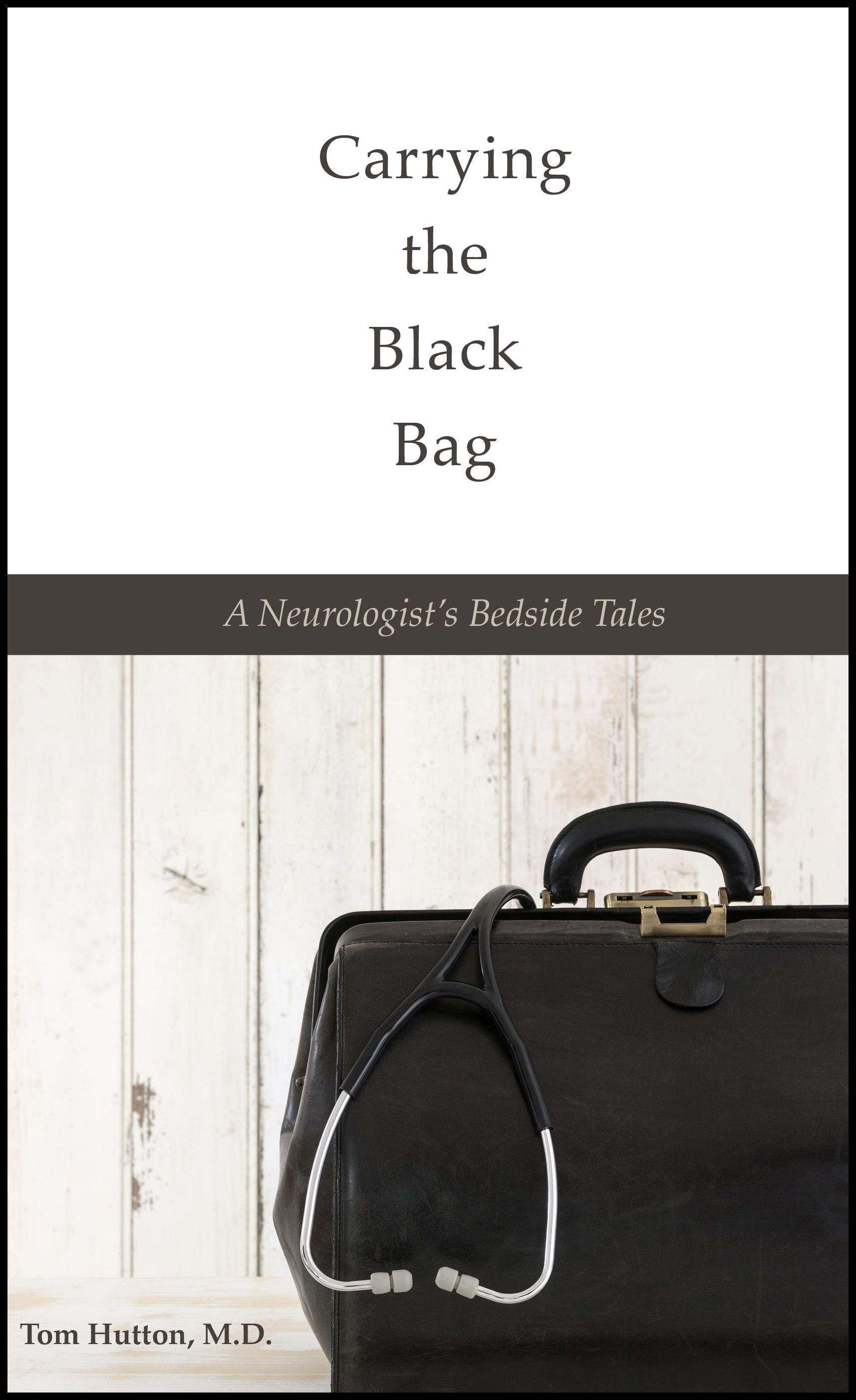
In my book, Carrying the Black Bag: A Neurologist’s Bedside Tales, a work that was part memoir and part homage to my patients, I paid tribute to those individuals who had faced grievous neurological challenges with grace, grit, and dignity. I also credited A. R. Luria for penning his psychodramas that had inspired my own writing.
While I never had a patient with the amazing and persistent memory as demonstrated by S. in Luria’s, The Mind of a Mnemonist, I had many patients whose altered awareness and perception created in me a sense of awe and incredible curiosity. Such patients included a man who progressed over a few minutes from extremely docile, kind, and articulate to a raging, hate-filled, aggressive state as a result of his temporal lobe seizure, only then to revert following his postictal state to his previous friendly demeanor.
Another one of my patients required years of investigation to determine that he had been self-administering arsenic to maintain a state of chronic invalidism. The ongoing investigation of the circumstances surrounding this case proved reminiscent of Luria’s efforts of prolonged and persistent inquiry of his patients. Likewise, a man with treated Parkinson’s disease who played pinochle with his hallucinated hounds and how they dogs’ visits provided benefit to his life. This clinical anecdote again was like the remarkable patients described by Luria. These case studies of mine became my own patient S.
Without the impressive examples given by Professor Luria in his clinical case studies as guides, I doubt that I would have been able to follow with this time honored, 19th century tradition in idiographic science (qualitative assessment) as in Carrying the Black Bag.
My later book, Hitler’s Maladies and Their Impact on World War II continued the tradition. Based on Lurian neuropsychology, I became convinced that advanced Parkinson’s disease patients suffered features of a mild frontal lobe syndrome. The mental inflexibility features were born out by the Wisconsin Card Sorting Test. Knowing the time frame (all showed it by 10 years) by which my parkinsonian patients developed these neuropsychological findings was then projected onto the life of Adolf Hitler with his Parkinson’s disease and provided insights into his catastrophic errors during the latter phases of World War II.
I became convinced that advanced Parkinson’s disease with its attendant memory/cognitive problems impaired his decision making. Nevertheless, Hitler’s neurological problems in no way excused his anti-Semitism and cruelty as these characteristics had formed long before the onset of his neurological illness.
Transfer of Lurian Neuropsychology to the United States–
Finally, a few comments on the transfer of Lurian neuropsychology to the United States as it related to identifying localized brain lesions. Upon my return to the U.S.A. and the University of Minnesota, I began to work with Manfred Meyer, Ph.D. who headed the Neuropsychology section within the Department of Neurology. Dr. Meyer was a wonderful man and an able neuropsychologist but had been imbued with the nomothetic approach (quantitative analysis) as exemplified by the Minnesota Multiphasic Personality Inventory (MMPI). He was unable to accept a more qualitative, bedside approach to neuropsychology. Likewise, I could not render Lurian neuropsychology in a quantitative fashion. Given my teaching by Alexander Romanovich, it simply was not possible for me to do so.
While I completed my Ph.D. under Dr. Meyer who was my principal advisor, my PhD thesis did not deal with Lurian neuropsychology but rather with other psychophysiological measures. Likewise, the then Chair of the Department of Neurology, Dr. Joseph Resch, was unimpressed with Lurian neuropsychology as a diagnostic tool, as by then not only had advanced Computerized Tomography (CT-scans) come about, but also Magnetic Resonance Imaging (MRI) scans and Positron Emission Tomography (PET) scans. All of the imaging techniques were faster and more precise at locating brain lesions, and negated the need for neuropsychology for identification of the site of brain lesions.
Technology had by then replaced the need for Lurian neuropsychology to locate brain lesions, as it also had for the more quantitative neuropsychology vogue in the United States at the time.
The beauty and completeness of Lurian neuropsychology and its neurorehabilitation benefits were lost on my American mentors and limited my using Luria’s methods in only highly selected patients.
It is my belief that Luria’s approach to neuropsychology in the United States and elsewhere has made more impact within the field of psychology and in understanding brain/behavior relationships than it has in clinical neurological practice. It may provide its greatest benefit around neurorehabilitation efforts by establishing a firmer scientific underpinning for rehabilitative strategies as well as providing a baseline of memory/cognitive function for later comparison in patients with more diffuse and progressive dementing illnesses.
References
Luria, A.R., The Man With a Shattered World: The History of a Brain Wound. Basic Books, Inc., New York, 1972.
Luria, A.R., The Mind of a Mnemonist: A Little Book about a Vast Memory. Basic Books, Inc., New York, 1968.
Hutton, Tom. Carrying the Black Bag: A Neurologist’s Bedside Tales. Texas Tech University Press, Lubbock, 2015.
Hutton, Tom. Hitler’s Maladies and Their Impact on World War II: A Behavioral Neurologist’s View. Texas Tech University Press, Lubbock, 2023.




 Views From Medicine Spirit Ranch