Tag Archives: Family Geneology

Family Sayings

Cute sayings and pithy advice are part of any family’s history. Such verbal gems usually cannot be chased back to their origins but may have existed for generations longer than suspected. All too often such family history is lost to posterity. I leave here a few examples from the Family Hutton and from the Family Plunket; however, I’m sure many examples have already disappeared into the fog of history. I encourage the reader to take notice of the unusual and clever sayings they grew up with and document them for future generations.

Adages can at times be easy to identify from where they came, even if unable to identify when they began. One such example is I recall my Dad using when braking his car a bit too quickly. He would call out while tromping down on the brake petal, “Whoa, whoa I say, whoa.” No doubt my Dad had heard his father shouting this command. I suspect this action command dates to when his father or grandfather drove a buckboard or wagon pulled by a a different type of horsepower than powered Dad’s car. Under those earlier circumstances the operator was using specific and direct language while pulling back on the reins and hollering a command at his horse.

Portrait of Howard Hutton
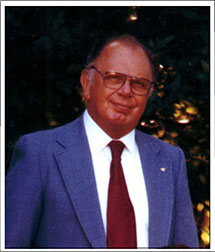

Other sayings derive from life’s experiences. Dad provided two bits of advice to me when using public restrooms. The first bit of wisdom he proffered was that the man entering the restroom ALWAYS has the right of way over the man exiting. Such advice of course demonstrates good manners, realizing that the man entering no doubt is in the greater hurry than the man exiting.

The second piece of advice Dad offered was to never get in line at the urinal behind an old man. The reasoning behind this gem, no doubt, is age-related prostatism that most old men develop. This condition prolongs their time at the urinal. The short line behind the old man suckers the unwary and is like the short line at motor vehicles. Both lines move glacially.

Dad always referred to our collective family as “The Hungry Huttons”,” This one needs no explanation with four growing children seated around the dinner table.

My aunt Grace Schwarz, Nonnie, would often comment that our family “might have lacked the millions but we had the airs.” (unfortunately we did not have the heirs)

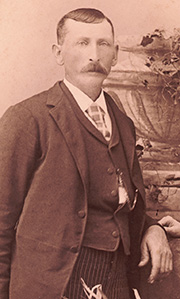
My great grandfather, Thaddeus Septimus Hutton, advised to always shake out your boots in the morning before putting them on. I imagine he acquired this sage advice the hard way while being a cowboy in Texas. To those living in Texas, we understand scorpions love to infest warm places such as recently removed boots. Ouch!

Portrait of Great Grandfather Thaddeus Septimus Hutton
My sister, Joan, recalls Dad referring to her as “Spook.” The name apparently came from a WWII era comic strip where only the eyes and nose protruded over the fence or table top. Joan apparently in her early years showed this pose when peering over the table at Dad, thus prompting her nickname.

Paul W. Plunket III (Trudy’s brother) described his grandfather, Hal C. Horton, on finishing a particularly satisfying meal would exclaim, he was “superflopity.” Paul thinks this saying might have been a southern corruption of the adverb “superfluously” which means extravagant.

Portrait of Hal C. Horton

When Paul W. Plunket Jr. (Trudy and Paul’s father) did not want to do something, he would say: “Well, can’t dance, too wet to plow.”

Below portrait of Paul and Sarah Plunket

When Sarah Plunket (Trudy and Paul’s mother) in her role as a professional photographer would tell the subject things that were not exactly true to achieve a particular expression. She called these sayings, “misty white lies.”

Paul W. Plunket III (Trudy’s brother) borrowed some good advice from a mentor that he readily shares. “You would worry less what others think about you, if you realized how seldom they did.”

Trudy grew up with the encouragement to tackle a particular challenging task with the proviso, ” No hill for a stepper.” When asked to dress up, the encouragement would be to “put on your Sunday go-to-meetin’ clothes.”

When disparaging a wannabe cowboy, the saying goes, “he’s all hat and no cattle.” When questioning someone’s honesty, the saying goes, “as crooked as a dog’s hind leg”. Or if expressing uncertainty on a specific claim, the saying goes, “Don’t bet the farm on it.” When commenting on a person’s unwillingness to spend money, the saying goes “he’s as tight as bark on a tree.” All of these sayings, Trudy and I heard while growing up. While these sayings go much further than our immediate families, these are the adages we remember well.

My new book titled, Hitler’s Maladies and Their Impact on World War II will appear by April of this year. This is a behavioral neurologists take on the impact of Adolf Hitler’s poor health on WWII. I hope you will look for it.

Also if you haven’t read by last book, Carrying The Black Bag: A Neurologist’s Bedside Tales, I hope you will get a copy. In the book I share favorite patient stories that show insights into what is most meaningful when faced with life threatening illnesses. The book has been well received and has a surprising amount of humor. You can contact me for a copy and send $15 and I’ll mail it to you. Also available via Amazon or your local bookstore at full price. My address is 751 Bryant Road, Fredericksburg, Tx 78624

Tom Hutton, January 25, 2023

Family Geneology- Don’t Fail To Ask

Recently I wrote a bio for my paternal grandfather for our family Bible. To enliven the piece, I struggled to remember anecdotes that would illustrate his life. This recall proved challenging, and I wish I had asked a lot more questions about his growing up. My plea to others is don’t forget to ask. You’ll likely be sorry later if you do not.

Below is the brief bio of my grandfather, John Francis Hutton (Frank). Family and those who knew this kind gentleman may find it interesting.

John Francis Hutton
(By John Thomas Hutton, grandson)

John Francis (Frank) Hutton was born in Garden City, Missouri on April 11, 1888 to Thaddeus (Thad) Septimus Hutton and Elizabeth (Betty) Jane Ragan Hutton. Frank was the only child born to Thad and Betty who was not born in Texas. He had three brothers; Thaddeus Leslie, George Earl, and John Francis who died in infancy and two sisters; Emma Jane and Margaret Mary. In October 1904 the family moved to Kansas City, Missouri where Frank attended Central High School, Central Business College, and the American Savings and Loan Institute.
Frank married Kate Frances Lincoln on October 1, 1913. Years later Frank shared a story about his courting of Kate. Frank’s home in Kansas City lay about 20 miles from Kate’s home in Liberty, Missouri. In order to visit her, Frank would borrow the family horse and buckboard and head for the Lincoln’s farm. At the end of the day, Frank would climb back into the buckboard, point his horse in the direction of Kansas City, loosely tie the reins, and then crawl into the back of the buckboard. There to the metronomic clip clop of his horse’s hooves, Frank would fall fast asleep. After all he had to work the following day and needed rest in order to be productive. When the horse would eventually stop, Frank realized that he had arrived home. He would then climb out of the buckboard, unharness the horse, and head off to bed. Frank’s practical approach to his late night transportation needs demonstrated an early example of a driverless vehicle, a smart horse, and a resourceful suitor.
For a time after getting married, Frank worked as an accountant for a salt company in Salina, Kansas. For the last thirty years of his work career, Frank worked at Metropolitan Savings and Loan in Kansas City, Missouri, working his way up the ranks until becoming Vice President.
Frank and Kate had one child, John Howard Hutton, born in Liberty, Missouri April 11, 1921. Frank eventually purchased two acres of land and a red brick two-story home at 909 Vivion Road in Kansas City, Kansas where he and Kate enjoyed a semi-rural lifestyle. For many years the Frank Hutton family planted and tended a large vegetable garden that provided abundant harvests.
The yard on Vivion Road was large and required Frank to own two lawnmowers; one a large machine he called Big John and a smaller one that he named Little Boy. Frank used Big John for the broad swathes and Little Boy for the tighter areas. Frank regularly pruned the shrubbery, fertilized the yard, and mowed at regular intervals. Frank’s yard reflected his own personality with its simplicity, understatement, and tidiness.
One of Frank’s lessons for his grandchildren dealt with neighborliness. He described how one good neighbor would extend his fertilizing for a short distance across his property line and into his neighbor’s yard. Likewise the next-door neighbor would extend his fertilizing efforts across the boundary into the first neighbor’s yard. This extension inevitably led to a deeply green and luxuriant strip of grass midway between the two yards. This practice, Frank suggested, embodied good neighborly relations.
Frank for years enjoyed a regular Saturday golf outing with his friends and continued to play until he was well into his eighties. While a slight man at about five feet six inches and 130-140 pounds, his drives down the fairways were short but remarkably on target. His iron play and putting remained as deadly as ever.
Frank knowing the wonderful life lessons that golf taught wanted to pass the golf legacy to his three grandsons. Despite his patient instruction his attempts were not universally accepted. With the exception of David, none initially took up the game. Frank’s grandsons were larger, stronger, and more physically fit than their slightly built and aging grandfather, yet their grandfather was so far superior to their own unrefined efforts that each grandson questioned whether golf was destined to be his game.
Frank’s Christian faith played a guiding role in his life. For many decades Frank served as a dedicated Sunday school teacher with regular attendance at the Ivanhoe Christian Church in Kansas City, Missouri.
Several of Frank’s personality characteristics spring to mind. He demonstrated great affability. He possessed a kindness and interest in people that served him well throughout his life and gained him many close friends. Frank may have acquired his affability from his father who possessed this attribute as did Frank’s son, Howard. Frank also possessed a wonderful sense of humor and told grand stories. He was soft spoken and mild mannered except when attending the Kansas City Athletics baseball games at Metropolitan Stadium where he rooted loudly for the home team. Frank often took friends and family to sit in the Metropolitan S & L box that was located along the first base line. Frank always treated his family and friends generously with treats and soft drinks.
A second personality characteristic of Frank was his loyalty. He was for decades a devoted employee at Metropolitan Savings and Loan. He showed loyalty to his family as well. When his son, John Howard Hutton, transferred from Kansas City to Dallas to fly for Braniff Airlines, shortly after Frank’s retirement Frank and Kate followed and bought a home only several blocks away from Howard Hutton’s home in Richardson. Frank and Kate said they wished to watch their grandchildren grow up. In Richardson (a northern suburb of Dallas) he attended innumerable youth ball games, church events, school plays, sporting events, graduations, and city happenings. Frank was a doting and loving grandfather. Frank remained loyal to the Christian Church in Richardson where he and Kate regularly attended and where he again taught Sunday school. He also founded a Senior Citizens group that for many years served the community.
A third characteristic of Frank Hutton was his calm demeanor. Undoubtedly, he likely must have displayed excessive emotionality at some point, but this observer never once saw him lose his temper or become upset. He served as an emotional anchor for his family and calmly surfed the upsets of life that would often distress others.
Frank Hutton enjoyed good health until very near the end of his life. He died on September 14, 1975 following a fall on his driveway that gave rise to intracranial bleeding. He was 86 years old. Of Frank Hutton it can be said, he was truly a gentle person who was widely respected and loved by all who knew him.