Category Archives: Ranch animals

Naming Our Bottle Calf Norman

I recently described here my shock at finding a rare set of newborn calf twins and being still more shocked when the mama cow refused to allow the tiny bull calf to nurse. Knowing this was not an unusual circumstance with beef cattle twins and previously having bottle fed calves, Trudy and I swung full force into action with store bought colostrum and powdered cow’s milk.

A nameless baby bull calf and big friend

A nameless baby bull calf and his heifer friend

We determined the calf needed a name, but what should we call it? We typically don’t name those destined for the livestock auction, but in this case a handle shorter than “the bottle fed bull calf” was needed.

Since posting that story I’ve heard from “Rowdy’s Mom” who suggested the name, OLLI. Rowdy’s Mom  until recently was the very capable director of the Osher Lifelong Learning Institute at Texas Tech University, hence the acronym “OLLI” and her understandable affection for the name. As an aside, She also is most responsible for cajoling me two years ago into helping to establish a branch of the OLLI-TTU in the Texas Hill Country. Thanks Emma for all your wonderful help and my arm has almost recovered from your persuasion.

Despite her’s being a very good suggestion, by the time we received it another name was already being  used.

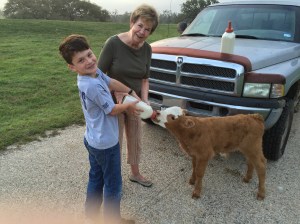
Mama Trudy and Norman

Mama Trudy and Norman

Have you seen the movie, City Slickers? This humorous movie starring Billy Crystal depicts his character and two chums (all New York City slickers) at a dude ranch improbably herding cattle via horseback from New Mexico to Colorado. During the long trail drive, a mama cow gives birth to an adorable calf they call Norman. Billy Crystal’s character is forced to rescue the calf from a surging river, he bonds with it, and quixotically packs him home in a crate to join his family in the city. The calf in the movie looks very much like our bottle fed calf and, you guessed it, we call our calf- Norman.


The feeding of Norman twice a day has become a regular staple of ranch activities. Betty and Cecil Selness, great friends from Minnesota, recently spent time with us and became regulars at Norman’s feedings.

Betty giving Norman his evening bottle while Cecil drinks his own libation

Betty giving Norman his evening bottle while Cecil drinks his own happy hour libation


Grandson Graham spent part of his spring break at the ranch with fishing, horseback riding, gator driving, and hikes on the agenda but his favorite activity above all others was feeding Norman. Graham also learned how hard a baby calf can buck against a bottle when the milk doesn’t come out quickly enough.IMG_0656

Needless to say, Norman has frolicked and suckled his way into our hearts. It’s hard to spend so much time staring into Norman’s appreciative dark eyes and not develop a bond of affection. In a year when we need load him into the cattle trailer for the one way trip to town,it will be a sad day indeed.

In my next post, I’ll share what I’ve learned about bovine twins of different genders and the concept of freemartins. Please let me know if you’ve had similar experiences and, if so, what you learned, especially about yourselves. For now you can think of Trudy and me as Calf Mama and Calf Papa.

Ranch Mistakes Are Not Unusual, Just More Painful

Perhaps it’s the time of year or my advancing age, but I find myself lately reminiscing more. As they say, “Some of the best memories were not always the best experiences.” Such was my first major injury on Medicine Spirit Ranch.

It went something like this. The day was warm and welcoming. Trudy and daughter Katie were enjoying the lovely weather but chose to do so sitting.  I, anxious to practice horseback riding, saddled Doc, our gelding, andwished to enjoy the beauty of the day from his broad, well muscled back.

I rode Doc in a  pasture nearby the barn, enjoying the day and the ride, while Trudy and Katie sat chatting amiably on a nearby hill. Feeling I could manage a bit more adventure, I urged the horse into a trot and then on into a gallop and began to race across the pasture.

What I had not planned for was that Doc took issue with me bouncing up and down on his back. Mid-stride and without warning he bucked me out of the saddle and over the saddle-horn.  To my considerable surprise, I found myself riding along with my arms frantically searching  his head and neck for something to hold onto.

Realizing I would not long remain balanced in this precarious position and with Doc still loping through the pasture, I struggled to inch my backside down his neck and back over the saddle-horn. Trying to clear the saddle-horn felt akin to backing myself over the Himalayas. It just wasn’t going to happen. I don’t know how jockeys maintain their racing, butt-up, position but at least they have stirrups, something I  was sorely lacking at this point.

I recall slowly slipping sideways from his neck and having a flickering thought to look for a soft spot on the ground. After that I have no further recall.

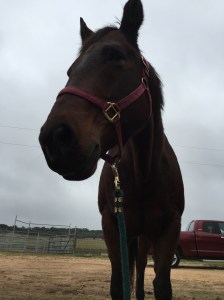
I regained consciousness on the ground experiencing terrific pain in my neck, head, and right arm. My view from the ground was something like the picture below with me looking up into the flaring nostrils of my horse.

"I told you my back hurt."

“I told you my back hurt.”

It was only later when the vet found the calcium stones in Doc’s urethra which he referred to as beans that I understood the role his painful kidneys had played in my unplanned departure from his back. The pressure on his kidneys from back pressure must have hurt him and my bouncing up and down on his back had increased his discomfort still more. Doc had, under the circumstances, chosen to remove the source of his increased pain (me) although by doing so directly adding to my own.

I imagine Doc looking down at me on the ground thinking something like, “So didn’t I tell you my back was hurting when you foolishly decided to saddle me?”

As for me, my broken arm was later set, placed in a cast, and it ultimately healed. My jammed neck recovered as well. As for Doc following this event, he received twice yearly bean removals from his urethral sheath and urethra. Since that time he’s never bucked again, making both him and me happier.

In addition to the broken arm and jammed neck, I’ve encountered while working on the ranch a ruptured disc in my low back. This resulted from trying to man-haul trees from the creek (not my finest day or decision). This landed me in bed for six weeks. I’ve also been run over and rolled by an irate mama cow. Oh yes, and there was also the time a cow tossed me out of the cow pen. For comparison sake, I never in my long neurological career received a single injury while swinging my reflex hammer!

As mentioned earlier, this is now a great memory but was a bad experience!

Guest Worker Program at the Ranch

IMG_0421

A new face temporarily resides at Medicine Spirit Ranch. No, Curly, our white Charolais bull didn’t get a black dye job nor did he lose 800 pounds. The Black Angus bull in the picture belongs to our good neighbors, Steve and Carla Allen and goes by the politically questionable name of “Sambo.”

The bull is staying for three months to breed with my heifers. Since they are first time heifers, we needed a small bull. Hope to sell the bred heifers for a good price in the spring.

The vernacular calls Sambo a “working” bull. Now guys, how much work can it really be? He has five heifers to breed and plenty of time in which to do it. No pressure here!

Lets see- he has plenty of grass or hay, range cubes, clean water, and five heifers. Does this really sound like work to you? And we refer to it as the “Life of Riley” but in reality it’s the “Life of Sambo.” He seems happy in his work.

We’il see how this breeding experiment works out next spring when the heifers are pregnancy checked. Meanwhile they will frolic in the most gorgeous weather we have seen in awhile.

I did a little research on Black Angus. They originally came from the shires of Aberdeen and Angus in northern Scotland. The cattle from Aberdeen were affectionately referred to as “hummlies” and those from Angus were called “Doddies.”

The transfer of Angus to the States began in 1873 when four Angus bulls were imported to Kansas. Over the next 12 years some 1,200 Angus beef cattle were imported and they have become one of the most popular breeds of cattle in the USA. They are especially prized in Japan.

They are naturally polled (meaning they have no horns) which for anyone like me who’s been bonked by a Longhorn’s horn sounds like a real plus.

Do Human Behaviors Mirror Animal Behavior?

Lately I’ve been pondering how animal and human behaviors mirror each another. My curiosity on this was prompted by an amazing experience Trudy and I had while in Kenya.

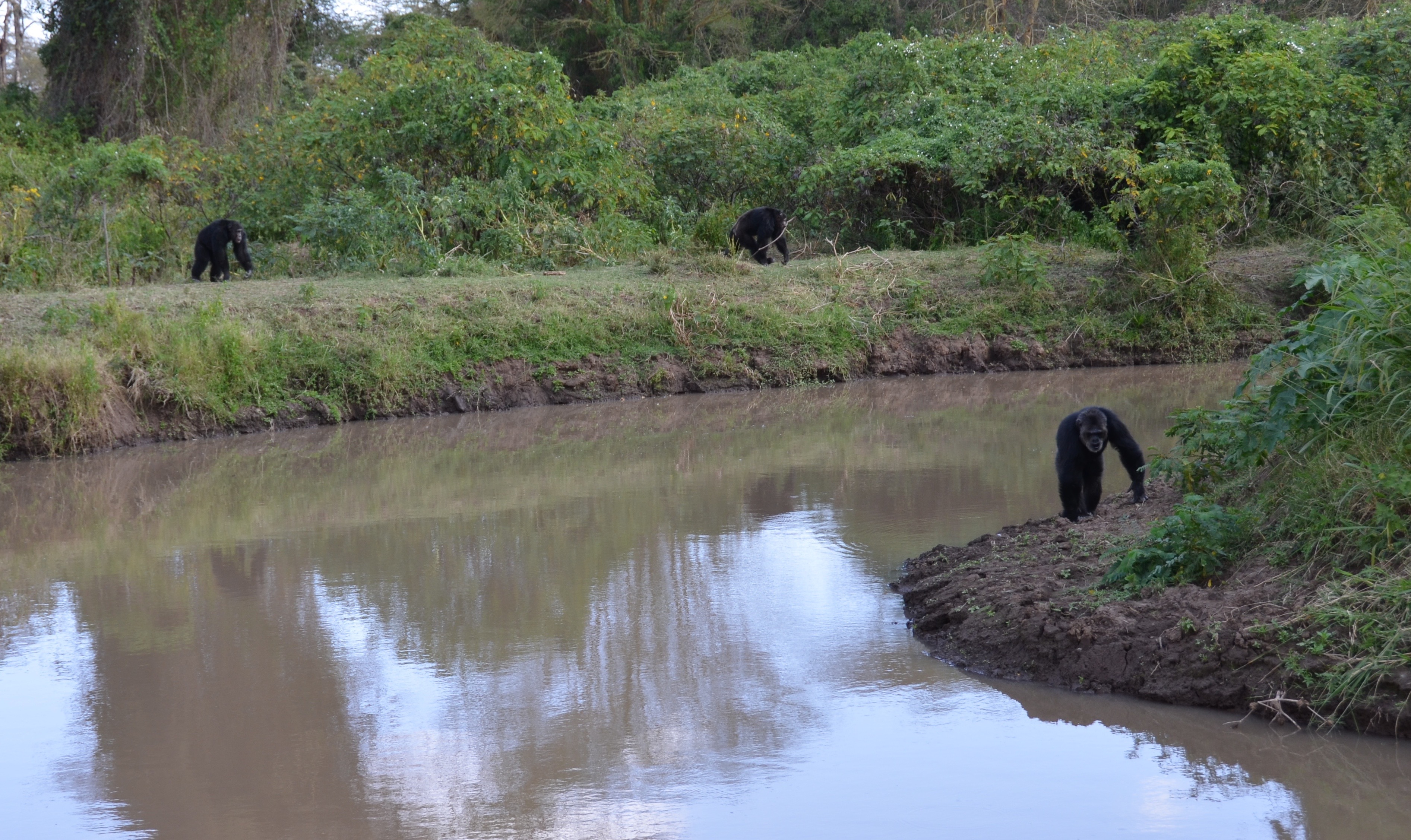
While visiting a chimpanzee conservancy, we viewed two populations of chimps divided by a river. Since chimps don’t swim, the populations remained separated and suspicious of one another.
One group of chimps on the right bank approached the river bank where on the left side another population of  chimps lived. This led to a rapid escalation of tension and an aggressive display. The outburst consisted of one group rallying their fellow chimps and racing full bore through the forest, vocalizing loudly and shaking trees wildly. On reaching the river bank the charging chimps hurled branches far into the river to intimidate the opposing band of chimps on the opposite bank.DSC_3532

DSC_3550This brought to mind the admonition by Colin Powell regarding the lead up to the Iraq war. He maintained that “shock and awe” would play a big part in any subsequent battle and, indeed, it did. The Iraqis quickly abandoned their positions. Aggressive displays in chimps and man?

Lately I’ve taken special notice of my horses’ feeding behavior. Fancy, our mare, always stops at the end of the trough nearest to our slow-footed, approaching gelding, Doc. There she will eat as much as equinely possible in the brief time before Doc arrives and chases her to the other end of the trough.

While Fancy schemes, he still gets his share.

While Fancy schemes, Doc still gets his share.

Fancy uses a strategy to consume as much food as possible given her smaller size but faster pace. This got me to reminiscing about my own upbringing.

I recall growing up and eating (dueling might be more accurate) with my two hungry brothers. We brothers would each mound up our potatoes and vegetables as high as possible, conserving space on the plate before one of our parents served our portions of the tasty entree.  We all took care to leave a large vacant and inviting spot on our plates to suggest the need for a generous serving of meat.

Seems to me something of a commonality exists between horse and human eating behaviors. Both in these instances sought to game the system in order to gain as much food as possible at the expense of either the other horse or a brother.

What do you think? Any instances where you see similar mirrored behavior between humans and animals? Would love to learn your thoughts.

Do Animals Mourn?

Not long ago my wife, Trudy, and I returned from an Kenyan safari. The trip was wonderful in so many ways, and one of the many amazing stories was how elephants mourn. When an elephant dies, the rest of the herd stands around the body for up to three days without eating or drinking. They then push over trees to cover the body of the deceased elephant, in effect performing a burial. Even years later when returning to the site they stop and stand silently, as if remembering their fallen family member.

I found this story engaging. It made me wonder if elephants engage in the same emotions of mourning as do humans. These elephant behaviors look like they are mourning the deceased.

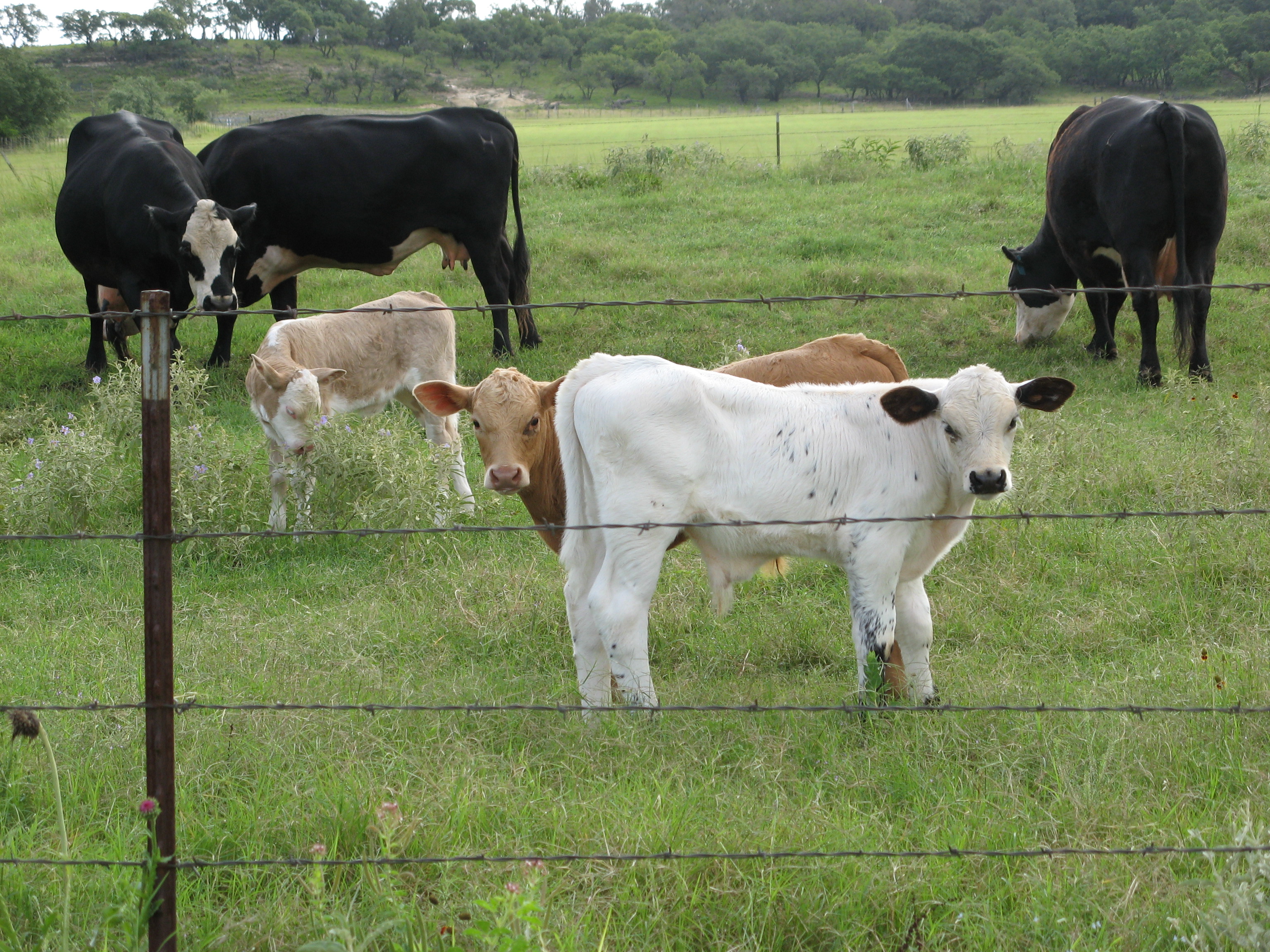
Then a couple of days I saw something in my herd of cattle that called me up short. Tragically a calf of about a month of age died. I found it dead without obvious cause. The mother had wandered off by then to feed with the herd.CALVES IMG_0191

When I rolled the dead animal over, inspecting it for signs of predators or other hints as to why it  had died, I was surprised to look up and see the mother trundling hurriedly for where I stood. The mama cow maintained her protective instinct for her deceased calf, and I felt sure she would have defended the carcass. Needless to say, I quickly took my leave.

Admittedly, protectiveness of the calf’s body is different from mourning but still projects an awareness of concern and affection for the deceased calf. Watching mother cows cleanse, feed, and protect their calves has convinced me that these mothers feel strong emotions for their offspring. Even the bull on occasion ends up calf-sitting and demonstrates surprising patience and protective instincts for his offspring.

I have believed for years that human psychology could be better informed if we better understand the behavior of other mammals, especially those closest to us on the evolutionary scale.

Would love to hear your thoughts. Do you think animals mourn? Do your pets show emotions?

Buddy

I love Border collies. This statement will never be called into question by those who know me. Not only do they make great pets, they have proved valuable in herding our cattle at Medicine Spirit Ranch. Especially impressive have been feats of herding involving our well-traveled bulls to neighboring, overgrown ranches. Without Border collies, the bulls might still be AWOL.
The story that follows is about Buddy. Please give me your feedback as I plan to submit this piece either to a contest or possible publication. It needs to be as good as it can be.
In its initial form the story had a middle portion showing Buddy’s incredible herding abilities. In this shortened story, I skipped the middle portion in the present version in the belief it took away some of the punch. I look forward to your comments.


Buddy

Impatiently, he waited for me to stop the pickup, piercing the night with excited, high-pitched yips. His succession of barks resounded up and down the hill through sheening groves of moonlit juniper.
Once the pickup had nearly stopped, I watched in the side-view mirror as my border collie burst from the bed of the pickup like a cannon shot. I pressed hard on the accelerator, attempting to outdistance Buddy to the garage a quarter of a mile ahead- a tiny victory, long sought after in this our nightly contest, but one not yet realized.
In the darkness, I could only make out the white “shepherd’s lantern” at the tip of Buddy’s tail. It appeared and quickly disappeared, as he sprinted through low brush, behind trees, and into gathering shadows.
I silently lauded his long strides as they gobbled up the gray ribbon of our ranch road. His youthfulness and agility made me a little envious as they contrasted with my increasing years and diminishing physical abilities. Age may have certain advantages but flexibility and speed are not among them.
The road bent away from the house in a semicircular direction while Buddy took a shortcut across a field of native grass. Before our paths diverged, I caught a glimpse in the headlights of the determined black and white collie, with ears back, charging confidently ahead. During this final sinuous stretch of ranch road, Buddy would typically overtake me, given his ability to out corner my hoary Dodge pickup. I galumphed over a rusty pipe cattle guard and plunged down the driveway toward the waiting garage and faux finish line.
Minutes later after parking the old truck, I looked for my competitive canine. I was surprised not to find Buddy waiting on the driveway with his usual smug look pasted across his muzzle. I waited a minute…. and then another, but he failed to arrive. I walked out onto the front lawn. The smell of newly mown grass and honeysuckle wafted over me. I breathed deeply, enjoying the scent. More minutes ticked by. My surprise became worry, giving way to eventual alarm.
I jogged awkwardly across the yard, searching the gloom of night for his familiar silhouette. What I spotted took several long moments to register. Slowly, like a photograph developing in a darkroom bath, it became clear, frighteningly clear to me. When it did, it filled me with an inky dread.
My normally agile Buddy moved oddly. I hurried closer to gain a better look. I was shocked by what I saw. My heart sank because Buddy with great effort was hauling himself along with his powerful forelimbs, his back legs lifelessly trailing behind. The significance crashed over me like a cataract over a broken dam. Oh my god, he’s paralyzed!
Within minutes I placed an urgent phone call to our veterinarian. Thankfully he responded immediately and said he was still working in his office and immediately to bring Buddy in. My wife, Trudy, and I gently lifted Buddy into the car and rushed back down the ranch road and across town. Red lights exasperated our progress, as did the sated, unhurried diners departing restaurants on Main Street. I felt additional tension welling up within me. On arrival at the one story, white stone veterinary clinic on the east side of town, I gathered Buddy in my arms and carried him through the double glass door Trudy held open. Within moments of Trudy ringing the bell on the counter, Dr. O’Neill appeared behind the main desk and proceeded to lead us down a darkened hallway to the first examination room. The clinic had a faint odor of wet dog mixed with an astringent smell.
Our vet flipped on the overhead light and asked me to place Buddy on the exam table. Following a quick examination of Buddy’s back, checking for movement in the limbs, and determining if Buddy felt a pinch to his hind foot, Dr. O’Neill gave an audible exhalation and said, “Mmm.”
“What do you think?” I asked.
“Well, Buddy needs an MRI–scan and may even need back surgery.” The weight of those words, while sympathetically uttered by the kindly, square-faced veterinarian, struck home like a hammer.
“Oh no!” Trudy cried out, her words echoing through the vacant halls of the clinic building.
The meaning of his words was all too clear, but I was flummoxed as to how Buddy had injured himself and what might be done to reverse it. “But, but what happened?” I asked while stroking Buddy, who lay quietly on the stainless steel examination table. His trusting, liquid eyes repeatedly searched our faces for an explanation for all this fuss.
“Sometimes these athletic dogs can explode a disc from their spinal column, causing weakness of the hind limbs,” Dr. O’Neill replied. He tenderly ran his hand over Buddy’s furry black and white head and gave his ears a fleeting scratch. “I’ll call ahead to an all night veterinary surgical center in San Antonio, let ‘em know you’re on your way and ask them to kick-start their MRI. Awfully sorry about Buddy, really am, he’s a fine dog. Sure hope they can help him.” His voice trailed off, containing traces of both hope and lament.
Shortly after and at high speeds, we hurtled southeastward through the deep Texas night on a winding U.S Highway 87. Overhead I viewed the blurriness of the Milky Way and Orion. Silvery moonlight fell between tree limbs and lay on the ground in shattered pieces. I switched the headlights to high beam to probe the uncertain darkness ahead of us.
We soon turned onto the four lane and divided Interstate-10 in the direction of San Antonio. I noticed eighteen-wheelers, heading at high speed in the opposite direction toward El Paso and, no doubt, the West Coast. Ahead of them lay over a thousand miles of desert with limited access to assistance should they break down. I, on the other hand, was headed east toward similar uncertainty. In the backseat Trudy cradled Buddy’s head in her lap, saying little.
On arrival at the San Antonio location, I hurried out of the car and opened the back door to gather Buddy into my arms. I rushed him across the asphalt parking lot into the nondescript emergency veterinary clinic. A diminutive and surprisingly young veterinarian approached us with a confident stride. She had high and well-defined cheekbones, a reassuring smile, light brown hair pulled back in a ponytail, and an air of quiet competency. After a brief exchange, she took Buddy, and with his added weight waddled away down the green tiled hallway.
I noticed Trudy had a frightened look on her face. I felt helpless to reassure her, fearing the worst possible outcome for Buddy. We lingered in the dimly lit waiting room that was filled with about a dozen worn, inexpensive chairs, a few marred wooden side tables, and a single TV that blared a documentary on the destructive nature of feral hogs. I tried to ignore the booming TV and paced restlessly, my mind full of thorns.
The petite veterinarian soon reappeared. Her green eyes darted about and her face expressed concern. “Dr. O’Neill was right. Looks like your dog herniated a disc fragment from his spine causing his paralysis. A disc can shoot out into the spinal canal like a bullet from a rifle. Your dog’s spinal cord received a pretty good wallop.”
“Can Buddy recover?” asked Trudy.
I saw the veterinarian drop her gaze and pause for several long moments before responding. She shrugged her shoulders, raised her head, evidencing a furrowed brow. “Time will tell. Whether the fragment still compresses the cord can be determined only by an MRI-scan. You’ll need to decide if that’s how you want us to proceed.”
If the disc still compressed the delicate cord, I knew de-compressive surgery would be required, and soon, to prevent permanent paralysis of Buddy’s back legs.
“I need to go check on a Labrador who decided to tangle with a pack of coyotes. The poor old boy got chewed up pretty good.”
I made a sympathetic comment regarding the Lab but my real concern lay with Buddy.
“Will check to make sure the MRI is free, that is if you decide to proceed that way. I’m leaving Farah here to answer any questions you may have,” said the veterinarian. She turned on her heel and with purposeful strides and ponytail bobbing strode away in the opposite direction. My gaze trailed the retreating veterinarian down the hallway like a lonesome puppy. I saw her pass through the door at the end of the hall and close it with such finality that it made me wonder if I would ever again see my collie alive.
Grief and fear overwhelmed me. Trudy’s cheeks glistened and I heard muffled sobs coming from her. We embraced, knowing not what else to do. The sad look on my wife’s face would have brought a tear to a glass eye.
The veterinarian had left behind a young, spherically built vet tech to answer questions. The plain-faced assistant appeared to have three chins and reminded me of the stolid, hardy pioneer women who, along with their men, had settled the Texas frontier in the 1800s.
What followed next was an unexpected and wholly different kind of trauma delivered by the no nonsense vet tech: “The cost of the MRI-scan is $2200 upfront,” Farah piped up in her flat, broad Texas drawl. “This is in addition, of course, to the afterhours clinic charge and veterinary expenses.” She said this while smacking her gum and fingering the stethoscope dangling from her side pocket. Farah had an unblinking expression, lacking in emotion or empathy.
Guess this is where she does the wallet biopsy to check our ability to pay.
She next rattled off costs for surgery including anesthesia, medicines, and rehabilitation. Exorbitant, I thought. Would Buddy really need weeks of pool therapy to recover? Somewhere in the conversation I confirmed her conjecture that Buddy had actually cost us nothing, being born to Mollie, our Border collie bitch.
This could end up running $3000, maybe $4000 even without the surgery! With surgery just no telling the final cost!
“Even with surgery, no guarantee this dawg’s ever gonna walk again,” she said. Her drawn out words seemed to hang in the air like a slowly dissipating puff of smoke.
I avoided her laser-like gaze by glancing out the window, viewing a faint glow in the east following the long and broken night.
The technician drew my attention back by saying, “Need to consider what kinda life a paralyzed dawg would have, especially a working dawg like your border collie.” I heard her talking but her words were slow to penetrate my thinking because of my great affection for Buddy.
“Might just wanna euthanize the dawg? Sure ‘nuf be a whole lot cheaper,” said the vet tech, impatiently looking back and forth at Trudy and me as if watching a lantern swinging in a windstorm. I noticed her cheeks and chins wobbled with the excursions of her head.
Neither Trudy nor I responded to her indirect advice, all gussied up and impersonating a question. I glanced at Trudy’s face, mirroring my own dismay. I slipped a supportive arm around Trudy, trying to steady both my wife and my own rocked emotions.
The course that the vet assistant advocated was, I knew, based on sound economics for a working dog. It was just as when a rancher makes treatment decisions based on price/expense ratios for his livestock. After all it didn’t make sense to do a thousand dollar surgery on a five hundred dollar steer. Wasn’t the same rationale also true for a working cow dog? To do otherwise invited financial loss in an already challenging vocation with a very narrow profit margin. I was new to this ranching bit, but I somehow felt differently about my dog. But I also knew the wrong decision could doom Buddy to a dreadful life of paralysis. My mind was dizzy with conflict. I felt a terrible resignation wash over me.
“So what you wanna do? Want us to just put the dawg down?” Each word struck like an icepick. Time passed as if in slow motion. Trudy took a step backward and slumped into a chair. She buried her face in her hands and sobbed. The TV assaulted my ears with its cacophony of inchoate sounds. I failed to respond to the technician’s awful query, my mind in fitful desperation having by then escaped to a fonder memory of Buddy during cheerier times.

Years later, it was I who suffered from a back injury. I lay prone in my bed with my right leg frog-legged out, suffering from a ruptured disc in my low back. For six weeks I had assumed this awkward position, popping pain pills as if they were popcorn, and dreading the real possibility of impending surgery. For hours on end through the window I watched the flitting and swooping of barn swallows. I saw them disappear under the eves to their protected nests with morsels in their beaks for their hatchlings.
Along with her usual workload, Trudy had assumed my routine ranch chores. Her activities required prolonged absences from the house and this along with the remoteness of our ranch house forced an unanticipated silence in my life.
No longer was the opportunity for introspection competing with the demands of vocation, meetings, or ranch responsibilities. Following my retirement from a hectic medical practice, Trudy and I, as if compelled by habit, had become immersed in ranch work, volunteering, getting a new home in order, and establishing our presence in a new community. We had sought a reordering of our lives in a community, ripe with exciting opportunities. All my activities had earlier been put on hold weeks due to my injury.
It occurred to me, as I lay there hour after hour and day after day, that my existence before the injury had been like standing mere inches from a TV screen, unable to clearly make out the flickering images. Only now during my inactivity was I able to back away and see what was really taking place.
My new mental and physical distance from the hectic life had also brought about a sharpened awareness as to what was truly important. While travel, work, and professional accomplishments were important and had offered a degree of satisfaction, what seemed really important were the personal relationships and the imprint that love in all its forms had firmly stamped upon my life.
I lay there recalling the exhilarating intoxication of amorous love, the assurance and satisfaction that accompanied mature love, the quiet wonder of family love with the caressing voices and company of openhearted children and grandchildren. I thought of the nurturing love that comes from expanded knowledge and from my personal search for wisdom. I pondered the spiritual and devotional love that relinquished self to a greater good. I also recalled the unconditional love between pets and their humans. When thinking of pets I thought of Buddy. Love with its many faces had invigorated my life, comforted me through challenging times, and had fed and nurtured my spirit.
While convalescing from my ruptured disc, I frequently recalled Buddy’s tragic back injury so many years earlier. I assumed his back injury had been as painful as my own, but he had braved his injury with great courage and without pain medicine. I relived the mental anguish over that night at the veterinary clinic in San Antonio when presented the persuasive but repugnant option of euthanizing him.
At least there hasn’t been any talk of euthanizing me. I chuckled out loud. My long-standing feelings of hurt over Buddy resurfaced once again- a sickening mental all-time low in my life that just then co-mingled with my back pain.
I remembered during the darkest nights at our new ranch, walking behind Buddy’s white tipped tail and him leading me home. Like a beacon his shepherd’s lantern had always stood out, signaling both his movement and the path I needed to take.
As if controlled by an alien force, my hand stole out behind me and blindly searched the bed covers. I felt the coolness of the cotton sheet as my hand swept from side to side like the pendulum of a grandfather clock. And there it was. I felt moist breath on my hand, followed by a distinctly wet nose, and whiskers that tickled my hand.
I scratched behind the soft, furry ears of my now elderly Buddy. His tail began to thump happily against the bed. I cocked my head around to see him gazing at me with expressive and soulful eyes, his head cradled on his paws. From his position of recline, he slowly and mechanically stood, his back abnormally humped. He gingerly approached me. Buddy then circled three times and he lay down. His gait and actions had slowed but he showed no hint of complaint or surrender to the circumstances life had dealt him. Buddy had not required surgery and with time and home therapy had largely regained his strength in his hind limbs.
Buddy’s life had been complete with joyful forays around the ranch. He had nimbly herded our cattle, frolicked in fields festooned with bluebonnets and Indian paintbrushes, and had cared for his humans. I had no doubt he felt contented.
For weeks Buddy and I had lain beside one another in the quiet bedroom. There we shared our common sense of community. How unifying it all seemed. We two beings had been apportioned a common fate– suffering similar infirmities and growing older together.
I found Buddy’s presence comforting. Having witnessed his defiance of his injury gave me both increased strength and augmented my limited store of patience. Buddy’s tolerance for his diminishing physical abilities had imparted a life lesson not soon forgotten.
Just then, as if to show thanks and demonstrate his devotion, Buddy gave my hand a languid, velvety lick.

The Postal Goat

IMG_0231When stopping at our mail box on Loudon Road not long ago, I was surprised to find  a young goat standing a few feet away just on the other side of the fence. He frantically tried to get to me. I sensed a friendly attitude.

This behavior, for those of you with limited goat experience, is highly unusual. Normally goats run when they see a stranger, especially one not bearing food. This little fellow, on the other hand did everything he could to gain attention including standing up with front hooves resting on the fence, protruding his head through the wire, and wanting his ears scratched.

What was going on here! I saw no other goats in the pasture. I looked particularly for a nanny goat but saw none. This lone goat proved an enigma to me. The plot thickened each time I picked up our mail. Every time i stopped, there was the lone, not fully grown goat. I wondered if he might just be an orphan.

For over a month the scuttlebutt among the denizens of Blue Jay Way largely consisted of theories dealing with the origin and behavior of the little Boer goat. In response to his entreaties, we began to feed the demanding goat. Whereas I routinely carry a sack of horse feed in the back of my pickup truck, I removed some and offer the feed. As if famished, the goat ate hungrily from my hands or feed scoop. He much preferred eating from my hands or from the scoop rather than eating it off the ground. This struck me as strange goat behavior indeed. What gives?

The four families who have their mailboxes clustered together at the end of Blue Jay Way began to speculate about why the goat acted as he did. Before revealing what the outcome, take a moment to speculate by completing the poll below. We’ll see if this works.


A Backward Glance–Part 2 by Paul Hayes, Guest Blogger

This is Part 2 of the piece written by Paul Hayes. Paul, like me, always had a hankering to be a cowboy but first had to have a paying job to afford to do so. For Paul it was a successful career as a land man for Marathon Oil and for me, a career in Neurology. It was worth waiting for!– Tom Hutton

Two Longhorn cows and calf

Two Longhorn cows and calf

Paul Hayes wrote the following:

COWS

While we didn’t have any horses or cows ourselves, we lived on a dirt road at the edge of a very small town. So farm animals were all around me. In fact, the family of one of my best buddies, Bobby White (I think he was named after a quail), had a farm just down the road, and they had lots of animals. One day, while playin’ at Bobby’s place, he came up with an idea for the ages. He thought it would be a really great idea if we went and roped a cow. “heck, yes” I exclaimed with enthusiasm. Did I mention that I was the brainy one in my group of friends?

We dashed out to their barn. Remember, if it weren’t worth runnin’ to, then it weren’t worth doin’. Bobby climbed up on a horse stall and pulled a rather stiff rope down from a rusty ol’ nail on the barn wall. He jumped down into a cloud of dust and we proceeded to the pasture.

Now, bein’ the smart boys that we were, we picked a young cow are our first target. Bobby had growed up on the family farm and actually knew how to rope. Not livin’ on a farm myself, the only rope that I had knowed was fer jumpin’. We walked as close as we could get to our victim, and Bobby took his stance. He swung that rope around a few times and throwed it in the direction of that cow. Much to my amazement, and Bobby’s too I suspect, the lasso went over that cows head. As the cow jumped, the rope tightened. Bobby screamed for me to help and I grabbed aholt of that rope. We dug our heels in as far as we could and pulled with all the might that two boys of six years of age could muster. After a few harrowin’ seconds, the cow calmed herself and all seemed quiet.

But, the really fun part started with my next question. “Well, that was excitin’. Now what do we do?” After a few brief seconds of thought, which, as luck would have it, was not sufficient time to come up with a reasonable plan, Bobby said that, while one of us holds the rope, the other will crawl under the cow. Yep, you heard me right. Again, what six-year-old boy wouldn’t want to have that on his resume. Since there were only two of us, and since Bobby was already holdin’ on to the rope, he said I could go first. With not nearly the hesitancy of my first horse ride, I willfully got down on the ground next to the small cow. As I approached, I saw the rope tighten and I saw Bobby dig in for whatever might come. Wantin’ a good view of the excitement, I got on my back and began scootin’ along the ground under the cow. I am directly under the cow when I discovered that a six-year-old boy does not possess the strength to hold even a small cow in place. The cow jumped, kicked like a mule and then ran out into the pasture – rope draggin’ behind. I, on the other hand, laid breathless on the ground with hoof prints on the portion of my white Sears tee shirt that covered the center of my chest.

I had followed up my horse lesson with an equally successful lesson about cows. I am not certain, but I may have been rethinkin’ this cowboy thang at this juncture.

GUNS

Paul Dennis Harris was a boy who lived across the pasture from my house. He was a year older’n me so I, quite naturally, believed that everythang he said was as gospel as Sunday preachin’. I would come to learn that there are two voices that we hear in our lives, one is the voice of God, the other is the voice of Paul Dennis Harris. On this particular day, as I peered out the kitchen winder, I could see Paul Dennis over in the pasture playin’ with somethin’. I just couldn’t see what it was. That situation required a prompt investigation. As I approached, Paul Dennis displayed a pistol that he told me his grandpa said he could play with. I later doubted that the ol’ man, not havin’ been afflicted with brain damage to the best of my knowledge, knew anythang about the pistol caper. At six years of age, I knew nuthin’ ‘bout guns, includin’ the fact that they could lift a boy’s skull from his head if pointed in the wrong direction.

I have no idea what the caliber of the gun was. But it was heavy, and it was real. Paul Dennis suggested that we shoot a target, so he proceeded to set a coke bottle on top of a fence post. While I knew that that coke bottle was worth three cents down at the local grocery store, I was willin’ to forego that income for a new experience. Bein’ the nice guy that he was, he even said that I could shoot first.

Are you hearin’ a repeatin’ theme in these stories?

Well, by this time, bravery was my middle name, and I happily accepted the offer. He loaded the revolver with six bullets – five more, as it would turn out, than I would need to complete the experience. He then handed me the gun, stood back and covered his ears.

I’m six years old. I have no idea how to use a gun. Ne’ertheless, I took the pistol in my hand and held it up to my cheek just below my right eye. Takin’ good aim at that bottle, I slowly pulled the trigger. I am not certain what hurt worse, the powder burn on my cheek, the damage to my eardrums or the butt beatin’ I got from my dad when he found out. I immediately dropped the gun to the ground and ran home cryin’ like a cat in a rockin’ chair factory.

I learnt a hard lesson that day from the likes of Paul Dennis Harris. Age, as it turns out, does not necessarily equate to wisdom.

COWBOY?

Though I survived the age of six, my parents decided to move to Dallas before I could learn any more lessons about life in a small country town. I became a city boy whose only exposure to cowboys from that point on were the ones who played football on Sundays. Now, at the age of 56, I find myself living back in the country. However, it is safe to say that I will live my life as a cowboy vicariously through you.

Thanks for your contribution to my longevity.

Paul

A Backward Glance–Guest Blog by Paul Hayes

What a pleasure it is to receive a response to an item I posted on my blog. Paul Hayes recently sent a lengthy and thoughtful piece. A second part of his piece will follow. The satisfaction of impacting others is the most fulfilling aspect of having a blog. I hope reading my posts will prompt others to glance backward at their lives and recall similar fun episodes. If so, let me know. Thank you Paul for sending this piece.

Paul Hayes wrote the following:

Tom,

It is always a joy to read about life at Medicine Spirit Ranch. Undoubtedly, during all those years working in the medical community, you secretly harbored the desire to be a real-life cowboy. Now, after retirement from the city life, you get your chance to experience the cowboy life first hand.

Like you, I knew early on that I, too, wanted to be a cowboy someday. After all, what’s to know about horses, cows and guns? What follows are true accounts from my youth about my training to be a cowboy.

HORSES

Take my first experience ridin’ a horse. When I was near about six years old, my friends and I gathered at Ricky Robinson’s house for an afternoon of whatever we could find to do on a Summer’s day in our tiny little town. Randy Brewer, who lived a rock’s throw down the ol’ dirt road from Ricky, was the imaginative one in our gang. When he would enlighten us with one of his stories of famous relatives and such, we would tell him that he was just imaginin’ thangs.   However, on this occasion, he was the one who imagined that we ought to go saddle up their old mare and go horseback ridin’ around their backyard – much of which also served as Mrs. Brewer’s veg’table garden. Now tell me, what group of young boys wouldn’t take advantage of an opportunity like that. Each of us, decked out in out white Sears tee shirts and blue jeans, high tailed it over to Randy’s house to begin our cowboy experience.

Anytime we went from one place to another, it was always a race. We never walked a single place. If it weren’t worth runnin’ to, then it weren’t worth doin’.

The Brewer’s mare was quite old and very docile around us kids (we can thank the Lord for that little favor). Randy, we would come to learn, knew as much about horses as I knew about girls of the opposite sex at the age of six. Ne’ertheless, he managed to get one of those metal chompin’ thingies into the horse’s mouth so that we would have something to hang on to once we got on top. That, my friend, would prove to be the easiest part of this adventure into the world of cowboys.

Next came the saddle. I distinctly remember askin’ if we REALLY needed a saddle at all. “After all, I’ve seen injuns ride bareback on all the TV westerns”, I would proclaim. Wantin’ the real cowboy experience, by buddies quashed that idea quicker’n Paladin drawin’ his six shooter on a stage coach bandit. Ok, so herein lies the problem. We have five boys, each of which measures about 4 foot nuthin’, and a full grown horse whose back, though swayed, is taller’n all of us. But don’t you think for a New York second that such a small challenge would deter this group of would-be rustlers. No siree, Bob. With Randy holdin’ that leather strap thang and the other four of us standin’ on a rickety ol’ table that we found in the garage, we hoisted that saddle up onto that ol’ horses back – on about the fourth attempt, that is. We actually achieved the feat on the third attempt, only to discover that the saddle was on back’ards.

Now, not havin’ lots of deposits in my vast horse-knowledge bank, my misguided mind thought we was through. Some brilliant mind came up with the sayin’ “hold your horses” just for occasions like this one here. “Oh, no”, explained Randy. At this point, we were all willin’ to learn a thang or two from our friend, Randy. He instructed Tommy Wilson to grab aholt of the rope that was attached to the saddle and walk under the horse to the other side. Without hesitation, Tommy grasped that rope in his hand, ducked his head only slightly (he was shorter‘n the rest of us) and proceeded to traverse that horse’s belly. Well, as dumb luck would have it, just at that time, that ol’ horse decided to buck an’ come down on Tommy’s head like a big ol’ hay bale. We rushed to see the damage, but it was nuthin’ more than a couple of tears. Although Tommy recovered quickly and wiped the tears as if they weren’t never there, I feel certain that he had screws in his neck by the age of 30. He jumped up, grabbed the rope and handed it to Randy. Randy, again bein’ the horseman of our gang, ran the rope through a silver ring and pulled it about as tight as a six-year-old could pull. It was only a few minutes later that we would come to realize that the strength of a six-year-old may not have been sufficient for the job.

Well, the only thang left to decide was who would be the first of us to ride that day.   Country boys are just born with the innate wisdom of the democratic process, and we understood that the only fair way to decide that question was to draw straws. Randy grabbed his maw’s broom that was leanin’ ag’inst the garage door and he picked off five straws. He then pulled a pocket knife from his pocket (where else would one keep a pocket knife?) and he commenced to cuttin’ those straws so that one would be shorter than the others.

Now, we hadn’t yet got to the point in our cowboy development where bravery was fully developed. While nobody dared say, none of us was hopin’ to draw the short straw that day. As I recollect, Joey Andrews was the first to draw. His was a long one. Next was Tommy, and he too smiled as he slide a long straw from Randy’s now sweaty hand. As if written for a big screen suspense thriller, Rickey likewise tugged on a straw, revealin’ a third long one. Only Randy and I remained. As I reached for the straw on the left, Randy jerked his hand as if to say “not that one”. But, bein’ the brainy one in this group, I now knew exactly what I had to do. I reached for the straw on the right and tugged quickly. Randy laughed with delight as he exposed the remainin’ long straw, still in his hand.

Right at that moment, to my mind came another sayin’ that someone had made up just for such an occasion – “Never let ‘em see you sweat”. So as to demonstrate my bravery, the development of which took a small leap forward that day, I jumped up on that table and grabbed aholt of that saddle. “Now what”, I asked Randy. “Th’ow your leg up over the saddle and slide on top” he explained. Sizin’ up the feat, I explained in a semi-calm voice that “I need a boost”. Ricky joined me on that table and, cuppin’ his hands together, I placed my foot, and my life it seemed, in his hands. I then pushed my way up and onto the saddle. That ol’ horse, she barely moved at all. With a whole new level of accomplishment and confidence, I smiled and declared “I’m ready”.

As Ricky and Joey moved the table aside, Randy handed me that leather strap that, as I recalled from watchin’ westerns on TV, worked like a steerin’ wheel for a horse. Problem was, at six years of age, I had no idea how a steerin’ wheel worked. But, that didn’t matter, not one bit. This gentle ol’ mare took one step forward and the saddle and I began what seemed like a slow motion slide. With my eyes closed tighter’n a skeeter’s ass, I held on for dear life. When the motion had stopped, I was still holdin’ on to that handle-like knob on the front of the saddle, my feet now draggin’ the ground. The ol’ horse didn’t take nary another step, which was amazin’ considerin’ the roar of the laughter that had erupted from my gang of buddies.

It was, indeed, an inauspicious beginnin’, but I vowed to remain fearless in my quest for cowboydom.

“Mama Duck-Me” Guest Blog by Trudy Hutton

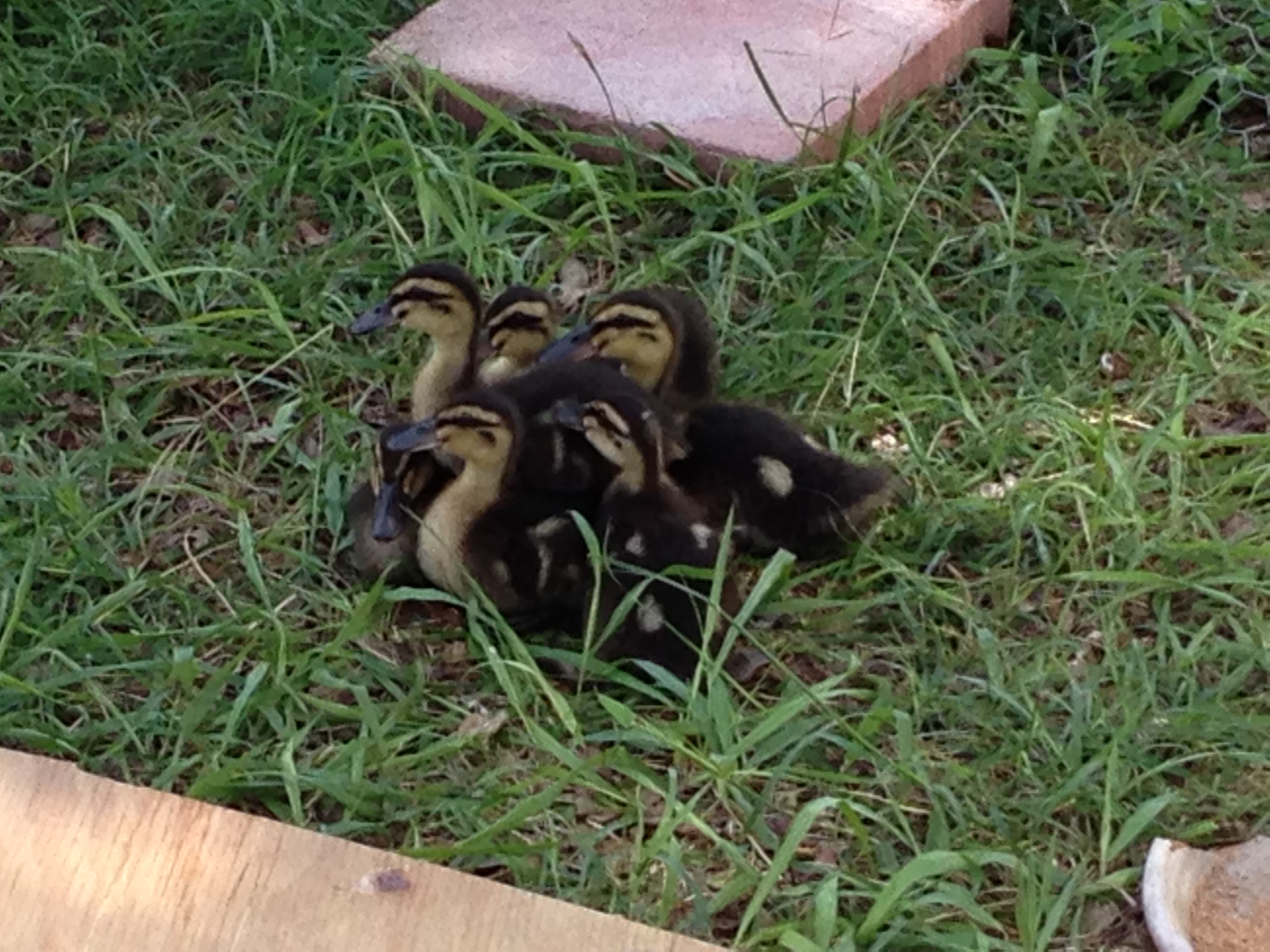
How did I become Mama Duck? Earlier this summer we and our neighbors decided to raise some Rouen ducks for our pond (known in Texas as a “stock tank” or just “tank”.) We have raised ducks before—five or six years ago– but they have all disappeared through old age or predators and we decided we would enjoy them again.

The ducks are ordered from a breeder and come via mail at one day old. The post office calls first thing in the morning…and I mean first thing, usually about 6:00 a.m….that there is a cheeping box of birds to be picked up AS SOON AS POSSIBLE.

113-1388_IMG

Our ducks, six cheeping handsful of down, lived for the first week in the laundry room in a large cardboard box. They had a heat lamp to keep them warm and we lined the box with newspaper to keep them semi-clean They are messy, smelly little things; the box needed to be cleaned daily, lined with fresh newspaper and food and water dishes refilled. Ducks like water. They really saw their water dish as a small swimming pool. Every morning about 4:30 they would begin cheeping for fresh water and food. Tom was the one who heard these early morning protestations and got up to fulfill their requests. Enough of that. The second week we moved them out to the shop and into an old poultry cage we had before used for our birds. Out of earshot and smell range (not to mention they were quickly outgrowing the box) we slept a little better.

We built a nice round chicken wire pen inside the fenced garden and filled a small wading pool for their swimming enjoyment.

IMG_1305

DSC_0167Although they were growing fast, we had to build “duck ramps” for them to be able to get into the water and we placed a rock “island” in the middle of the pool for them to rest on.

Every morning we gathered the ducks into a cardboard box and transported them to the outdoor pen. In the evening we rounded up the ducklings, after chasing them around the outdoor pen and putting them in the box to transport back to the poultry cage. (Making the outdoor pen round was not a good idea – no corners to catch them in.) They are very fast little devils! I would “quack, quack” to reassure them that it was Mama Duck, and hopefully convince them to follow me.

After the second week the ducks had outgrown the small wading pool, so we added a larger one and took down the chicken wire pen. They now have full roaming rights to the entire garden area.

IMG_1312

By the end of that week, they had the morning and evening routine down. We no longer have to transport them in a box between the garden and their night-time pen. Open the door to the shop and the cage door in the morning and I could lead the ducks out to the garden, quacking as we went. Tom says I flapped my wings, too, but I deny it.


After a few days I didn’t even have to do much as far as leading or herding. Now when we open the door to the poultry pen, out they march, in a close group, on their own.

About sundown we reverse the routine, usually following behind the ducks, as they seem to know it’s time for bed. They head straight into the shop and the evening safety of the poultry pen. A few nights ago, I was a bit late going out to bed them down and found they had already taken themselves inside for the night!

IMG_1314

As the ducks grow we may have to find a bigger swimming pool. But before too much longer they will be big enough to move down to the tank and be on their own. Rouen ducks are identical in coloring to Mallards, but unlike Mallards they cannot fly more than 20 or 30 yards. By the time they grow enough to move to the tank, they will be able to swim into the middle of the water for safety from predators.

I still “quack, quack” when I feed them daily in hopes that when they do make the move to the tank, it will only take a few “quacks” to call them up to feed. We’ll see how the transition to the tank goes. The last time we had ducks ready to move to the tank, I walked down to the tank, quacking as I went, with 6 mostly grown ducks behind me. However, I barely got back to the house when we heard them quacking at the back gate. They had not only followed me down to the tank, but evidentially thought Mama Duck wanted them to follow her home. Time will tell about these little quackers..