Category Archives: Animals on the ranch

Tragedy in the Texas Hill Country

The news of terrible flash floods in the Texas Hill Country, most notably in the Kerrville area, are now well known around the world. Many friends and family members from across the country and as far away as Australia have checked with us to be sure we are okay. For those of us who live in the Hill Country, the impact has been personal, painful, and concerning. Our ranch is only 22-miles from Kerrville. Rain totals on Friday at Medicine Spirit Ranch measured six inches on top of already saturated soil from earlier rains this week. Today, we have had almost another three inches thus far, creating flash floods. We are unable to get off our hill due to multiple flooded low water crossings. The water at the base of our hill is raging and would sweep my pickup away if I were foolish enough to attempt a crossing.

Our lives at the ranch have been only minimally impacted with our inability to ford low water crossings, cancellation of Fourth of July parades and fireworks, and concern over blow out fences where streams flow into and out of our ranch land. That is not true for many unfortunates in the Hill Country. No doubt fences are down and stock will wander. Round ups are in my future when feasible.

My major concern has been with the poor folks in Kerr County some of whom have lost their lives, houses, and property. Many people living in our area and some of our family members have had children or other relatives attend Camp Mystic in Hunt, Texas. Our local representative to Congress, August Pfluger, had two daughters at Camp Mystic who fortunately have now been evacuated.

I’ve spent time in the past on the banks of the Guadalupe River in Kerrville. People had gathered for the Fourth of July celebration and had been enjoying the festivities. At 2:30 am and in a matter of minutes the river rose 30 feet and swept away campers, cars, pets, and people. As I write this some 80 people have been declared deceased with 11 girls from Camp Mystic are still missing. The count will inevitably go up.

While living in the Texas Hill Country is idyllic, flash floods have long been a threat. The reasons for flash floods are multiple. The soil is thin in the Hill Country and retains water poorly. I’ve always been surprised the day following a good rain that the ground often will be dry. Also the hilly and rocky terrain and steep canyons cause rapid shedding of ground water into shallow creeks and gorges. The humid air from the Gulf and from the Pacific Ocean can meet a front moving down from the Great Plains and give rise to torrential rainfall. Such was the situation that has given rise to our flash floods that began three days ago.

The flash floods in the Texas Hill Country are recurring. The last big flash flood with loss of life was in 1987 when the Guadalupe River rose 27-feet in a matter of a few hours. Extreme weather has become more frequent and worse with global warming. The warming causes the air to hold increased water vapor that on meeting cooler air gives rise to torrential downpours and raging streams and rivers.

Federal, and State emergency services are at work. Even faster has been the local response. For example today our church took in countless jugs of water and many bags of personal items to distribute to the needy. These packages will leave shortly for the affected area. Our Rotary District has already established methods for donating money and plans to send many Rotarians to the flood sites for clean up purposes. Everyone seems to be mobilizing in some way to lend a hand during this tragedy. Texans are resilient and events such as these sad events give rise to uncommon cooperation and generosity.

Finally I’ll add a few random thoughts. Prior to the torrential rain, the sky took on a definite purple cast. Both Trudy and I noticed the strange color of the sky that in the past has been associated with thunderstorms, hailstorms, and tornadoes. The sky had an ethereal appearance.

Also this afternoon after checking Live Oak Creek and finding it flooding, I found an unusual number of animals roaming around the top of the hill. I saw a gray fox run across the road. This was an unusual sight to see a fox in the middle of the day. Secondly, I saw a turtle arduously crawling up the ranch road from the creek toward one of our stock tanks (read pond). It had traveled over 200 yards to that point. Finally, I spotted the largest herd of deer I’ve ever witnessed atop our hill. No doubt these animals sought high ground to escape the raging water below.

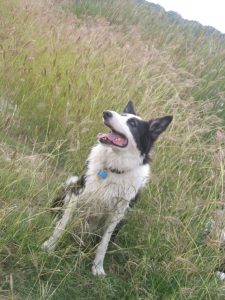
Upon returning from checking the status of the creek and immediately after spotting the large herd of white tail deer, I parked the pickup, heaved a dejected sigh, and let out the Border collies. Duke, our young Border/Aussie cross jumped out like his tail was on fire, ran across the yard, traversed several cattle guards and disappeared from sight. Without a doubt Duke decided to exercise the deer because later on his return he was panting excitedly. Well at least Duke found a bright spot for the flash floods! Somehow he had lightened my grief somewhat.

Received notice that my blog has been featured on FeedSpot as one of the top Ranch Life Blogs. I am gratified for the recognition and express my appreciation for this honor.

A Duke Reigns at Medicine Spirit Ranch

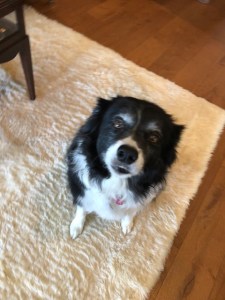
Like his royal name suggests, Duke came our home to visit and stayed and in the process anointed a painful emotional scar left by the forced departure of our earlier dog, Beau. Trudy and I had been grieving Beau’s loss for over six months when we received a phone call from our veterinarian’s office, informing us that they needed to re-home a Border collie. The dog in question had refused to stay cooped up in a small backyard located in a town some thirty miles away. The owners,the caller said, simply could no longer keep the escape artist and had given him up to Second Chances, a dog re-homing service. Would we be interested in meeting Duke? The question from the caller was the equivalent of kicking in an already opening door.

Not long after Trudy and I along with our twelve year old Border, Bella, arrived at the vet’s office where we met Duke. He was skittish but friendly. He immediately took to me, so much so that Trudy now refers to Duke as a Velcro dog. Of importance to us was Duke’s behavior toward Bella. He was curious about Bella, but in no way did he bully or harass our old, sweet, and largely blind Bella.

Duke at our first meeting at the vet’s kennel

We learned that Duke had been found wandering about the streets of Mason, Texas where he had been for an unknown length of time. He had weighed only 36 pounds when he had arrived at the vet’s office in Fredercksburg but had gained several additional pounds there. Evidently he had eaten poorly for some time while on the streets or at his prior home. His name had been given by his prior human parents so that we thought it best to maintain it. He was estimated to be around a year old. Duke seemed grateful for new parents, was housebroken, and had been neutered. The decision to keep Duke proved easy. Duke would come live with us at Medicine Spirit Ranch where he could run free.

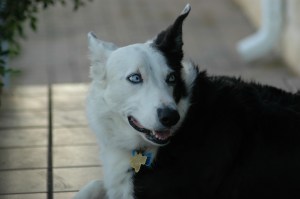
On closer inspection Duke had a slightly different appearance from our earlier Border collies. He had larger and floppier ears that have proved an endearing feature. Also he sported brown patches over his eyes that we refer to as his eyebrows, something not seen in Border collies. Trudy through a GOOGLE search determined that his appearance fit perfectly for a Border collie/Australian shepherd cross.

Duke’s temperament is that of our prior Border collies, likely because Aussies and Borders are so closely related. He quickly learns tricks, possesses incredible energy, loves to chase jack rabbits and deer, and is protective of his human family. He quickly learns patterns of behavior such as when we dress differently to leave the ranch, he will lose interest. He also loves to take walks about the ranch, ranging far ahead or behind but returning quickly when called. Thus far he has not had close contact with our cattle but shows high interest in the large animals when staring at them through the windshield of the pickup. Once fully settled in, Duke’s herding prowess will be tested when the need arises to move the cattle to different pastures.

To Trudy’s credit, she took Duke for a six week obedience school. He shined in the class, quickly learning the stay, heel, sit, and down commands. He also largely ignored the twenty other dogs. His initial ravenous appetite has settled somewhat, but Duke has gained up to around fifty pounds and has added additional height as well.

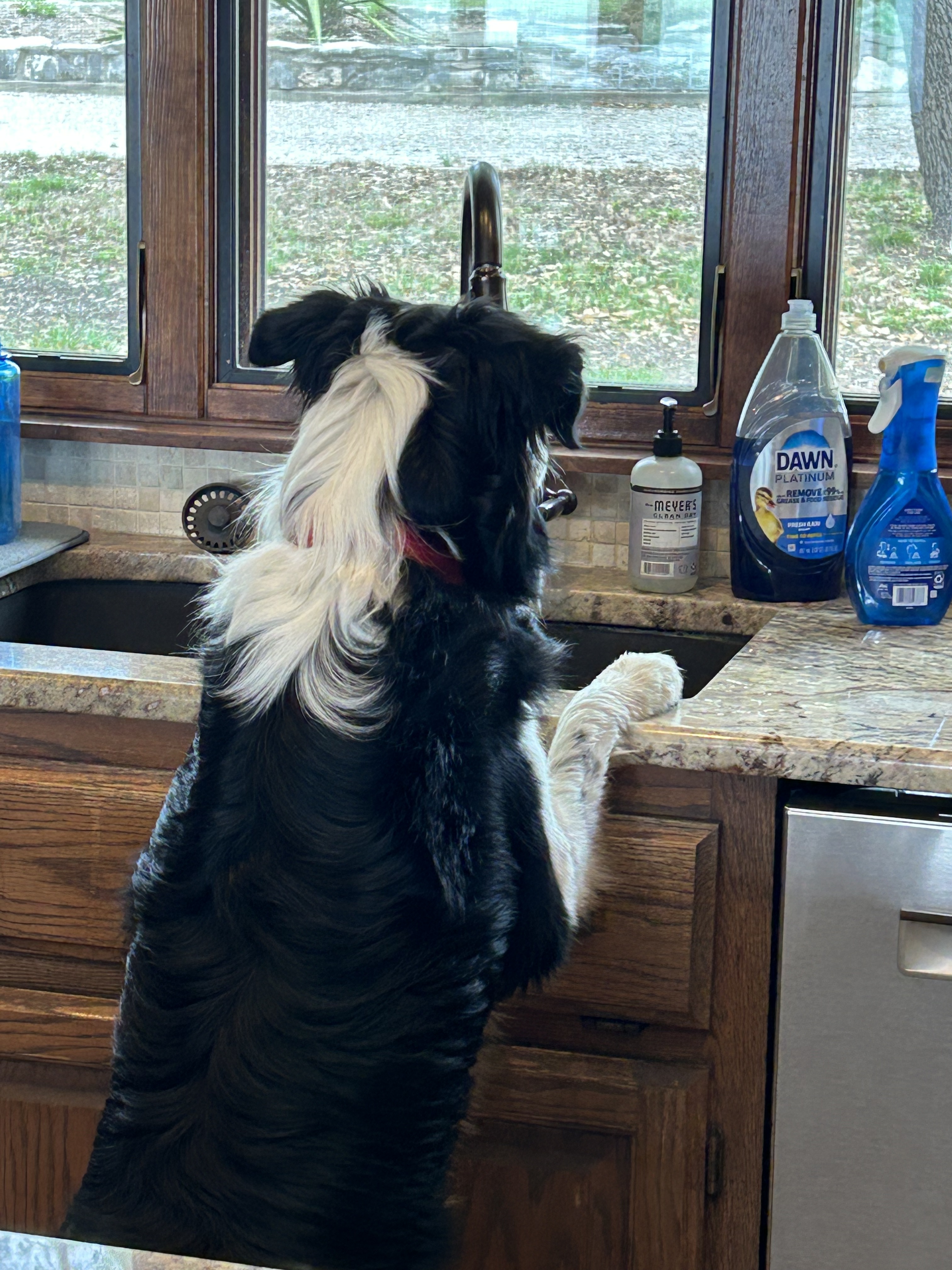
Perhaps his greatest pleasures have been two fold. First, he loves to stand on the sink cabinet and watch the birds outside at the bird feeders. He watches them intently, never barking or shooing them.

Secondly, he loves to chase armadillos. For the most part, he simply enjoys herding them. On rare occasion he has grabbed the armadillo in his large mouth and carried it about as a trophy. But Duke has usually released them on command. Unfortunately, he has killed a few armadillos but for the most part seems content to chase, herd, and scare them back into their burrows. For reasons I know not, armadillos are plentiful on our ranch this year. Duke routinely will chase from four to ten on every walk.

Earlier today after Duke prodded me to take a walk on a blustery, cold day, Duke developed great interest near a large water drainage pip running under the “road” on our ranch. I approached to see what had captured his attention. As I peaked over the edge of the hill, I saw a large snake that I estimated to be five to six feet long. It was silvery in color. I became alarmed when it reared up, cobra-like, flicking out his tongue at Duke and me. Its head appeared far too triangular for my satisfaction, although it did not fit the description of any of the four poisonous snakes that live in Texas. On command Duke backed off the snake. The large snake dropped back to the ground and went one way, and Duke and I went the other.

I am in awe of Duke’s agility and speed. To watch him bound across a field of tall grass, zigging and zagging, and bouncing upward while searching for armadillos gives me pleasure. His kinetic energy is nature’s poetry. I find myself recalling my youth when I too could run virtually effortlessness. To see his keen look, excitement, and with his tongue dangling allows me vicariously to enjoy his athleticism and my own long lost ability to run. How often human dog parents must enjoy the abilities of their pets or recognize the modeling of various behaviors common to mankind. We have a truly special bond with our dogs.

So welcome to the ranch Duke. Make yourself comfortable. We have a lot of ground to cover.

If you have not had the chance to read my latest book, Hitler’s Maladies and Their Impact on World War II: A Behavioral Neurologist’s View (Texas Tech University Press), I invite you to do so. The book explores an important aspect of the Hitler story and World War II that has not been well studied. Many of Hitler’s catastrophic errors including the premature invasion of the Soviet Union in June 1941, the slowness of German forces to counterattack at the Battle of Normandy in 1944, and the highly risky Battle of the Bulge in late 1944 into 1945, can be better understood, knowing the sizeable impact that Hitler’s physical and mental conditions had on these vital battles.

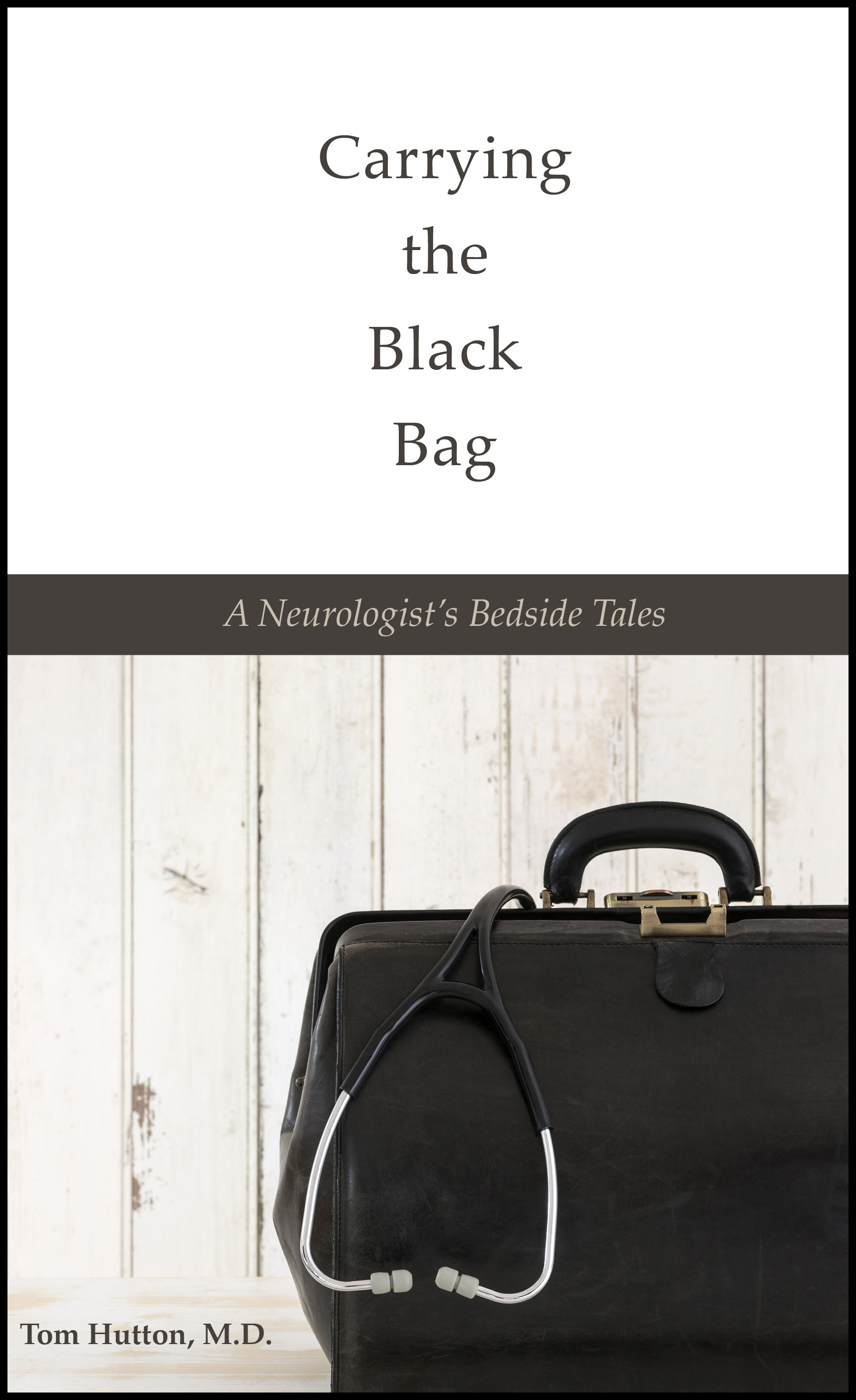
Also, consider picking up a copy of my earlier book, Carrying The Black Bag: A Neurologist’s Bedside Tales (Texas Tech University Press). Please join me on my personal journey as a physician and meet my patients whose reservoirs of courage, perseverance, and struggles to achieve balance for their disrupted lives provide the foundation for this book. But step closely, as often they speak with low and muffled voices, but voices that nonetheless ring loudly with humanity, love, and most of all, courage.

A Sad Day at the Ranch

Over the years I have expressed moments of great joy at Medicine Spirit Ranch and a few instances of deep sadness. Today, I express the latter. Beau our young Border collie who had such great promise as a herder and with whom we fell in love over his antics, is leaving us.

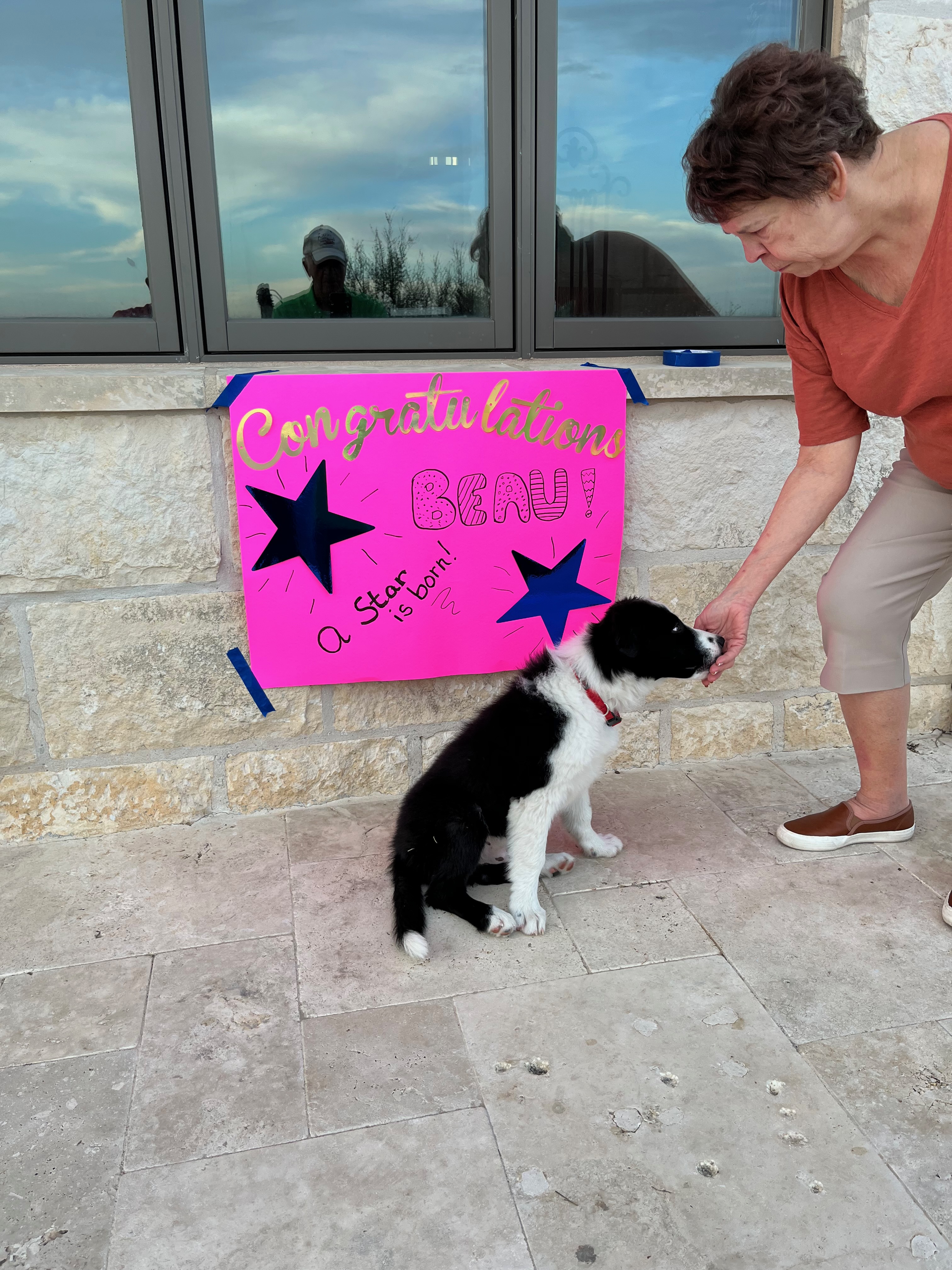
Beau showing off his star form after making a Purina One Commercial

You see, Beau began to pick up the bad habit of biting not only our old and virtually blind Bella, but also Trudy and me. Trudy sustained a wound to her hand that required five stitches while I have received too many bites to count. Yesterday he sank his teeth deeply into the fleshy part of my right hand. I bled extensively and it was quite painful. His biting is getting worse and increasing in frequency.

Why Beau enters into a blind rage that leads to his biting, is difficult to say. In part he will growl to protect his food, his toys, and even his people. Resource protection is not all that unusual. But at other times he curls his lip, growls, and attacks ferociously because he is willful to keep his position in the truck or because he demands to chase cows or horses or for other reasons known only to him. His enthusiasm is welcomed, but his rage and serious biting are intolerable. It is as if he has a screw loose.

Beau has been through obedience school. Other than a single instance in which he growled at another dog, Beau proved the star of his class. No great surprise as Border collies usually are the stars in obedience class. We also have been working with a wonderful dog trainer. For the longest time, Beau hid his aggressive tendencies from her but last week his rage showed forth in front of the dog trainer. Yvonne, the dog trainer, was taken aback. She now says that she fears Beau and tells us his behavior will likely only worsen. She advised we contact Beau’s breeder and ask if similar examples exist in their other dogs and whether she would take him back.

The breeder shared that no other examples of such aggressive behavior have occurred among her dogs. The breeder agreed to take Beau back. The alternative for us was to put Beau down, a move that I cannot yet carry out. We know the breeder likely will see similar bad behavior and that Beau has only a small chance of living much longer. We are heartbroken.

I don’t recall any of our Border collies having as much instinct for herding as Beau. Likewise, I’ve never seen any of our prior four Border collies become aggressive or bite.

Trudy and I feel like dog rearing failures. We’ve done everything our veterinarian and dog trainer have advised. Beau was neutered without any appreciable change in his behavior. Doggie downers have been ruled out by our vet. We have worked extensively with him on his decorum and on various types of training. He is well cared for and never abused. He is deeply loved. So why the rare but very real aggression?

I would not be able to live with myself if Beau were to bite a child or another person. I feel we have no good options left.

The breeder has a number of Border collies and a large working cattle ranch. Perhaps, just perhaps a change of environment will bring about a favorable change in Beau’s behavior. He will become an outside dog living much of his time in a dog run. Will this extend his life? Well, I can hope…

This evening we make the transfer. My nearly constant ranch companion for the last year will leave us and take with him a little of my heart.

Bandit Our First Border Collie- Part 5: Intruder

While driving across my ranch one early morning several months following retirement, I discovered my neighbor’s exceptionally large White Park bull standing amidst my small, young heifers. This jarring discovery became my first true ranch emergency and called for greater skill than than this neophyte rancher possessed at the time.

My inexperienced Border collies, Bandit and Mollie, surprisingly resolved this frightening situation for me, and by so doing revealed previously well hidden talents. The incident also provided me with a greater understanding of Bandit’s destructive and irritating behavior while feeling restricted in a city.

Bandit represents what can happen to anyone who is poorly suited for a particular place and then becomes transformed when moved to a more conducive environment.

This is a fitting final story about Bandit for this blog series, as he affected our lives so greatly. His story may inspire humans other than ourselves to seek changes in their lives and environments in which they have failed to bloom.


Towering above my black cows stood a giant, ghostly white bull. Its massive white head was accented by black ears, nose, and black-rimmed eyes. The bull was thick, muscular and three times the size of my young, first time heifers.

“Oh damn,” I murmured. “Now what?”

I  glanced around for my black Angus bull that I had recently leased to breed my first time heifers, but found it nowhere in sight. I realized that if this white behemoth were to breed my heifers the offspring would be much too large to deliver, putting the lives of my young heifers at risk. I felt a state of near panic rising up within me. The welfare of my young cows depended on me- the clueless city guy who was brand new to cattle ranching.

 After shoving two intensely interested Border collies deep within the truck, I opened the door and bailed out of my pickup. If freed I feared my two rookie collies might cause a stampede, leaving either the dogs or the cattle as casualties. I soon spotted a mangled section of fence not far from our old and falling down pole barn. Barbed wire dangled uselessly from broken cedar posts that lay scattered on the ground. The gouged and scraped dirt beneath the broken fence identified where the intruding bull had entered my ranch.

Mollie and Buddy want to help

Bulls are territorial animals. My herd bull would have confronted the the intruding bull at the perimeter fence and would have violently defended his domain. I instinctively knew that my small, leased Angus bull  would have had no more chance to repel the larger white bull, than would a destroyer pitted against a battleship.

I picked up a small limb from the ground and scuttled in the direction of the herd as fast as poorly conditioned legs would allow. My hand repeatedly gripped the rough bark of the stick, milking the stick for a plan to expel the intruding bull.

With my attention fixed on the bull, I failed to notice an exposed Live Oak root. I caught my foot on it, lost my balance, lurched forward, and struck the ground hard. My right hip absorbed the initial blow, causing a searing pain to explode down my leg and into my low back. My head next hit, smacking into a cow patty. As I pushed myself up from the ground, the pungent smell of cow dung filled my nostrils. Rage welled up within me. I scraped dung from cheek and glasses, regained my balance, and limped onward; anger supreme over pain. By then I had lost all semblance of common sense.

I shrieked, “I’m getting you, you trespasser! Can’t sneak onto my ranch!”

What I expected to accomplish with my limp along, futile advance was unclear, but lacking a plan to remove the bull, bravado was all I could muster. The bull threatened my small kingdom and challenged my role as protector of these young cows. To be sure, bulls were not the only territorial animals on the Hutton ranch that day.

My herd complete with the offending bull grazed in a pasture nearby the cattle pens. The herd stood a hundred yards removed from my now abandoned pickup, providing a degree of separation from my dogs, but I could still hear their barking coming from within the truck .

When I drew within twenty yards of the bull, the great white bull raised its massive head and slowly turned toward me. Its baleful, unblinking eyes fixed on me; a stare so powerful and so frightening that it stopped my movement. The bull’s coal black eyes seemed to project malevolence. I observed the immense thickness of his neck, thicker than a man’s chest. After taking a deep breath and steeling my resolve, I crabbed forward, all the time visually measuring the distance to the relative safety of the cattle pens in the event that the bull were to charge.

The bull lowered its massive head and slowly scraped his enormous hoof along the ground, throwing dirt up under its massive belly. This aggressive display again momentarily halted my forward progress. I observed how the bull’s dirt-caked nose dripped and how drool streamed from his maw. I could hear the bull’s low-pitched sounds, as if coming from a bass speaker, but so deep it was hard to imagine the sounds emanating from an animal rather than some mythological beast in a subterranean cavern. Evolution designed this warning to frighten away other bulls, predators, and foolish, neophyte ranchers like me.

Mercifully, the bull did not charge, leaving me to share my story. Perhaps surprised at seeing a yelling, flailing, limp along man, carrying but a small stick, he chose instead to fall back. The bull likely did not have fear me as much as viewing me as an inconvenience, like a pestering swarm of  flies.

Over the next twenty minutes, I attempted without success to separate the intruding bull from my herd. Despite repeated efforts, the bull stubbornly remained among my heifers. Despite the coolness of the morning, I soon found myself sweating and felt my shirt sticking to my back. My lungs began to burn, and more than once I was forced to bend over with hands on knees to recover from my efforts. My limited physical activity of a physician had certainly not prepared me for such physical exertion.

Once, I briefly separated the bull from the heifers, only to have him circle around me and quickly rejoin the cows. I felt irritated and and even a little embarrassed by my failure. Bulls, I learned, moved surprisingly fast to be such large animals.

Defeated, exhausted, and still smarting from my fall, I limped back toward my pickup. By then the earlier rosy glow above the eastern hills had developed into a breaking dawn. But the additional light provided me no further illumination as to how to rid the bull from the ranch. I turned toward the bull in a parting gesture- in case any neighbors across the fence happened to be watching- and yelled, “Just you wait, you’ll make the biggest meatloaf in history, make the Guinness Book of Records!”

Despite my bluster, I felt diminished and outsmarted by this roving ruminant. My boots scraped along the ground. I felt embarrassed- with my many years of education, outwitted and outrun by a dumb bovine.

While approaching the pickup, I heard howling from within it. When I raised my eyes, I saw my pickup visibly rocking. Bandit and Mollie’s wailing seemed to demand their release. Mollie had by then jumped over the seat and careened from side to side, banging forcibly into the car doors. She used her body like a small battering ram in her attempt to free herself.
Did someone say cows?

Bandit with his well practiced destructive ways had meanwhile shredded the back seat. Stuffing from the macerated seat had spread throughout the cab and the white seat stuffing made the interior resemble a snowstorm. A tuft of stuffing even crowned Bandit’s head like snow atop a mountain peak. Momentarily I stood dumbfounded, looking at the swaying truck and the dog-inspired mayhem within. I learned yet another painful ranch lesson- never leave the Borders in the pickup with nearby cows.

It became ever so clear the dogs demanded their opportunity at moving the bull. But realistically how could small, inexperienced dogs help against this giant marauder? I thought Bandit and Mollie could be hurt or even killed. The risk was too great to consider. I felt anguish, torn by fear for my dogs yet tormented by my responsibility for the young heifers and lack of a viable plan to evict the bull. Good reasons existed for not releasing the dogs, as they could be kicked, stomped, or butted by the giant bull. Their frenzied desire to participate in their Border collie birthright, however,  struck me as oddly compelling, and I had no better option.

I grasped the door handle but stood frozen by indecision. The dogs could do no worse than my sloppy misadventure, having driven the intruder still farther from the broken fence line.

Peering through the window of the pickup, I asked, “You want to help?”

In response deeply emotive howls erupted from within. Their tails beat a staccato against the seats, their eyes burned with an intensity not previously seen. Their bodies quivered. I pushed the button on the door handle, cracked the truck door ever so slightly, only to have it blown open, as two yelping Border collies erupted from the pickup like two demons escaping Hades.

“Go get the bull! Get him!” I yelled after them, my voice larded with desperation.

The dogs, like low flying cruise missiles, sped off in the direction of the intruding bull.
They raced across the pasture. Mollie, the younger and faster of the two, reached the bull first. As she neared Mollie cut her stride, dropped her head, eyed the bull, and began slowly to circle him. When an opening arose, Mollie darted between the bull and the cows. She crouched down, awaiting Bandit’s arrival. The bull lowered its head and watched Mollie intently.

Bandit’s appearance was not long in coming and consisted of a headlong, yapping, suicidal charge straight at the bull. His kamikaze-like onslaught caused the giant bovine to spin around to face his new attacker. In the last instant, Bandit veered off, barely escaping the bull’s head butt. This diversion of the bull’s attention provided Mollie the opportunity to surge forth and bite at the bull’s hind legs.

The bull appeared surprised and then perturbed by the double onslaught. He twisted his massive body around to determine the source of the bite and momentarily focused his malice on Mollie. He clattered a huge, hoof over the rocky soil. He bellowed a deeply pitched warning. The bull then retaliated with several ferocious kicks that narrowly missed my circling dogs. My spirits sank. Had I been foolish to release my dogs? A dog’s skull would be crushed by landing a single kick from this massive bovine.

To my surprise, my usually docile pets had transformed into snarling, vicious animals. They fixed wolf-like stares on the bull. They snarled, revealing gleaming white canines. My fear for my dogs’ safety became mixed with incredulity at their agility and bravery. Mollie and Bandit repeatedly darted at the bull, dodging his flying hooves. The efforts of the giant bull kicked up a dust cloud that at times obscured my view of the dogs. I felt loathing for this bull. He threatened the well-being of my heifers but now sought to kill my rookie herders. My heart pounded in my chest.

The bull shifted his glare between Bandit and Mollie, his eyes never leaving my determined dogs. Then the bull lifted his head and, surprisingly, took a tentative step backward. The dogs, sensing his hesitancy, stepped up their attacks as if choreographed, demonstrating a fury that left the bull appearing bewildered. While the dogs appeared to be dodging and diving haphazardly, it became apparent their efforts were forcing the bull to retreat.

By then I had arrived close enough to the mêlée to smell the musky aroma of the bull. I stationed myself on the opposite side of the bull from the downed fence. I brandished my stick- a stick that in the presence of the dogs drew increased respect. Together the dogs and I edged the bull slowly across the pasture toward the distant breech.

After several more minutes, we managed to move the bull about a hundred yards away from the herd. It was when circling from opposite directions that the unexpected happened. The dogs with eyes fixed on the bull collided full force after running into each other. This sent both dogs sprawling in the dirt. For an instant, both Borders lay almost motionless on the ground, legs splayed awkwardly.

On seeing this unexpected opportunity, the bull whirled around and reversed his course and headed back toward the heifers. He swept by me, ignoring my windmilling arms, leaving me standing helpless in his lumbering wake. He had thundered by me so close that I smelled his rank odor and could have reached out and touched his broad back. The dogs quickly reacted, regaining their feet. Bandit stretched a painful limb, as if testing it. Soon both dogs were again afoot and raced back into the fight.

Mollie closed to a spot directly behind the bull where she bit and grasped his tail. In the next instant, I saw Mollie, attached Bulldog-style, rocketing behind the galloping bull looking like a miniature black and white caboose attached to a runaway locomotive. When the bull slowed, Bandit charged and sensing an opportunity, bit down on his broad nose, leaving behind a bloody gash. Bandit’s attack temporarily distracted the bull from the tenacious tail-grasping Mollie.

The bull, now bleeding from his nose, appeared flummoxed. He stepped away from Bandit and then proceeded to buck like a rodeo bull. By so doing the bull’s tail whip-like flung Mollie high into the air. She fell to the ground some twenty feet away, her back awkwardly pressed against a water trough.

My heart sank. Was she hurt? Would she be all right?

As if to answer, Mollie sprang up, shook herself, and raced back across the dusty paddock toward the bull. The collies outran the bull and placed themselves between the bull and herd. At the dogs’ urging the bull again turned back and with collies in close pursuit moved toward the broken fence. He eventually began to run directly for the broken fence line. The dogs, arcing from side to side trailed the trundling, ghost-like bull, herding him always onward.
Where did the bull go?

The bull thundered by the pickup, circled around the corrugated aluminum barn, and crossed the caliche ranch road with his giant hooves causing crunching sounds. The bull then in full gallop with an occasional desultory kick at the pursuing dogs headed for the broken fence and to safety from the pursuing dogs. Despite my best efforts, I fell behind the faster moving bull and dogs. But I was able to view the bull as he jumped through the yawning breach and into the pasture of the neighboring ranch.

I arrived at the breach in the fence where I found Bandit and Mollie pacing like two guard sentries. Both gazed in the direction of the disappearing marauder. I collapsed to my knees, sucking in huge quantities of air. I threw my arms around their furry necks, hugged them fiercely, and buried my face in their pungent, silky coats. Bandit and Mollie had accomplished what only minutes before had seemed utterly impossible.

Bandit, happy at last at the ranch where he never again chewed up furniture

From deep within these collies had come an instinct to separate the foreign bull from the herd and to drive him to the broken fence line. Moments before the dogs had acted ferociously, but they had transformed again into my pets. Their eyes still shone and tongues dangled haphazardly. Bandit and Mollie seemed to comprehend the magnitude of their accomplishment and appeared alive in a way I had never before witnessed.

Still too winded to speak, I embraced my incredible dogs. I scratched their ears. I hugged their necks I feet the softness of their fur against my cheeks. Raspy tongues licked my face and ears. Pride swelled within me. I felt exultant, as my burden had suddenly and miraculously been lifted. Bandit and Mollie, my two courageous Border collies, had provided a present, as dear in their giving as in my receiving.

Eventually my breathing became more normal and I was able to speak. I cupped their warm, damp muzzles in my hands. The dogs stared back at me, their eyes gleaming. They appeared expectant. With my first words, I uttered the time honored, but ever so parsimonious Border collie congratulation.

”That’ll do Bandit.”
“That’ll do Mollie.”

If you have not had the chance to read my latest book, Hitler’s Maladies and Their Impact on World War II: A Behavioral Neurologist’s View (Texas Tech University Press), I invite you to do so. The book explores an important aspect of the Hitler story and World War II that has not been well studied. Many of Hitler’s catastrophic errors including the premature invasion of the Soviet Union in June 1941, the slowness of German forces to counterattack at the Battle of Normandy in 1944, and the highly risky Battle of the Bulge in late 1944 into 1945, can be better understood, knowing the sizeable impact that Hitler’s physical and mental conditions had on these vital battles.

Also, consider picking up a copy of my earlier book, Carrying The Black Bag: A Neurologist’s Bedside Tales (Texas Tech University Press). Please join me on my personal journey as a physician and meet my patients whose reservoirs of courage, perseverance, and struggles to achieve balance for their disrupted lives provide the foundation for this book. But step closely, as often they speak with low and muffled voices, but voices that nonetheless ring loudly with humanity, love, and most of all, courage.

Brief Observations on Turtles

Over the years I have written about many different types of animals on the ranch. Never before have I written about turtles. Recent observations that proved surprising to me compel me to share two observations about red eared sliders.

During my morning feeding rounds that include stops to feed fish at the stocked tanks, I’ve noticed an increasing number of turtles. The increase in the number of turtles may relate to the drought we are currently suffering. As the fish diminish, the Red-eared sliders increase in number.

This is what one looks like (not my picture, taken from internet)

I’ve noticed the turtles hear my approach and a large number of them begin paddling toward the shore. Surprisingly, they lately have always had mud on their backs. I assume the turtles are burrowing down into the mud as a survival tactic during the drought. In any event they sense my approach and have learned that I am there to spread fish food. They aggressively compete for the fish food.

The more surprising aspect has been that the turtles, at least the most adventuresome among them, have begun to crawl out onto the bank and literally next to my feet. I throw or drop fish food that they readily devour. Now who would have ever guessed that turtles would chase toward a person with a food bucket? They feed aggressively and seem to recognize me on my approach.

Below you can see my shadow with camera at the ready, snapping pictures of the approaching Red-eared sliders. A curious Survivor Duck stands by observing.

Even more surprising the other day I came upon one turtle that was upended. The turtle lay on its back struggling to right itself. I watched for several minutes and could tell the turtle was having no success in righting itself. What happened next truly surprised me. Now Red-eared turtles are not supposed to be social. They largely ignore one another.

In this case of the upended turtle another Red-eared slider crawled up next to the upended turtle and began to pressure upward with its snout against the upended turtle’s shell in an attempt to right it. Imagine, a turtle coming to the assistance of another turtle?

After several unsuccessful attempts I approached and righted the upended turtle. It quickly scampered back into the pond.

To my surprise I learned that these Red-eared sliders sensed my approach with food and came begging. Even more surprising was when I observed one turtle come to the rescue of the upended turtle. I suppose animals of the same species will sometimes assist another. And of course examples exist where animals of different species will come to the assistance of an animal not of their own species. These observations I thought sufficient to add to this blog.

Beware The Rooster

While living in the country and raising large animals, I have experienced many ways to become injured. For example I’ve sustained a broken arm after being pitched from a horse and received serious whole body bruising after being run over several times by a mad mama cow and firmly planted in a barbed wire fence. Nevertheless, a friend from Lubbock recently visited with what I thought was a novel animal-inflicted injury.

To back up a bit, our friend Judy Wilkins decided to raise chickens in her backyard in Lubbock. Truly fresh eggs taste much better than store bought ones, making her desire to raise backyard chickens understandable. However with the passage of time, one of the baby chicks that she had bought turned out to be a rooster rather than a hen. I’m sure mistakes can easily be made when sexing baby chicks.

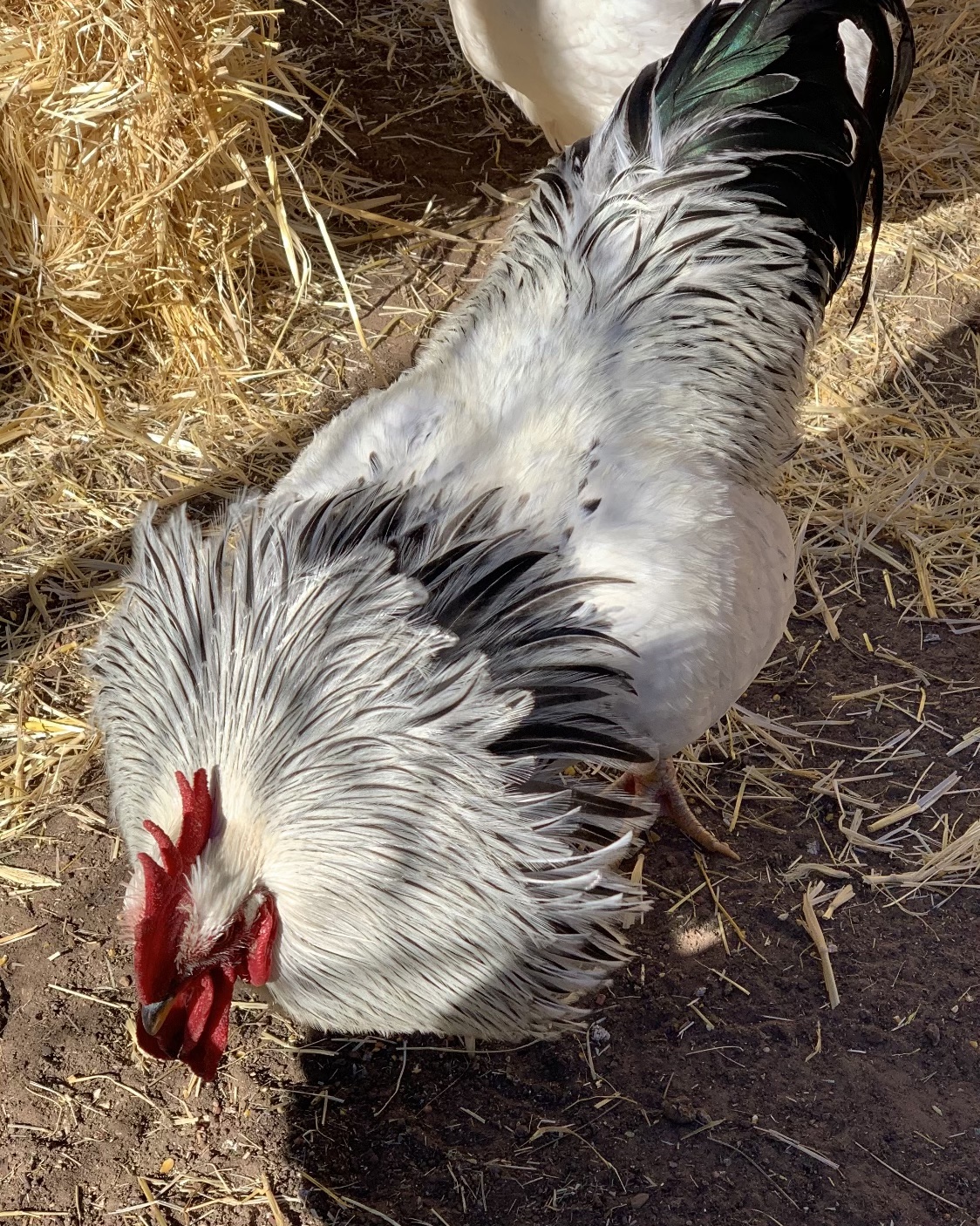
Speedy the Rooster all grown up

The rooster had a pleasing crowing sound during the morning, and Judy decided to keep him for its local color and audio value. What else would a nice civilized lady like Judy do after all, certainly not do away with the animal by making him into a chicken dinner. She named the rooster, Speedy and kept him with her egg laying hens. And a handsome but scheming rooster he had become.

Apparently Speedy as he became larger became increasingly aggressive. Various efforts were made to socialize the bird such as petting and scolding it. But all efforts by the nice and patient Judy and her friends met with very limited success. The rooster proved incorrigible but hope sprung eternal. Speedy became aggressive in “protecting” his hens, flapping and squawking when people entered the chicken coup.

Speedy adopting his aggressive stance

One lovely summer morning Judy entered her chicken coop to retrieve several farm fresh eggs to make into a tasty breakfast dish. In as quick as a wink, Speedy came out of nowhere and attacked Judy’s exposed leg. Like a sewing machine, Speedy left a series of vertical, triangular wounds down her calf as precise and as straight as a seam in a fine garment and for a distance of over half a foot. The blitzkrieg attack lasted brief moments but the damage had been done and proved the aptness of the rooster’s name. Soon blood gushed from Judy’s multiple rooster-inspired wounds and flowed down her leg. I suspect about this time, Judy had lost her inkling for an egg breakfast, although I wonder if a rooster dinner might at some point have crossed her mind.

Regrettably, due to my poor photographic skills the picture I made of Judy’s heavily pecked leg has been lost. Perhaps this omission is just as well. Needless to say, the rooster’s grizzly revenge was not a pretty sight. Judy’s patience proved exhausted following the rooster attack and Speedy was, ahem, re-homed.

I mention this surprising incident and injury in case you might be considering raising chickens to enjoy the delights of farm fresh eggs. While the eggs are tasty and tempting- Beware the rooster!

Winter At The Ranch

Winter at Medicine Spirit Ranch moves at a slower pace than  the rest of the year. The fields no longer require fertilizing, cutting grass, baling, and hauling hay. Likewise major repairs of the barns, major fencing changes, and replacing gates or cattle guards await better weather.

A few jobs increase during the winter. The feeding of the stock requires range cubes be fed daily to the cattle rather than  only a couple of days a week when the grass is green. We also provide large bales of hay typically three times a week via a tractor that requires a little time.

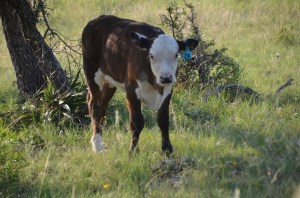
Two Black Baldy cows with their calves

Otherwise cedar chopping increases during the winter as the green cedar is easier to spot among the brown grass, and fences always need a bit of mending.

Otherwise winter tasks are largely determined by what most needs to be addressed. Some items simply are stumbled upon during morning rounds. For example today I stumbled across the carcass of a dead Black Baldy cow located at an infrequently traveled portion of my ranch. I had missed her late last year but never found evidence of her. I have no idea how or why she died but am especially perplexed because of losing two other cows last year. Only once before have I lost a cow and that was when her hind legs became paralyzed while attempting to give birth to a particularly large calf. She unfortunately failed to respond to the passage of time and treatment. Three cows dying in a year made for a very bad year indeed.

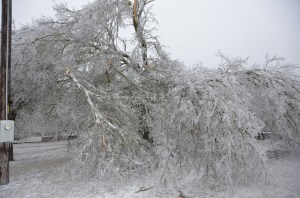
Last year also saw dreaded ice storm Uri from which we are still recovering. It was amazing the number of downed limbs and trees that resulted and that continue to litter parts of my ranch. I had hoped we would have the freakish mess cleaned up within a year, but my hope will go unrealized. There simply remains too much damage for us to clean up anytime soon.

Ice storm Uri left downed trees and limbs across our ranch

I remain hopeful that 2022 will prove better than last year. Surely the problems encountered in 2021 won’t recur. Reasons for hope are abundant. I have some outstanding calves ready to go to market and prices are good. We also are making good progress clearing the new land purchased last May. Hopefully, we will replace the previous bad fence along the county road, will have re-seeded the land, and have sufficient rain to grow a nice stand of grass. I also remain hopeful that we may finally see Covid-19 in the rear view mirror. Here’s hoping for a better future!

In addition the Great Blue Heron greets me almost daily. As previously noted in several blog pieces, the Great Blue Heron promises good fortune, and its presence adds to my optimism about the coming year.

A Great Blue Heron. Not my heron but representative

I wish you a wonderful 2022

Making Smoke

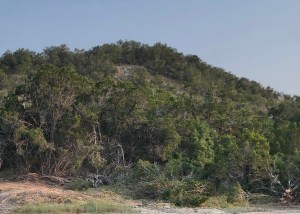
These past weeks we’re been making smoke- a lot of it. In May we obtained a piece of raw land adjacent to our Hidden Falls Ranch. I claimed at the time when we closed on the property that it was the WORST piece of property in the county. My less than flattering description resulted from the intensely thick cedar that covered it which had choked out the grass necessary for raising cattle. Being an eternal optimist, I secretly believed that with lots of TLC and bulldozer clearing, the property had the potential to return to  the pristine grazing land that once it had been.

Thick foliage covers the land, consisting largely of cedar

We have now spent three months clearing the land. Two part-time bulldozer operators have been working. The land is opening up dramatically and I may yet realize my fondest hopes. To my knowledge, the land has never been cleared. For centuries this land had few trees and consisted of rolling prairies with native grasses. The land changed over the decades due to over grazing and an influx of non-native trees. During the cattle drives from south Texas in the 1800s the mesquite and cedar (actually two varieties of Juniper) spread into our area and in some instances even choked out the native Live Oaks, Cottonwood, and Pecan trees. What is now our new piece of land became forested with thick cedar groves.  By doing so, the cedar sucked up vast amounts of precious water and the thick canopy prevented grass from growing. For at least the last 50-75 years, the land was used solely for hunting purposes that did not require clearing of the land.

My wish is to return the land to the prime grazing land that it once was. With luck and good weather we may finish clearing the land by the end of the year, and then spread native grass seed, and have the land in shape for grazing within the next several years.

Along with the bulldozing has come a new animal on the ranch. Meet Dozier Dog. One of the bulldozer operators comes to work with his Australian shepherd. To my amazement, the dog rides in the bulldozer with Coy, moving side to side in the bulldozer to observe its progress. The dog’s name is actually Remy, but to me he is “Dozer dog.” Despite the racket of the bulldozing, loud crackint of the trees being felled, and the ever present dust, Dozer dog rides happily along intently checking on the progress being made. Apparently the only dislike he has is going up very steep slopes and having branches fall over and into the cab of the bulldozer. Can’t say that I blame Dozer dog for disliking falling branches or steep climbs. At these times Remy seems content to wait in the bed of the pickup.

One outcome from dozing so many cedar trees has been huge piles of upended trees. Over the last several weeks and for months in the future, we will be burning the piles of trees and limbs. Hence, we are making lots of smoke. Vast plumes of gray smoke coil into the sky along with a scattering of ash over a wide area The acreage is opening up and revealing lovely nascent grazing land and striking vistas. We light the fires in the morning and burn huge piles of cedar all day. We take precautions to limit the spread of the fire by weed whipping around the burn pile, and stand  by with rakes, shovels, and large water containers to deal with any unwanted spread. So far, so good. The bulldozer pushes trees and limbs that are standing in piles nearby. All has gone well thus far.

I’ve been asked by friends who have moved from cities to the countryside whether a permit is required in order to burn. The answer is no so long as the county doesn’t have a burn ban in place. It is assumed that caution will be used that to me means low wind and wet conditions.

Bella: Hey, I don’t like another dog on the ranch. I want all the attention

In case you haven’t read it, consider picking up a copy of my book, Carrying The Black Bag: A Neurologist’s Bedside Tales. It is a heartwarming read about some terrific people with neurological disorders who teach lessons about love, humor, and especially courage. It is available via Amazon or your favorite bookstore and can be ordered as a traditional book or as an e-book.

An Unusual Visitor On The Ranch

While searching for a lost cow the other day, I came across a sight that caused me to make a classic double take. Before me stood a large Axis deer with a truly impressive set of horns. I had never previously seen an Axis buck or any other Axis deer on my ranch. These deer also go by the name of Chital which means spotted in Hindi. Indeed the spots on the adult Axis deer make them distinctive as do the impressive horns on the bucks.

Our Unusual Visitor On The Ranch


The buck I spotted didn’t appear to be afraid of me or of the truck I was driving. He walked calmly by in front of me, as if searching. I had heard that Axis deer did not jump fences (not true) and wondered how in the world he found his way into my pasture. This surprising visitor caused me to research the topic which I found interesting enough to share with you, the reader.

Axis deer were introduced into the Hill Country of Texas in the 1930s as an exotic animal for hunters. They also exist in parts of Australia but the largest populations exist in the Asian subcontinent. This variety of deer originates from India but found the Texas Hill Country to their liking. The terrain in the Hill Country is similar to that from whence they came. It did not take long for Axis deer to escape from the hunting ranches in Texas and populate this area. Axis now compete with our native White Tail deer.

Axis males are from 150 to 250 pounds and are about the same size as White Tail deer. Nevertheless, when meeting at a feeder, the Axis deer will run off the White Tail deer. White Tail and Axis do not interbreed given that they represent different species. Axis deer browse and graze and live in herds typically up to about fifteen individuals. They tend to vocalize much like an elk although not quite as loud.

Many Axis deer in the Hill Country were killed by the severe ice storm experienced last winter (see previous  blog piece for description and pictures). Obviously this big boy escaped harm which may explain why he is wandering about alone and perhaps searching for a herd of Axis deer to join. The ice storm may be one of the rare risks in Texas for this species of deer. We have no wolves in the Hill Country and mountain lions are fairly rare. Packs of coyotes may present a risk for Axis deer, as they do for White Tail deer.

The meat from Axis deer is said to be the tastiest of any wild game. Also being an exotic, no season exists for them and they can be hunted anytime. The open season for Axis deer is like that for feral hogs who are far more damaging to property and fences. The general advice has been to shoot Axis deer, as they are slowly out competing our native White Tail population. Actually we are so over populated with deer in the Hill Country that the hunting season for White Tail deer keeps getting extended and hunters are urged to shoot Axis anytime they come upon one.

I must admit that the beauty of this large buck left me momentarily mesmerized. Not being a hunter, I would find it difficult to shoot anything quite so magnificent as our recent visitor.

Summer Satisfaction At The Ranch

The seasons seem to roll by with greater speed these days, but what a year it’s been with Covid-19 restrictions and ice storm Uri. Admittedly, feelings of personal vulnerability  have been great. A humbling year to say the least.

Nevertheless, life has returned this summer to a more normal state. One of the most pleasing days of the year at the ranch is when we have cut, raked, and baled the hay, especially when its a good hay crop. And this year we had the second best hay crop ever with 166 round bales (each weighing about 900 pounds). This is greater than our own needs, although still feeling vulnerable, I’ll keep a larger reserve than I have previously and will sell the remainder.

While the rains have not been tremendous this year, they came at the right time. We experienced a good rain just after fertilizing (whew, such a big investment in dollars that could easily go for naught without rain). We also had timely rains during the growing season and then a dry spell long enough to cut, rake, and bale the hay. The bales will be left in the fields for several weeks, as the bales when wrapped tightly get hot and spontaneous combustion has been described with barn fires resulting. Following a reasonable interlude for the bales to cool, we will fill our barns to the ceilings with newly cut hay. Nothing like the pungent smell of newly harvested hay.

Bales of hay in the pasture

Bella , Jack and yours truly inspecting a bale


The birth of a calf is another satisfying event. Over a period of several weeks we had 15 calves born. It is such fun to see the calves scampering around.  They are so curious that they will come up to humans, at least until their mothers emit a deep mooing sound to let them know they are getting out of line. What fun to watch their playful antics and watch how rapidly they gain weight on nourishing mothers’ milk.

Previously I’ve written also several blog pieces about a Great Blue Heron that has frequented our ranch. While we have other herons about the ranch, I had not seen the one with whom I had developed a certain symbiotic bond. Well, yesterday he (I assume it is a he) returned. This heron sits on the same limb of a nearby tree, sees me and flies to a spot about thirty yards from where I stand. As I begin to throw out food to Survivor Duck and the fish in the tank, the Great Blue Heron slinks down the embankment, drawing near to me. There he squats down and folds his neck amid the weeds, awaiting an unsuspecting fish to swim by. On spotting a small fish, he swiftly lunges and extends his long neck, usually coming up above the water’s surface with a fish clamped in his beak. What a treat to have him back at our stock tank. Legends say herons are good luck! Finally after Covid-19 and the devastating ice storm, we could use some good luck.