Why Are There Many More Acorns Some Years Than Others?

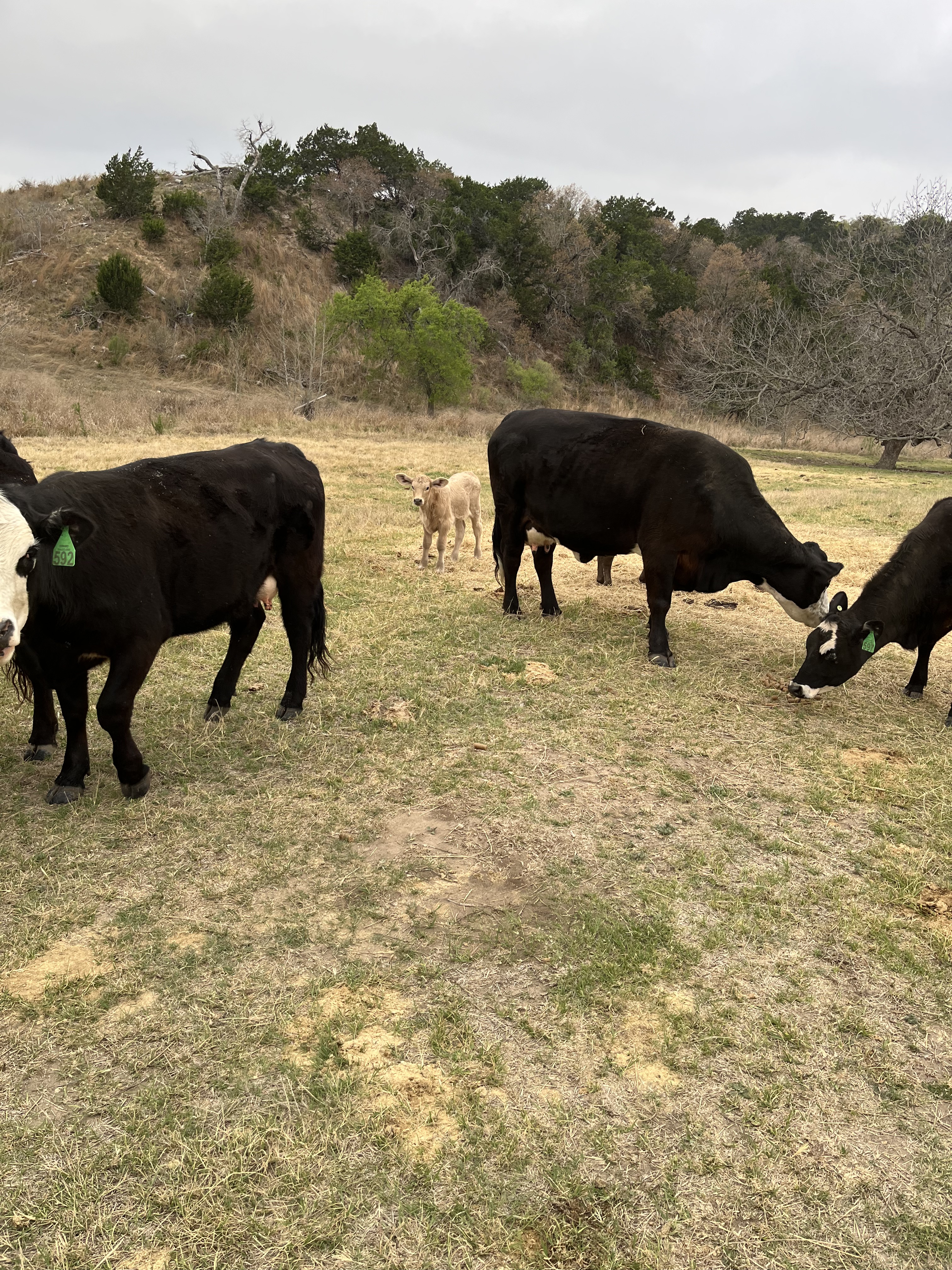
Every several years at Medicine Spirit Ranch we receive an unbelievable number of acorns. My oak filled yard becomes thoroughly covered by acorns. The periodicity of the big acorn crop occurs every two to five years, and I assumed it had something to do with the weather with wet Springs and hot dry Summers. Being a curious type, I went online only to find that increased amounts of rain and heat units do not adequately explain the periodic acorn bonanzas. What I also learned was that the cycles of none or few acorns punctuated by heavy acorn crops has been well recognized by botanists and the years of acorn boom times go by the name, Mast Years.

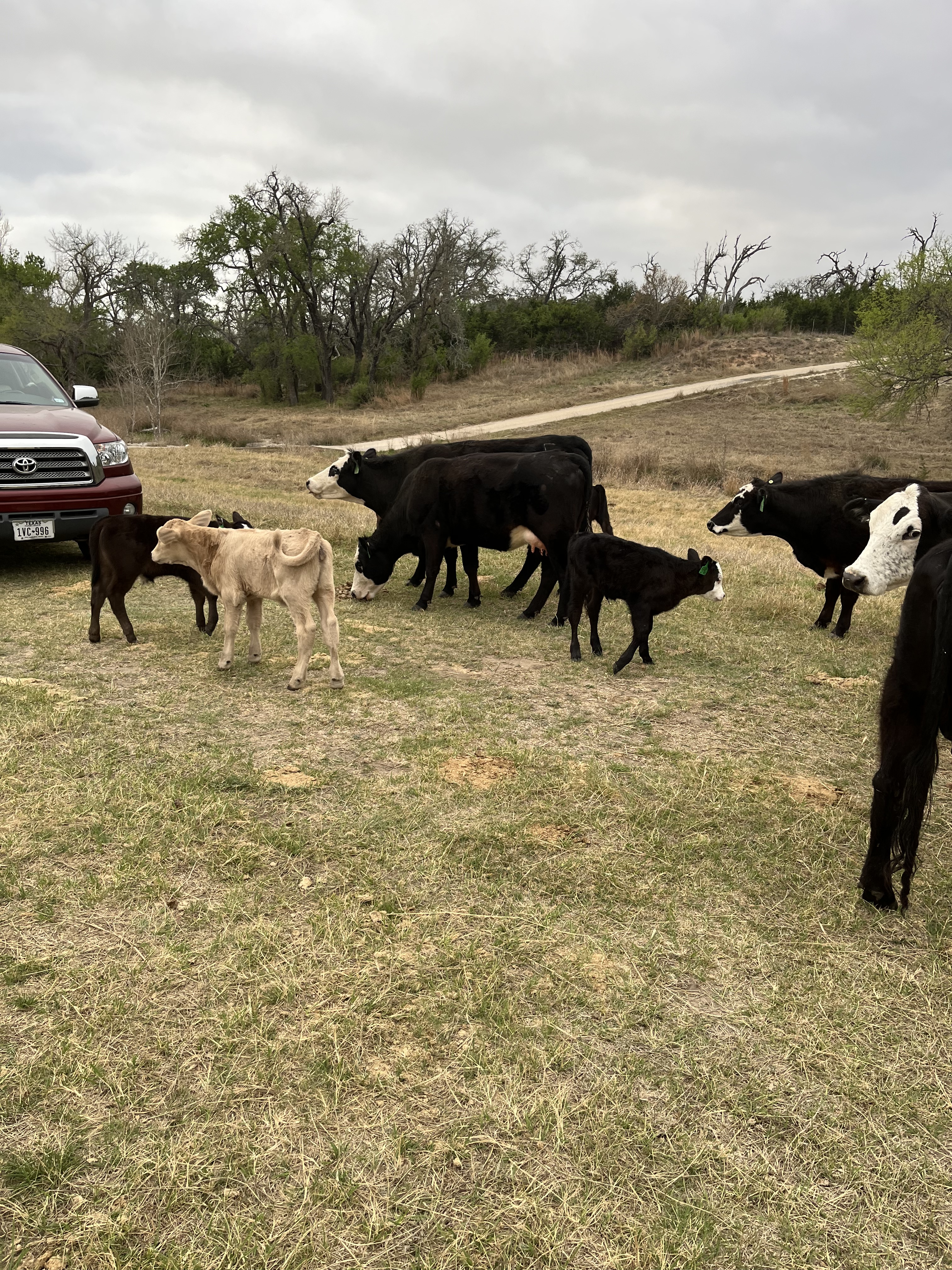
Our ranch has many Live Oak trees, red oaks as well as some Post Oaks. Across the world many different varieties of oak exist but all oaks produce acorns. The acorns are of course necessary for new trees to develop. The acorns also provide feed for squirrels, deer, feral hogs, turkeys, raccoons, mice, Blue Jays, Woodpeckers, quail,some types of ducks, and in some parts of the United States bears. We have even found our young Border collie, Duke, eating acorns. Acorns are highly nutritious.

The question arises as to why Mast Years exist at all. As it turns out science has not fully explained this curious event. As noted above weather and environmental factors are insufficient to explain it. Some scientists have speculated that an unknown environmental trigger may exist or that some type of chemical signaling may occur among the oak trees. Science up till now has simply been unable to adequately explain the mast year phenomenon.

One personally satisfying theory for Mast Years is that these cycles have a evolutionary benefit for oak tree development through “predator satiation.” What this means is that the lean years will not support as many animals who graze on acorns, thus thinning their numbers. Then a boom year of acorns occurs, such that many acorns go uneaten by the depleted number of foragers, increasing the chances of developing into new oak trees. Are Oak trees this “smart?” Well, it does make a certain amount of sense.

As a result of our current Mast Year, we can expect large herds of well nourished deer. Unfortunately, mast years also encourage the survival of more invasive and destructive species such as feral hogs. These hogs have become an increasing problem on our ranch and growing to 300-400 pounds and reproducing large litters twice as year, can out compete the cows and sheep for food and water. The feral hogs also destroy fences and can menace humans and livestock.

In a larger view, the interaction between an acorn bonanza and the fauna that feed on them establishes a symbiotic relationship that benefits all. Without having the opportunity to live at Medicine Spirit Ranch, I would not have ever realized this unusual integration of fauna and flora.

Tragedy in the Texas Hill Country

The news of terrible flash floods in the Texas Hill Country, most notably in the Kerrville area, are now well known around the world. Many friends and family members from across the country and as far away as Australia have checked with us to be sure we are okay. For those of us who live in the Hill Country, the impact has been personal, painful, and concerning. Our ranch is only 22-miles from Kerrville. Rain totals on Friday at Medicine Spirit Ranch measured six inches on top of already saturated soil from earlier rains this week. Today, we have had almost another three inches thus far, creating flash floods. We are unable to get off our hill due to multiple flooded low water crossings. The water at the base of our hill is raging and would sweep my pickup away if I were foolish enough to attempt a crossing.

Our lives at the ranch have been only minimally impacted with our inability to ford low water crossings, cancellation of Fourth of July parades and fireworks, and concern over blow out fences where streams flow into and out of our ranch land. That is not true for many unfortunates in the Hill Country. No doubt fences are down and stock will wander. Round ups are in my future when feasible.

My major concern has been with the poor folks in Kerr County some of whom have lost their lives, houses, and property. Many people living in our area and some of our family members have had children or other relatives attend Camp Mystic in Hunt, Texas. Our local representative to Congress, August Pfluger, had two daughters at Camp Mystic who fortunately have now been evacuated.

I’ve spent time in the past on the banks of the Guadalupe River in Kerrville. People had gathered for the Fourth of July celebration and had been enjoying the festivities. At 2:30 am and in a matter of minutes the river rose 30 feet and swept away campers, cars, pets, and people. As I write this some 80 people have been declared deceased with 11 girls from Camp Mystic are still missing. The count will inevitably go up.

While living in the Texas Hill Country is idyllic, flash floods have long been a threat. The reasons for flash floods are multiple. The soil is thin in the Hill Country and retains water poorly. I’ve always been surprised the day following a good rain that the ground often will be dry. Also the hilly and rocky terrain and steep canyons cause rapid shedding of ground water into shallow creeks and gorges. The humid air from the Gulf and from the Pacific Ocean can meet a front moving down from the Great Plains and give rise to torrential rainfall. Such was the situation that has given rise to our flash floods that began three days ago.

The flash floods in the Texas Hill Country are recurring. The last big flash flood with loss of life was in 1987 when the Guadalupe River rose 27-feet in a matter of a few hours. Extreme weather has become more frequent and worse with global warming. The warming causes the air to hold increased water vapor that on meeting cooler air gives rise to torrential downpours and raging streams and rivers.

Federal, and State emergency services are at work. Even faster has been the local response. For example today our church took in countless jugs of water and many bags of personal items to distribute to the needy. These packages will leave shortly for the affected area. Our Rotary District has already established methods for donating money and plans to send many Rotarians to the flood sites for clean up purposes. Everyone seems to be mobilizing in some way to lend a hand during this tragedy. Texans are resilient and events such as these sad events give rise to uncommon cooperation and generosity.

Finally I’ll add a few random thoughts. Prior to the torrential rain, the sky took on a definite purple cast. Both Trudy and I noticed the strange color of the sky that in the past has been associated with thunderstorms, hailstorms, and tornadoes. The sky had an ethereal appearance.

Also this afternoon after checking Live Oak Creek and finding it flooding, I found an unusual number of animals roaming around the top of the hill. I saw a gray fox run across the road. This was an unusual sight to see a fox in the middle of the day. Secondly, I saw a turtle arduously crawling up the ranch road from the creek toward one of our stock tanks (read pond). It had traveled over 200 yards to that point. Finally, I spotted the largest herd of deer I’ve ever witnessed atop our hill. No doubt these animals sought high ground to escape the raging water below.

Upon returning from checking the status of the creek and immediately after spotting the large herd of white tail deer, I parked the pickup, heaved a dejected sigh, and let out the Border collies. Duke, our young Border/Aussie cross jumped out like his tail was on fire, ran across the yard, traversed several cattle guards and disappeared from sight. Without a doubt Duke decided to exercise the deer because later on his return he was panting excitedly. Well at least Duke found a bright spot for the flash floods! Somehow he had lightened my grief somewhat.

Received notice that my blog has been featured on FeedSpot as one of the top Ranch Life Blogs. I am gratified for the recognition and express my appreciation for this honor.

What Pets Can Teach Us About Aging and Death

Our pets have shorter lives than humans, making it possible for us to observe their transitions across their aging spectrum. We can view them mature, grow old, and die. This can be instructive. For me, I’m staring at a formidable eighty years old at my next birthday and am sobered by the fact that by virtually anyone’s standard, I am now old. Despite physically feeling healthy and reasonably vigorous, I cannot completely shut out the concern about the not so stealthy approach of the old man.

As I stare into the formidable aging abyss, I find comfort from the actions and examples of my aging and deceased pets. Allow me to explain.

Mollie was a female Border collie that we acquired shortly before moving to the ranch almost twenty-five years ago. She was a Border collie from working stock and in her youth was a terrific herder. She could also run at an amazing clip. The latter trait was shown one day when I observed her run down a grown white tail deer. Molly had chased the white tail doe across a large pasture and was gaining ground on it when the deer in her panicked state attempted jumping a fence. Instead of clearing the fence, the deer trampolined off the barbed wire fence, landing in front of the paws of my semi-crazed, tongue wagging, blue eyed dog. Of interest to me was that Mollie made no attempt to attack the deer but merely waited for the deer to regain her feet. Soon the all out chase was on again with my deliriously happy hound in fast pursuit.

I mention this anecdote, as it strangely reminded me of my own youth and my own ability to run fast. Watching Mollie brought back proud memories. Of course I was not able to run down deer but was sufficiently agile to be offered track and field scholarships for the sprints and broad jump. Now fast forward twelve years from Mollie’s youth to her older years when she had been diagnosed with cancer. I recall on her last day of life, she wanted to go for her walk even if it proved to be a short one. There was no “give up” in that dog. Mollie lived her life fully, squeezing out all the activity and pleasure she could.

The following night Mollie began as usual sleeping on the floor next to my side of the bed. Sometime during the night, she apparently got up, walked about thirty feet down the hallway, laid down, and peacefully died. I found her cold, lifeless body the next morning. She had stayed engaged with life up until the very end of her life. Is there not a lesson to be learned here?

I’ve been advised by friends on the verge of selling their property in the country and moving to town to consider the same. Another friend questioned my continued efforts in golf lessons and time spent on the practice range, as it was his opinion that our golf games were never likely to improve. He may have been right about the golf scores, but that is not how I roll. Mollie comes to mind. She didn’t roll that way either, so why should I?

Please understand that I am not in denial about getting older, but I’ll do everything I can to fully enjoy my late years. I’ve had cataracts taken off and lens implant placed with excellent results. No more glasses! Recently I suddenly lost most of the hearing in my right ear and required a hearing aid for my left ear and essentially a microphone for my right ear to transfer sounds to my left ear. While the result is far from perfect, it allows me to remain engaged with life. My stamina isn’t what it used to be. Actually it is no where near the same. A nap after lunch has transitioned from a rarity to a necessity. And by the way my loyal, two-year old dog, Duke, never fails to join me for a nap, despite his characteristic boundless energy.

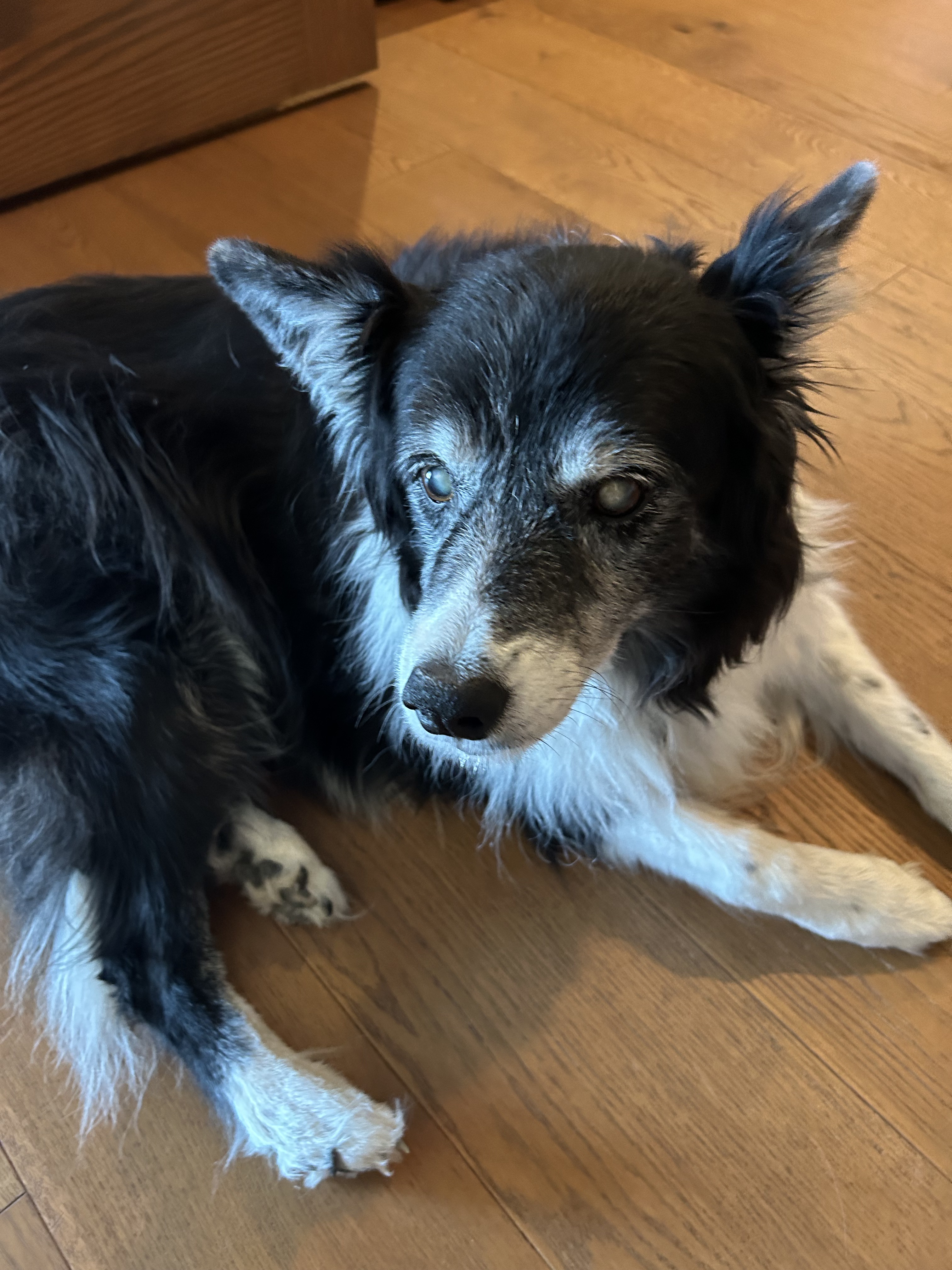
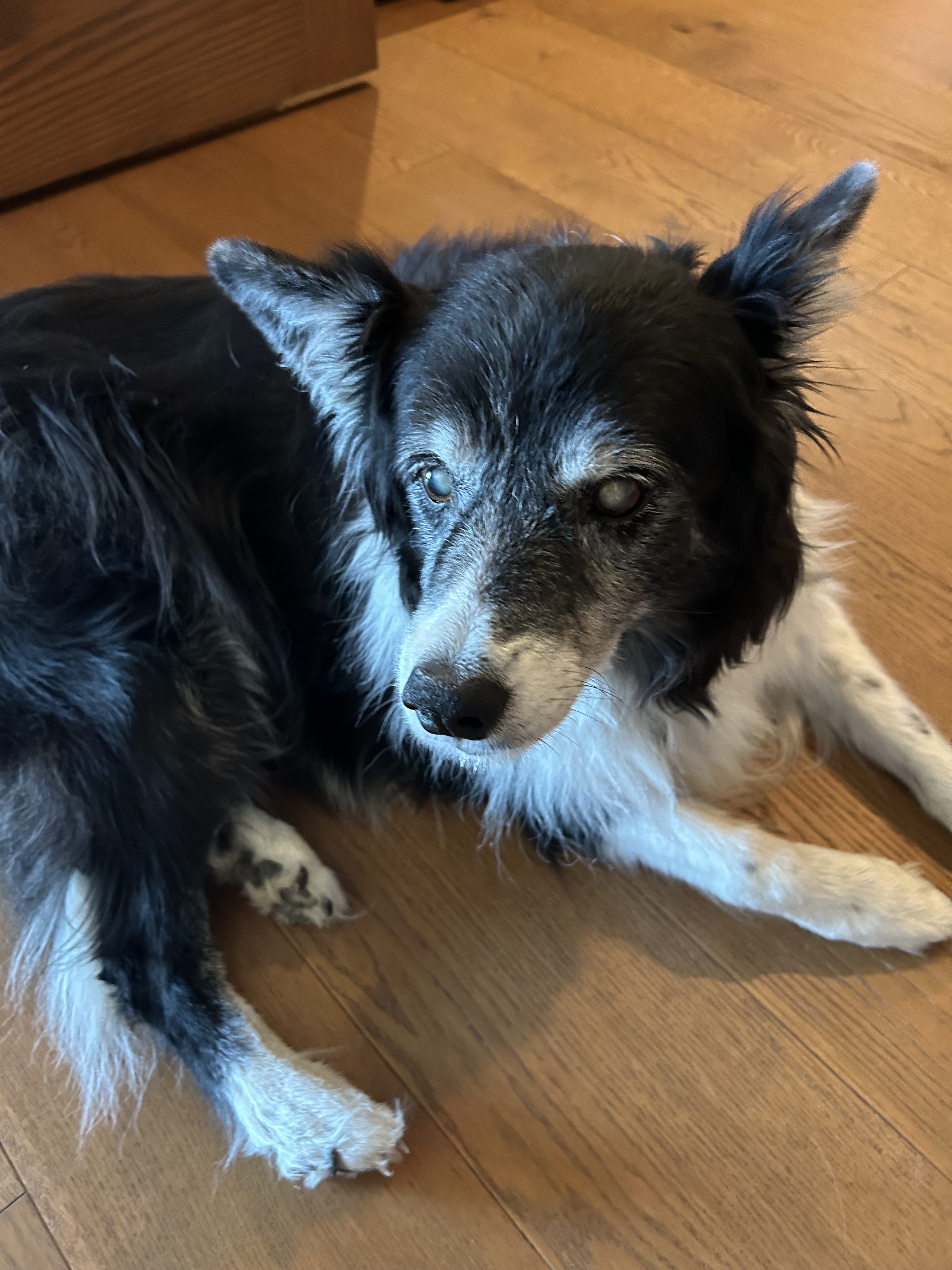
My current thirteen-year old and virtually blind Border collie, Bella, has also demonstrated graceful acquiescence to her aging. One difference in Bella is that when I now stop the pickup for a walk, she remains behind in the cab of the truck while young Duke and I go for a walk. She learned on her final walk several months ago that her limitations were simply too great and that she became too exhausted. Now Bella waits patiently in the truck for us to return, in the interim no doubt sneaking in an extra nap.

Bella has learned the extent of her physical abilities and has adapted to them with a sensible grace. She is accepting of those physical limitations that she can no longer perform. Doing so with calm acceptance and grace is what I’ve observed from my Bella and strive to learn. Yup! No more ladders for me!

The top picture is of the mature Bella and the lower picture is of the old Bella

On that most uncomfortable of all subjects, death, I’ve also learned from my Border collies. Our first dog Bandit who proved responsible for transferring us from a hectic city life to a bucolic ranch life, became old, severely infirm, unable to walk, and finally compassion required that we put him down. He had dearly loved the ranch with its abundant wildlife, scenic views, and cattle to herd.

When finally we deemed it time to let our old Bandit die with his dignity still intact, I placed him in the bed of the pickup, a spot where he had spent so many happy hours. I strategically parked the pickup so that Bandit had a view from the top of the hill and could sense the cattle grazing below. On a warm day with the gentle breezes and amid the songs of birds, our veterinarian facilitated the peaceful passing of our noble Bandit dog.

While the moment was incredibly sad for me, and I bawled my eyes out, I can think of no better way for our beloved pets or we as humans to die than surrounded by natural beauty, memories of outstanding accomplishments, and surrounded by those he/she loved. I can only wish that a graceful ending of my life will occur and that we humans might become as accepting of the inevitable as were my Bandit and Molly.

Perhaps you have observed your pets and gained wisdom from them about life’s mysteries. If so, please let me know what you have learned and share here with other blog readers and pet lovers.

If you have not had the chance to read my latest book, Hitler’s Maladies and Their Impact on World War II: A Behavioral Neurologist’s View (Texas Tech University Press), I invite you to do so. The book explores an important aspect of the Hitler story and World War II that has not been well studied. Many of Hitler’s catastrophic errors including the premature invasion of the Soviet Union in June 1941, the slowness of German forces to counterattack at the Battle of Normandy in 1944, and the highly risky Battle of the Bulge in late 1944 into 1945, can be better understood, knowing the sizeable impact that Hitler’s physical and mental conditions had on these vital battles.

Also, consider picking up a copy of my earlier book, Carrying The Black Bag: A Neurologist’s Bedside Tales (Texas Tech University Press). Please join me on my personal journey as a physician and meet my patients whose reservoirs of courage, perseverance, and struggles to achieve balance for their disrupted lives provide the foundation for this book. But step closely, as often they speak with low and muffled voices, but voices that nonetheless ring loudly with humanity, love, and most of all, courage.

A Duke Reigns at Medicine Spirit Ranch

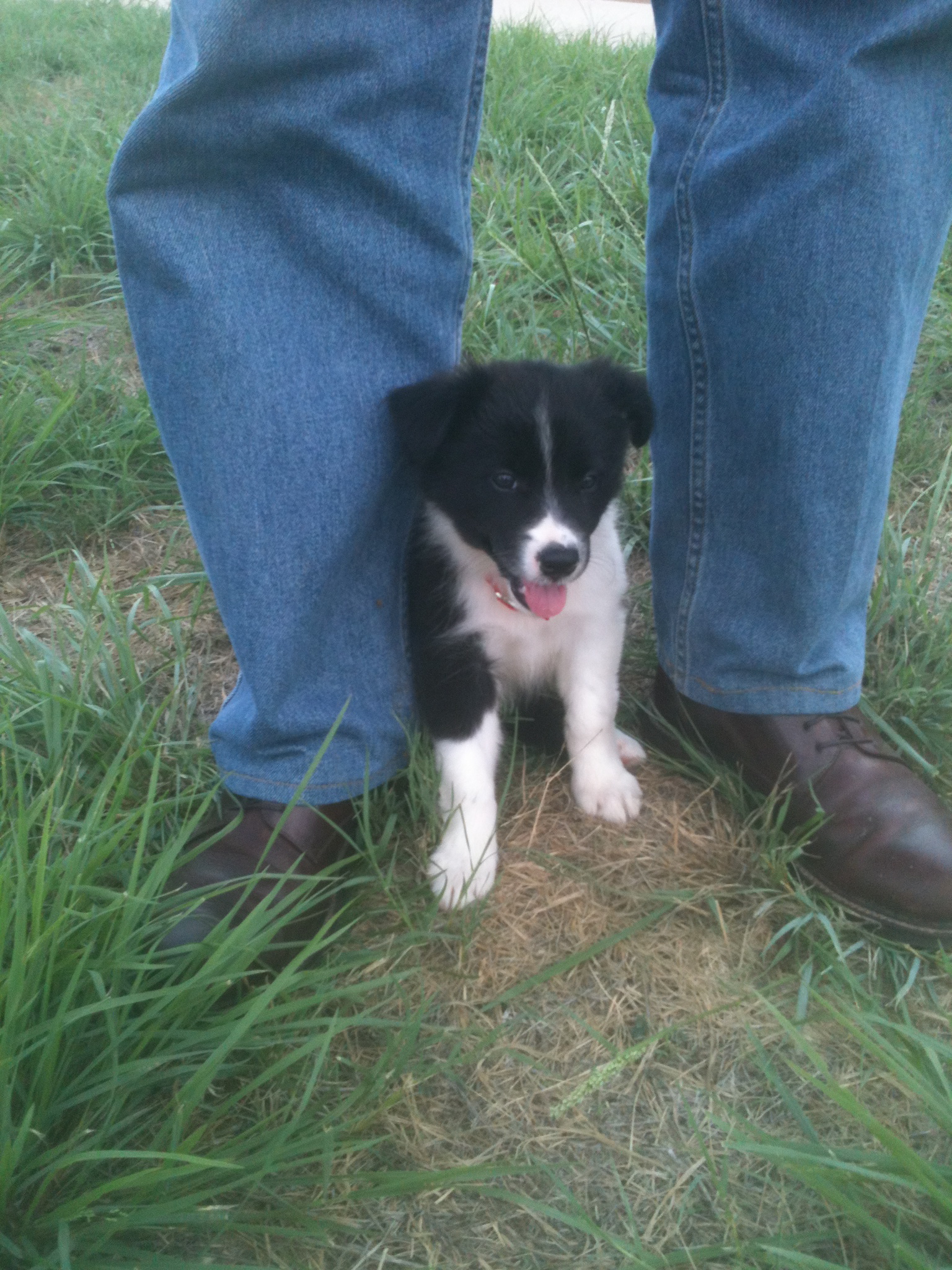
Like his royal name suggests, Duke came our home to visit and stayed and in the process anointed a painful emotional scar left by the forced departure of our earlier dog, Beau. Trudy and I had been grieving Beau’s loss for over six months when we received a phone call from our veterinarian’s office, informing us that they needed to re-home a Border collie. The dog in question had refused to stay cooped up in a small backyard located in a town some thirty miles away. The owners,the caller said, simply could no longer keep the escape artist and had given him up to Second Chances, a dog re-homing service. Would we be interested in meeting Duke? The question from the caller was the equivalent of kicking in an already opening door.

Not long after Trudy and I along with our twelve year old Border, Bella, arrived at the vet’s office where we met Duke. He was skittish but friendly. He immediately took to me, so much so that Trudy now refers to Duke as a Velcro dog. Of importance to us was Duke’s behavior toward Bella. He was curious about Bella, but in no way did he bully or harass our old, sweet, and largely blind Bella.

Duke at our first meeting at the vet’s kennel

We learned that Duke had been found wandering about the streets of Mason, Texas where he had been for an unknown length of time. He had weighed only 36 pounds when he had arrived at the vet’s office in Fredercksburg but had gained several additional pounds there. Evidently he had eaten poorly for some time while on the streets or at his prior home. His name had been given by his prior human parents so that we thought it best to maintain it. He was estimated to be around a year old. Duke seemed grateful for new parents, was housebroken, and had been neutered. The decision to keep Duke proved easy. Duke would come live with us at Medicine Spirit Ranch where he could run free.

On closer inspection Duke had a slightly different appearance from our earlier Border collies. He had larger and floppier ears that have proved an endearing feature. Also he sported brown patches over his eyes that we refer to as his eyebrows, something not seen in Border collies. Trudy through a GOOGLE search determined that his appearance fit perfectly for a Border collie/Australian shepherd cross.

Duke’s temperament is that of our prior Border collies, likely because Aussies and Borders are so closely related. He quickly learns tricks, possesses incredible energy, loves to chase jack rabbits and deer, and is protective of his human family. He quickly learns patterns of behavior such as when we dress differently to leave the ranch, he will lose interest. He also loves to take walks about the ranch, ranging far ahead or behind but returning quickly when called. Thus far he has not had close contact with our cattle but shows high interest in the large animals when staring at them through the windshield of the pickup. Once fully settled in, Duke’s herding prowess will be tested when the need arises to move the cattle to different pastures.

To Trudy’s credit, she took Duke for a six week obedience school. He shined in the class, quickly learning the stay, heel, sit, and down commands. He also largely ignored the twenty other dogs. His initial ravenous appetite has settled somewhat, but Duke has gained up to around fifty pounds and has added additional height as well.

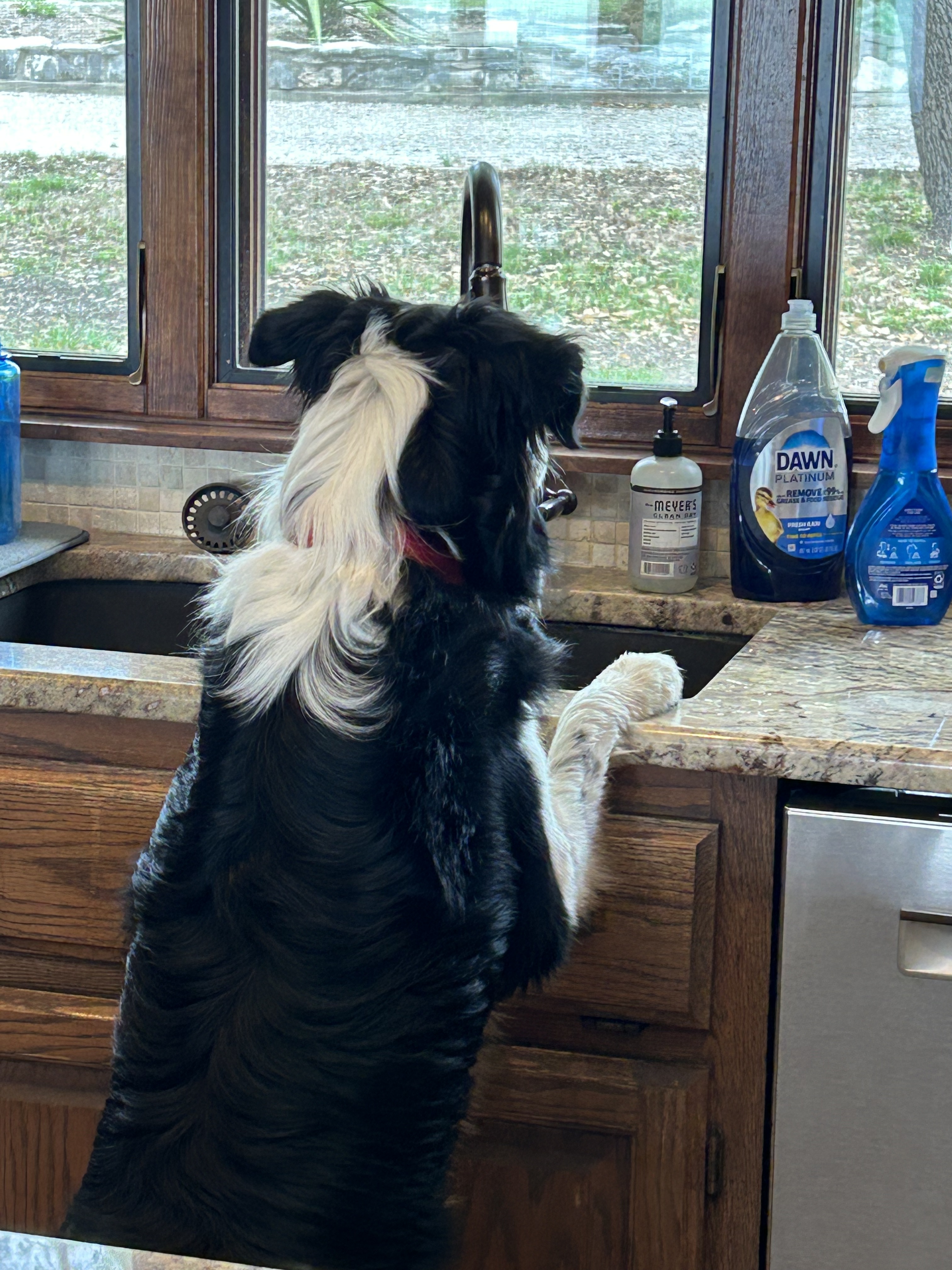
Perhaps his greatest pleasures have been two fold. First, he loves to stand on the sink cabinet and watch the birds outside at the bird feeders. He watches them intently, never barking or shooing them.

Secondly, he loves to chase armadillos. For the most part, he simply enjoys herding them. On rare occasion he has grabbed the armadillo in his large mouth and carried it about as a trophy. But Duke has usually released them on command. Unfortunately, he has killed a few armadillos but for the most part seems content to chase, herd, and scare them back into their burrows. For reasons I know not, armadillos are plentiful on our ranch this year. Duke routinely will chase from four to ten on every walk.

Earlier today after Duke prodded me to take a walk on a blustery, cold day, Duke developed great interest near a large water drainage pip running under the “road” on our ranch. I approached to see what had captured his attention. As I peaked over the edge of the hill, I saw a large snake that I estimated to be five to six feet long. It was silvery in color. I became alarmed when it reared up, cobra-like, flicking out his tongue at Duke and me. Its head appeared far too triangular for my satisfaction, although it did not fit the description of any of the four poisonous snakes that live in Texas. On command Duke backed off the snake. The large snake dropped back to the ground and went one way, and Duke and I went the other.

I am in awe of Duke’s agility and speed. To watch him bound across a field of tall grass, zigging and zagging, and bouncing upward while searching for armadillos gives me pleasure. His kinetic energy is nature’s poetry. I find myself recalling my youth when I too could run virtually effortlessness. To see his keen look, excitement, and with his tongue dangling allows me vicariously to enjoy his athleticism and my own long lost ability to run. How often human dog parents must enjoy the abilities of their pets or recognize the modeling of various behaviors common to mankind. We have a truly special bond with our dogs.

So welcome to the ranch Duke. Make yourself comfortable. We have a lot of ground to cover.

If you have not had the chance to read my latest book, Hitler’s Maladies and Their Impact on World War II: A Behavioral Neurologist’s View (Texas Tech University Press), I invite you to do so. The book explores an important aspect of the Hitler story and World War II that has not been well studied. Many of Hitler’s catastrophic errors including the premature invasion of the Soviet Union in June 1941, the slowness of German forces to counterattack at the Battle of Normandy in 1944, and the highly risky Battle of the Bulge in late 1944 into 1945, can be better understood, knowing the sizeable impact that Hitler’s physical and mental conditions had on these vital battles.

Also, consider picking up a copy of my earlier book, Carrying The Black Bag: A Neurologist’s Bedside Tales (Texas Tech University Press). Please join me on my personal journey as a physician and meet my patients whose reservoirs of courage, perseverance, and struggles to achieve balance for their disrupted lives provide the foundation for this book. But step closely, as often they speak with low and muffled voices, but voices that nonetheless ring loudly with humanity, love, and most of all, courage.

Why Dogs Sniff Crotches and How to Discourage It

We have a new dog at Medicine Spirit Ranch about whom a future post will be written. Duke our new Border Collie/Australian Shepherd mix who despite many good qualities turns out to be an inveterate crotch sniffer. His nosy behavior (pun intended) is awkward when friends drop by for a visit, as clearly Duke doesn’t respect human boundaries. His nose to the groin behavior prompted me to review why dogs sniff crotches and what can be done about this embarrassing doggie trait. Perhaps you have had a similar experience and wondered as well?

Duke our new Border/Aussie  mix

It is common knowledge that all dogs have a keen sense of smell, but did you know that a dog’s sense of smell is 10,000 times as sensitive as humans? It is this keen sense of smell that makes it possible for them to sniff out drugs, bombs, cancer, bed bugs, insulin levels and even Covid-19 infections. That’s quite a good sniffer!

Mary Beth McAndrews writing for the American Kennel Club also describes how dogs have a special olfactory organ termed a Jacobsen’s organ or vomeronasal organ that is located in the roof of the mouth. It plays a vital role in the dog’s superior sense of smell. The scent-dedicated part of the brain in dogs is forty times as large as in humans. But what is it that dogs are sniffing for?

Dogs sniff for the scent put out by sweat glands also termed apocrine glands, as they release pheromones that convey tremendous amounts of information for canines. The highest concentration of apocrine glands in dogs is found in the genitals and anus, explaining why dogs sniff other dogs’ butts. Apocrine glands in humans are especially prominent in armpits and crotches. Whereas most dogs are too short to sniff human armpits, most focus their keen olfactory attention on crotches for gaining information.

These pheromones inform them for example whether a person has recently had sex, given birth, or if menstruating. In each instance a sniff reveals a higher level of pheromones. These higher levels of pheromones also explains why many dogs tend to steal underwear since these undergarments carry the owner’s scent. Talk about awkward when your pooch parades through a social gathering at your home with your underwear clenched in his teeth!

While dogs love to introduce themselves to other dogs by sniffing the other’s rear end, something gets lost in doggie decorum when they do it to people. To better understand why dogs sniff crotches, it is helpful to understand why they are doing it in the first place. When meeting humans, we can ask relevant questions, but of course dogs can’t speak and must rely on their superior sense of smell. They instead will rush in to do a nose scan of the private areas, leaving behind their wet nose spot on your nicely laundered garment.

According to Rover.com and Dr. Sperry, it is improper to discipline your dog when they get nosy with a guest. The dogs won’t understand your concern, understand what they did wrong, or comprehend what you would wish for them to do differently. Dr. Sperry instead advises a more polite outlet by redirecting their sniffing behavior.

One example of redirecting is to teach your dog to sit when guests enter the house. By doing so your guest will have time to extend a hand for sniffing (plenty of apocrine glands in the palms of hands exist) rather than providing an unguarded opening for a crotch sniff. Another more guest friendly approach is to teach your dog to a High-Five. This is a particularly cute trick that will undoubtedly invite praise from your guests.

To train a dog to give a High-Five, place a dog treat in your fist and hold it out head high to your dog. Eventually your dog will paw your hand and allow you to reward him/her with the treat hidden within your fist. By rewarding your dog with praise, a treat, and a verbal “High-Five”, the trick can be learned. Our new dog Duke, learned the trick in only three repetitions (a little bragging here). A verbal cue can usually be learned quickly, making the trick both diverting and praiseworthy.

Of course taking your dog on a long walk with ample time for nose work may also prove helpful. Gaining opportunity to sniff will reduce the need for crotch sniffing. Myriad objects in the outdoors will tantalize your dog’s Jacobsen’s organ and allow for more socially acceptable nosework.

And please keep in mind that when your dog sniffs a crotch, it is not trying to be rude. Instead it is only trying to learn more about the person. Crotch sniffing is in the doggie world is more like a handshake or introductory human banter. Let’s be gentle with our pouches and redirect crotch sniffing in a more socially acceptable way.

The Importance of Family History

While folks are generally well acquainted with stories about their parents and typically have a reasonable  number of stories regarding their grandparents, stories about great grandparents are often extremely limited. Knowing more about my great-grandfather, Thaddeus Septimus Hutton, the first Hutton in Texas and a rancher, would be most welcome. The following blog piece shares what we know about Thad’s time in Texas and what might have happened based on the historical happenings surrounding him. This piece might also be viewed as a not too subtle plea to document family stories for future generations, as they can easily become lost in the mist of history.

Following my retirement from medicine, Trudy and I began researching our family’s genealogy. We wrote “Our Family’s History: The Huttons” and shared our findings and write up with my siblings. When it came to Thaddeus Septimus Hutton, fortunately my father had written a short article for a school assignment about his grandfather Thad Hutton. Dad’s theme provided valuable information. I learned that as a boy Thad, as he was called then, grew up on an estate in northern Virginia ( called Huntingdon). It was said to be almost in the shadow of the Capitol. Thad experienced the drama of the Civil War unfolding around him. Five battles were fought nearby his home. Fortunately, Thad was not directly involved in the war being too young to enlist or else our line of Huttons might never have occurred. Following the war and upon achieving the age of twenty one, he joined several of his brothers and sisters who had already fled the federal zone in Virginia to move to a more promising area along the Kansas and Missouri state line. There they had sought better opportunities and lives.

Thad lived in Missouri until 1875 before striking out for Texas. He traveled by covered wagon to Palo Pinto County and lived two to three miles north of the small town of Gordon (west of Fort Worth) and at that time it was located on the frontier. He married Elizabeth (Betty) Ragan on October 31, 1876 when an itinerant preacher of the Gospel of Christ denomination happened by to perform the marriage ceremony. Had Betty accompanied Thad in the covered wagon? We’ll likely never know. Betty had lived close to Kansas City and not far from Thad Hutton’s home in Missouri, suggesting they had likely met in the vicinity of Kansas City. She was a diminutive Irish lass who reportedly possessed a sharp tongue and later demonstrated fecundity as shown by birthing six children, one of whom died in infancy.

Thad Hutton and his wife Betty.

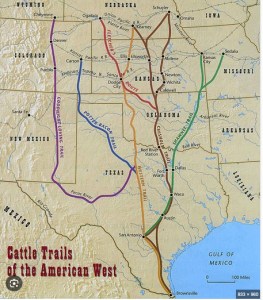
Betty gave birth to their first child, Thaddeus Leslie in 1878 while living near Gordon, Texas. On Leslie’s birth certificate, Thad’s occupation was listed as “cowboy.” Not long after Leslie’s birth, Thad and Betty pulled up stakes and moved further west to live near Seymour, Texas. No clear reason is known for this move, but a strong suggestion exists with the Great Western Trail (GWT) running through Seymour. The trail began in South Texas and traveled north to Dodge City, Kansas. Thad was associated with the P8 Ranch near Seymour that must have. been very close to the GWT. The P8 ranch apparently no longer exists.

From here on Thad’s story of ranching in Texas becomes more speculative. The family Bible reveals that Thad ranched cattle in Jack, King, and Knox counties, all counties close by Baylor County where Thad, Betty, and their growing family resided. Did Thad herd cattle up the Great Western Trail to Dodge City? This famous western cow town served as a major railroad terminus for moving cattle to eastern markets? Might Thad have interacted in Dodge City with famous western law men and gunfighters such as Wild Bill Hickok, Bat Masterson, and Wyatt Earp, all of whom established their reputations in Dodge City? Did he rest up from the cattle drive in Dodge City, said to the most wicked city in the country and home to the Long Branch Saloon and China Doll Brothel? Unfortunately, the answers to these questions, we will likely never know.

We may add to our understanding of Thad Hutton by examining the historical happenings that occurred around Seymour around the time Thad lived there and speculate on their impact on him. Settlement in what became Baylor County (Seymour becoming the County seat in 1879) was not possible until the U.S. Army in 1874 and 1875 defeated the Comanche, Kiowa, Southern Cheyenne, and Southern Arapaho tribes and removed the native Americans to Oklahoma reservations. This war occurred when the U.S. Army declined to enforce the terms of the earlier Medicine Lodge Treaty that forbid white settlement on Native American land. This conflict known as Red River war had ended only a few years prior to Thad and Betty moving to the area.

Information from Lawrence L. Graves describes Baylor County as follows: “This was the era of free-grass ranches, a time in which farmers and ranchers sometimes violently contested for land. Settlers from Oregon, led by Col. J. R. McClain, moved to the site of Seymour in 1876, for example, but were driven off when cowboys ran cattle over their corn. In 1879 the Millett brothers—Eugene C., Alonzo, and Hiram—came from Guadalupe County to begin ranching in Baylor County. They ran a tough outfit and used their armed cowhands to intimidate would-be settlers and the citizens of newly founded Seymour. Violence and contention plagued the county during the first years of settlement. Baylor County’s first two county attorneys were forced to resign, and in June 1879 county judge E. R. Morris was shot and killed by saloon keeper Will Taylor. Later the Texas Rangers gradually brought peace.”

How were Thad and Betty affected by the ongoing violence? The Texas of legend was predicated on open land and access to water sources.  With barbed wire having been introduced in 1875, the cattle drive itself, an integral part of the Texas legend and the basis for the Texas economy, became threatened. With Thad being a rancher was he involved in the range war? Did he cut barbed wire to move his cattle among the counties in which he ranched or was Thad a mere observer to the drama unfolding around him. Answers to questions such as these, we’ll never know.

With public support fence cutting became a crusade that led to a Fence Cutting War. Rabid anti-monopoly sentiments arose across Texas with fence building viewed as monopolistic and infringing on the rights of small ranchers and farmers.  Saboteurs cut fences and left threatening notes for fence builders. This conflict between free range ranchers and farmers would have likely continued and perhaps escalated further had the reasons for the conflict not been deflated by severe environmental issues.

Again according to Graves, “By 1880, fifty farms and ranches encompassing 13,506 acres had been established in the county (Baylor County), supporting a population of 708 people; more than 13,506 cattle were counted in the county that year.” Among these residents resided Thad, Betty, and son Leslie.

These early settlers including the growing Hutton family were severely tested in 1886 and 1887 by a severe drought. This difficult time for the Hutton family stemmed from range wars and the drought. Incidentally, my grandfather, John Frank Hutton was the last born of that generation in 1888, being born in Garden City, Missouri.

The building of railroads has long been credited with ending the Texas cattle drives and ending an illustrious era. But it was not until 1890 that the populace of Baylor County, home to Thad and Betty Hutton, raised $50,000 to insure completion of the Wichita Valley Railway, linking Seymour to Wichita Falls, 52 miles to the east. The reasons for the departure appear to largely due to closing off the open range, a severe lack of rain, possibly threats of violence, and the inevitable approach of railroads that ended the famous Texas of lore and reduced the need for cowboys such as great-Grandfather Thad Hutton.

If you have not had the chance to read my latest book, Hitler’s Maladies and Their Impact on World War II: A Behavioral Neurologist’s View (Texas Tech University Press), I invite you to do so. The book explores an important aspect of the Hitler story and World War II that has not been well studied. Many of Hitler’s catastrophic errors including the premature invasion of the Soviet Union in June 1941, the slowness of German forces to counterattack at the Battle of Normandy in 1944, and the highly risky Battle of the Bulge in late 1944 into 1945, can be better understood, knowing the sizeable impact that Hitler’s physical and mental conditions had on these vital battles.

Also, consider picking up a copy of my earlier book, Carrying The Black Bag: A Neurologist’s Bedside Tales (Texas Tech University Press). Please join me on my personal journey as a physician and meet my patients whose reservoirs of courage, perseverance, and struggles to achieve balance for their disrupted lives provide the foundation for this book. But step closely, as often they speak with low and muffled voices, but voices that nonetheless ring loudly with humanity, love, and most of all, courage.

FOND RECOLLECTION OF PROFESSOR A. R. LURIA

Not long ago I was asked to provide my recollection of working with the great Soviet Neuroscientist, Alexander Romanovich Luria. Since Academician Luria had such a profound effect on my life and on the field of psychology, I thought my recollections might prove of some interest to the readers of my blog.

Introduction-

Looking back on my professional career, my most exhilarating experience was the remarkable academic year spent at the University of Moscow with Professor A. R. Luria. This brilliant and caring man accomplished so much in his life and did so amid challenging circumstances. My fellowship with Professor Luria solidified my interest in brain/behavior relationships and provided impetus to share selected patients’ stories in the manner he demonstrated in his remarkable books, The Man with a Shattered World  and The Mind of a Mnemonist.

The U.S.-U.S.S.R. Health Exchange program in 1974-75 offered me a life changing opportunity to study with Academician Alexander Romanovich Luria in his laboratory at the N. N. Burdenko Institute for Scientific Research in Neurosurgery. I cherish his memory, his kindness, his wisdom, his patience, and for teaching me his method of practicing neuropsychology.

Background of the U.S.-U.S.S.R. Health Exchange Program-

The U.S.-U.S.S.R. Health Exchange Program came into being on May 22, 1972, when President Richard Nixon and General Secretary Leonid Brezhnev signed the treaty at the first SALT (Strategic Arms Limitation Talks) summit. My exchange followed in 1974-75 and proved both challenging and enriching.


Previously, the internationally well-known and distinguished Professor William Fields of the University of Texas Health Science Center in Houston had reviewed the status of Soviet Neuroscience. During his visit to Moscow, Dr. Fields had been introduced to the leading Soviet Neuroscientist, Professor A. R. Luria. Dr. Luria in addition to providing an overview of Soviet Neuroscience also requested from Dr. Fields that he send one of his neurology residents to learn the principles of Lurian Neuropsychology.

On his return to Texas, Dr. Fields, not having a residency program at the time and knowing I was soon to enter a neurology training program at the University of Minnesota, proposed I accept this unique educational opportunity.


Gaining approval to participate in the U.S.-U.S.S.R. Health Exchange Program proved challenging. Additional administrative alignment had to occur at the Department of Health, Education, and Welfare prior to the initiation of the exchange program. My splitting my residency to participate in the exchange program presented a huge hurdle that eventually was overcome.


Shortly after my arrival in Moscow, I learned the Burdenko Institute in the absence of advanced imaging  studies depended heavily on electroencephalography and rather primitive angiography. Neuropsychology also played a substantial clinical role in identifying the location of brain tumors. Lurian neuropsychological assessment proved helpful to the Burdenko Institute’s neurosurgeons for carrying out and directing their operations.

Fond Remembrances-

One of Professor Luria’s most endearing qualities was his personal warmth and concern for others. On our arrival at Sheremetyevo airport, three very tired Huttons were met by Bella Kotik, who has now become Professor Bella Kotik-Friedgut and authors a chapter in this volume. In 1974 she was a graduate student in neuropsychology in Luria’s laboratory at the Burdenko Institute. Bella spoke English well and had been dispatched by Alexander Romanovich (the honorific of first name and patronymic was the most formal and appropriate way in Russian to address respected individuals) to help us manage immigration, wind our way through Soviet officialdom, provide transportation, and help settle in at our long-term hotel, The Hotel Warsaw.


The U.S.-U.S.S.R. Health Exchange was such a recent development in 1974 that no permanent housing existed for exchange families. This lack of housing left us no better option but to live in a specific hotel room where exchange westerners had always been housed. The room was L-shaped and large, with a double bed, couch where our son could sleep, a wardrobe, a table, a few chairs, a large bathroom, entrance hall, and a radio and television that proved ideal sites for implanting surreptitious listening devices. Recall my exchange occurred at the height of the Cold War, and, after all, we were from the United States of America.

Early on Professor Luria opened his home to us and provided the opportunity to gain an appreciation for how he lived. Professor Luria’s small flat was neatly kept and nicely decorated with mementos. It lay only several blocks from the Kremlin. He welcomed us warmly and served champagne and caviar to mark the special occasion. The Professor and his dear wife served a lovely meal. Professor Luria also explained his plans for the upcoming year and sent us home with full stomachs and with many of our questions answered.


The Professor also pledged to find a suitable daycare for our son who was at the time a year and a half old. This task Alexander Romanovich accomplished with flare, putting young Andy is a model Russian daycare facility that was a frequent stop for Intourist buses. We laughed when Andy’s daycare teacher shared that whenever a busload of American tourists visited the daycare that Andy would be asked to walk with the teacher to the bus and wave the bus off with a goodbye by saying, “Do svidaniya.” I soon became envious of our son’s ease and rapid acquisition of the Russian language. Such was the kindness and personal concern that Alexander Romanovich showed us during our stay in Moscow.


Perhaps Alexander Romanovich’s greatest personality trait was his personal warmth and concern for others. During that first visit to his flat, he addressed our apprehensions, coddled Andy, and acted more like a doting grandfather than a gifted and world renown neuroscientist. I quickly understood why his students treated Professor Luria with such respect and affection.


During my sojourn in Moscow, I learned that during the terrible years of the Stalinist purges, Alexander Romanovich had slept with a packed suitcase beside his bed. Psychology was feared by the Soviet officialdom because it was viewed as offering a separate philosophy from Communism. Luria fully expected a fateful knock on his door from the Soviet security services. For a degree of protection, Alexander Romanovich had befriended two high government politicians (I was told they sat on the Politburo) with less than stellar reputations but who were politically influential and provided a safeguard.


Also like his close colleague and friend, L. S. Vygotskii, Luria’s being a Jew had presented challenges for his societal acceptance and his professional advancement. After learning of Luria’s desperate years during the Stalinist purges and his cultural challenges to developing neuropsychology, our living in a one room hotel room with an eighteen-month-old child, cooking on hot plates, and dealing with the frustrations of an underdeveloped exchange program, did not seem bad after all.


Beginning in the 1920s Luria began carrying out his groundbreaking work, but psychology was at the time viewed in the Soviet Unione as a suspect science and a potentially competitive ideology to Marxist Leninism. Early on Professor Luria steered away from an initial flirtation with Freudian psychology, as this was politically unacceptable given the politics of the day. Luria then moved toward the study of the most basic elements of psychology including the anatomy and physiology underlying behavior. This type of psychology was viewed as more consistent with dialectical materialism and led to neuropsychology becoming the dominant and perhaps only form of psychology in the Soviet Union as other schools of psychology were suppressed.


According to Professor Luria, the Burdenko Neurosurgical Institute was the largest Institute of its kind in the world. Its size and emphasis on brain tumor evaluation and treatment allowed him a remarkable opportunity to study many patients with localized brain lesions. This availability of clinical material afforded him the opportunity to develop further his understanding of brain/behavior relationships. Years earlier the immense tragedy of brain injured soldiers during World War II had also afforded Luria with an immense number of study patients on which to establish his principles of neuropsychology.


Professor Luria’s laboratory in 1974-75 was staffed by 3-4 Ph.D.’s or M.D.’s (one or two neurologists), and 4-5 post-graduate students. One of the more junior post-docs was Natasha who appeared to have been assigned as my “guardian angel.” Her English was only slightly better than my Russian but, she was helpful with communication as well as locating various items that Trudy needed. Bella who had met us at the airport and with whom I became friends was a more advanced graduate student and continued to look after us.


My attempt to learn Russian from a previous University of Moscow instructor had proved inadequate. She had emigrated to Minneapolis during my busy internship year and first year of Neurology residency training, providing too little time to study and practice Russian. My lack of fluency disappointed both Professor Luria’s and me. To address my language deficiency, Professor Luria arranged an intensive 4-5 hour/day Russian language class that met after Institute hours across town at the University of Moscow. Whereas activities in the neuropsychology lab were essentially completed by mid-afternoon, I would dash from the Institute, head for the underground, and slide into my chair just in time for my Russian language class to begin. There, an excellent teacher would intensely drill her four or five Russian language students. This remedial effort greatly aided my Russian language skills but made for an exhausting day.


A typical day in Luria’s neuropsychology laboratory usually began with a case presentation to Professor Luria by one of his graduate students. The patient was then brought into the laboratory or else the group of us would traipse off to the ward and gather at the patient’s bedside. The neuropsychological exam typically took an hour to an hour and a half to complete. On rare occasions when Professor Luria found the case particularly challenging or deserving of further investigation, we would repeatedly return for follow-up examinations.


Given that so many international students and visitors came through the neuropsychology laboratory, Professor Luria carried out his case summaries in English. I became impressed how his qualitative, careful, and unfolding examination complemented the standard neurological examination. Later in the United States when an appropriate patient would arrive on the ward with a particular frontal lobe syndrome or other intriguing neurobehavioral findings, residents, students and I would meet at the bedside where I would demonstrate the Lurian methods of elucidating the diagnostic features.


In the afternoon the trainees in Luria’s neuropsychology laboratory frequently saw additional patients, but quitting time was early by American standards. On days when I did not have class at the University of Moscow, I could arrive home by mid-afternoon. This eventuality made it possible for me to help Trudy with the challenges of shopping in Moscow and, prior to our son’s placement into a daycare, with childcare.


Professor Luria was a master clinician. He reportedly spoke some twenty languages and dialects. I cannot vouch for him knowing that many languages and dialects; however, I never saw him stumped because of insufficient language skills despite the many multicultural patients arriving at the Burdenko Institute from across the expansive Soviet Union.


Professor Luria’s bedside skills included gentle encouragement and kindness that he projected to his patients along with amazing creativity in modifying his examination to identify the underlying neuropsychological deficits. His examination was certainly not rote, but rather an evolving and creative diagnostic examination. His was a masterful performance.


Perhaps, the most memorable patient I saw during my exchange program was patient Lev Zasetsky, the man featured in Luria’s, The Man with a Shattered World. While this book ably describes Luria’s methods and digressions into the associated neurological substrate of Zasetsky’s grievous bullet wound to his brain, the most memorable feature for me was my realization of the struggles Zasetsky had faced and continued to face in coping with his incapacity. He recognized his losses, put forth incredible effort to address these deficiencies, and affirmed his continuing existence as an intelligent man.

I was extremely impressed by Zasetsky’s courage and tenacity in attempting to overcome his great incapacity. The lessons taught in The Man with a Shattered World were not lost on me. Throughout the latter part of my career as a clinical and research neurologist, I kept a personal file of patients  whose courage, tenacity, and incredible efforts for rehabilitation had impressed and amazed me.

In my book, Carrying the Black Bag: A Neurologist’s Bedside Tales, a work that was part memoir and part homage to my patients, I paid tribute to those individuals who had faced grievous neurological challenges with grace, grit, and dignity. I also credited A. R. Luria for penning his psychodramas that had inspired my own writing.


While I never had a patient with the amazing and persistent memory as demonstrated by S. in Luria’s, The Mind of a Mnemonist, I had many patients whose altered awareness and perception created in me a sense of awe and incredible curiosity. Such patients included a man who progressed over a few minutes from extremely docile, kind, and articulate to a raging, hate-filled, aggressive state as a result of his temporal lobe seizure, only then to revert following his postictal state to his previous friendly demeanor.

Another one of my patients required years of investigation to determine that he had been self-administering arsenic to maintain a state of chronic invalidism. The ongoing investigation of the circumstances surrounding this case proved reminiscent of Luria’s efforts of prolonged and persistent inquiry of his patients. Likewise, a man with treated Parkinson’s disease who played pinochle with his hallucinated hounds and how they dogs’ visits provided benefit to his life. This clinical anecdote again was like the remarkable patients described by Luria. These case studies of mine became my own patient S.


Without the impressive examples given by Professor Luria in his clinical case studies as guides, I doubt that I would have been able to follow with this time honored, 19th century tradition in idiographic science (qualitative assessment) as in Carrying the Black Bag.


My later book, Hitler’s Maladies and Their Impact on World War II continued the tradition. Based on Lurian neuropsychology, I became convinced that advanced Parkinson’s disease patients suffered features of a mild frontal lobe syndrome. The mental inflexibility features were born out by the Wisconsin Card Sorting Test. Knowing the time frame (all showed it by 10 years) by which my parkinsonian patients developed these neuropsychological findings was then projected onto the life of Adolf Hitler with his Parkinson’s disease and provided insights into his catastrophic errors during the latter phases of World War II.

I became convinced that advanced Parkinson’s disease with its attendant memory/cognitive problems impaired his decision making. Nevertheless, Hitler’s neurological problems in no way excused his anti-Semitism and cruelty as these characteristics had formed long before the onset of his neurological illness.


Transfer of Lurian Neuropsychology to the United States
Finally, a few comments on the transfer of Lurian neuropsychology to the United States as it related to identifying localized brain lesions. Upon my return to the U.S.A. and the University of Minnesota, I began to work with Manfred Meyer, Ph.D. who headed the Neuropsychology section within the Department of Neurology. Dr. Meyer was a wonderful man and an able neuropsychologist but had been imbued with the nomothetic approach (quantitative analysis) as exemplified by the Minnesota Multiphasic Personality Inventory (MMPI). He was unable to accept a more qualitative, bedside approach to neuropsychology. Likewise, I could not render Lurian neuropsychology in a quantitative fashion. Given my teaching by Alexander Romanovich, it simply was not possible for me to do so.


While I completed my Ph.D. under Dr. Meyer who was my principal advisor, my PhD thesis did not deal with Lurian neuropsychology but rather with other psychophysiological measures. Likewise, the then Chair of the Department of Neurology, Dr. Joseph Resch, was unimpressed with Lurian neuropsychology as a diagnostic tool, as by then not only had advanced Computerized Tomography (CT-scans) come about, but also Magnetic Resonance Imaging (MRI) scans and Positron Emission Tomography (PET) scans. All of the imaging techniques were faster and more precise at locating brain lesions, and negated the need for neuropsychology for identification of the site of brain lesions.


Technology had by then replaced the need for Lurian neuropsychology to locate brain lesions, as it also had for the more quantitative neuropsychology vogue in the United States at the time.

The beauty and completeness of Lurian neuropsychology and its neurorehabilitation benefits were lost on my American mentors and limited my using Luria’s methods in only highly selected patients.
It is my belief that Luria’s approach to neuropsychology in the United States and elsewhere has made more impact within the field of psychology and in understanding brain/behavior relationships than it has in clinical neurological practice. It may provide its greatest benefit around neurorehabilitation efforts by establishing a firmer scientific underpinning for rehabilitative strategies as well as providing a baseline of memory/cognitive function for later comparison in patients with more diffuse and progressive dementing illnesses.


References
Luria, A.R., The Man With a Shattered World: The History of a Brain Wound. Basic Books, Inc., New York, 1972.
Luria, A.R., The Mind of a Mnemonist: A Little Book about a Vast Memory. Basic Books, Inc., New York, 1968.
Hutton, Tom. Carrying the Black Bag: A Neurologist’s Bedside Tales. Texas Tech University Press, Lubbock, 2015.
Hutton, Tom. Hitler’s Maladies and Their Impact on World War II: A Behavioral Neurologist’s View. Texas Tech University Press, Lubbock, 2023.

Gymnastics at Medicine Spirit Ranch

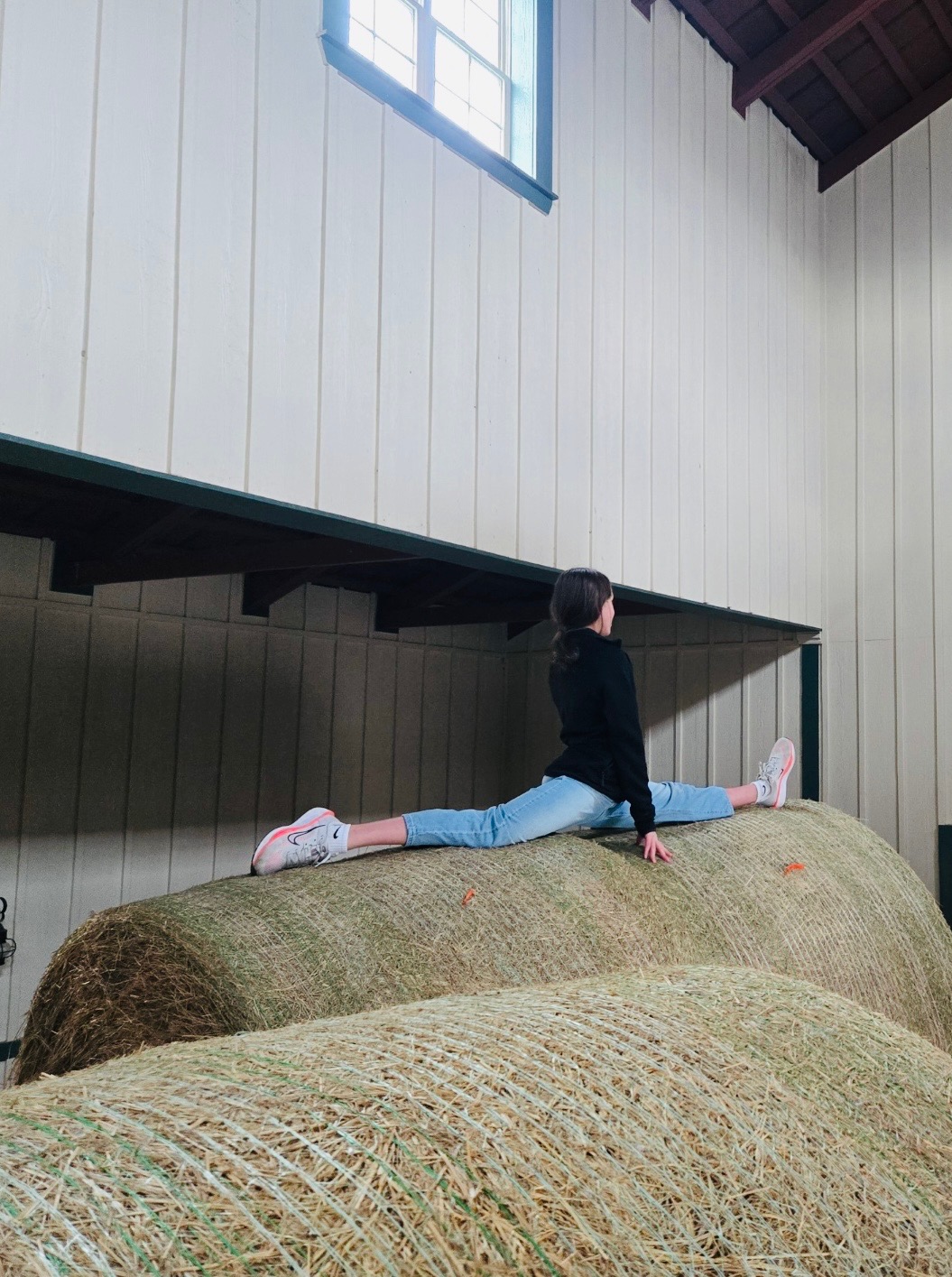
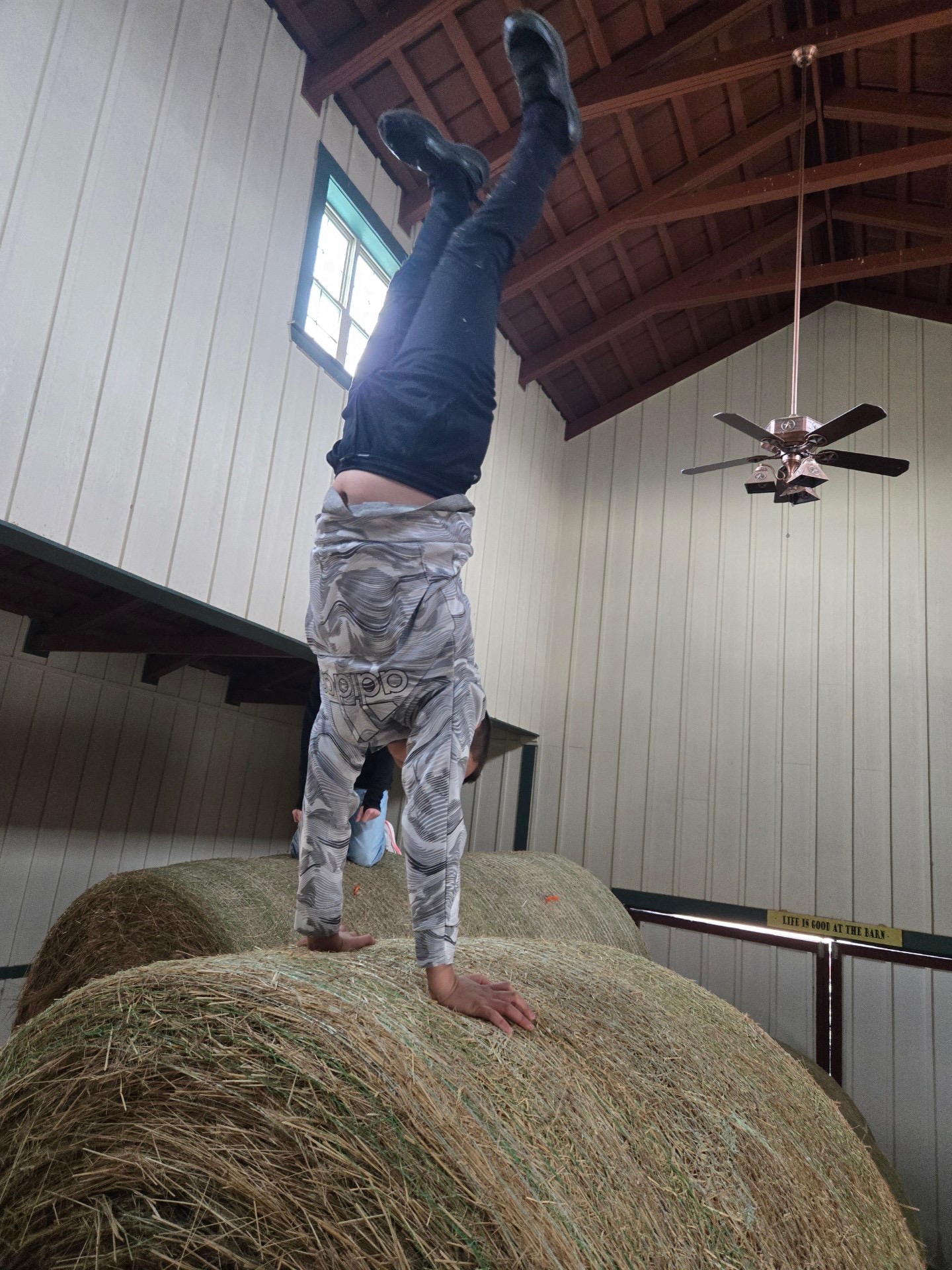
A fond memory of our recent family Thanksgiving at the ranch was the presence of a relative, Eden, who is a young gymnast. She was fresh from having competed successfully in a State-wide gymnastics competition.

I feel confident that gymnastics hs never been performed previously at Medicine Spirit Ranch, especially atop the stack of round bales residing in the hay barn.

Such a delight to see the hay barn turned into an exhibition of gymnastics. Might not want to try this immediately after a large Thanksgiving meal. Thought the readers of the blog might enjoy seeing Eden do her thing.

What Dogs Teach Us

We teach our dogs tricks, but hubris may prevent us from recognizing what dogs can teach us. During my numerous trips around the sun and from watching my canine friends age, I’ll admit to a few things I’ve learned from my dogs.

If you will just listen, I can teach you a few things!

Lately, I’ve observed Bella, my Border collie, changing some of her behaviors. As Bella has aged, she has developed Diabetes. Her Diabetes has clouded her eyes, similar to the cataracts I developed and had surgically removed. Due to her low vision, I’ve observed Bella bumping into doors and fences. When Bella and I take walks on the ranch, she has taken to trailing me by scent with her nose to the ground and with cocked ears, listening for my footsteps. Both are good adaptations to her visual loss.

Bella as a healthy puppy, full of vigor and promise

I am struck by her seeming calm acceptance of her sensory loss. Also I admire her desire to continue walks about the ranch, albeit it at a slower pace and requiring her other more intact senses to manage the task. She doesn’t seem to get upset with herself when bumping into objects but accepts her diminished vision with grace. The line from the Desiderata by Max Ehrmann comes to mind, “Take kindly the counsel of the years, gracefully surrendering the things of youth.” The writer rendered good advice, and Bella has modeled surrendering gracefully for me.

Look closely at Bella’s cloudy eyes that vets refer to as nuclear sclerosis

Frankly, Bella has modeled this behavior better than I. A number of times friends have asked me given my age if I ever consider selling the ranch and moving to an easier life in town? Or I’ve been asked, would I consider cutting back on my ranch activities? Certainly, the amount of work that is required in keeping up the ranch would be less if I were to sell it, and the injuries suffered from being around large animals would certainly be reduced. Yet my sheer enjoyment of the ranch with its views, purpose, and peacefulness prevents me from making drastic changes in my ranch activities. But in recognition of my growing physical limitations, I have learned to ask my ranch hand for more help when my loss of speed and balance would place me at greater risk.

Bella is now twelve years old. In dog years this makes her 84 years old. She certainly is not the energetic, athletic dog of her youth. Bella is now content to curl up in her place in the sun and snooze away the day. I too have found the comfort of a nap after lunch, and Bella and I often partake of a nap together in the afternoon. We still enjoy a walk late in the afternoon, but both of us take longer to recover from the exercise than we did earlier in our lives.

Bella now spends an inordinate amount of time napping

As Bella has aged, I’ve noticed her becoming increasingly dependent on Trudy and me. She now requires a boost when jumping into my pickup. She also needs help getting onto my elevated bed in order to take her afternoon nap. Bella no longer pays attention, or perhaps even sees, deer meandering through our yard or varmints on the ranch. I recall in earlier days when she and Jack, our rescue dog, would tear into marauding armadillos. It wasn’t pretty, but demonstrated amazing mutual hunting skills and athleticism. Armadillos by the way, can really run!

I suppose as we age, we all need to accommodate to diminishing physical skills whether it is wrestling calves, mowing the yard, or replacing light bulbs from a ladder. Avoidance of certain activities reduces risk of injury and are better left alone. This makes sense, but admittedly can be hard for humans, especially men, to accept.

While her physical skills have diminished with Bella’s aging, her love and extreme loyalty have only increased. She has taken to following me around the house, moving with me from room to room. She appears uneasy when not with me and will, with nose to ground, seek me out wherever I am. As I write this, Bella lies beside my desk, placed in such a way that I cannot leave my desk without having to alert her by stepping over her. She seems to gain pleasure from being with me, perhaps for protection or merely for the love and affection she receives.

Bella almost ended up as a show dog and owned by a man in South America. We like to think we gave her a happier life on the ranch. Her name means beautiful in Italian and fits her well

Likewise, my desire for companionship and spending time with friends has also increased as I’ve aged. I’ve always been a person who needed human (and animal) companionship. Nevertheless, if I don’t have human or animal contact, I find myself missing it, even more so than in my earlier years.

I recall an earlier Border collie of ours named Molly who grew old and ill. The vet assumed she had cancer but she was still up and about and enjoying life to some extent. Shortly after seeing the vet, I awoke in the morning and found Molly dead on the floor not far from me. Molly accepted her illness with great stoicism, a strong trait in Border collies. The vet was embarrassed and regretted not offering to put her down earlier. I felt there was no need for his embarrassment, having witnessed the incredible stoicism of my serial Border collies.

I often recall Molly’s stoicism and that of my other Border collies when I hear aging human friends recount their numerous ailments. Jokingly, I refer to their complains by medical terminology as their “review of systems.” I hope that I will be able to retain a degree of Border collie stoicism in light of advancing aches and pains and potentially more serious health problems that undoubtedly will come with advancing age.

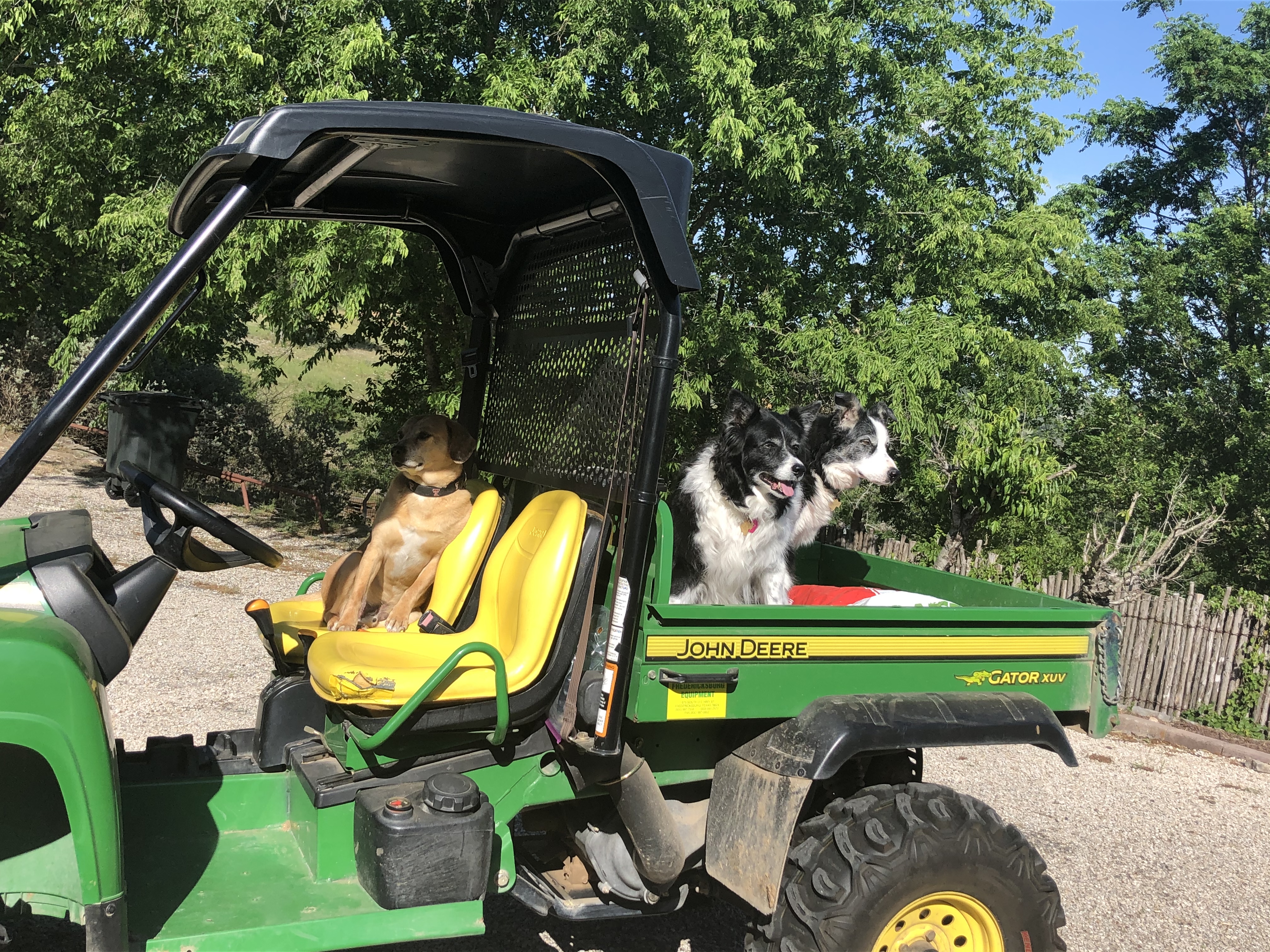
Hey, we’ve taught you as well,” Jack and Buddy say! Jack in the front seat, Buddy and Bella in the bed of the Gator

The lovely aspect of having serial dogs throughout my life is that with their shorter life expectancy I’ve observed the maturation and behavioral changes due to their aging. I’ve observed many cycles with my many dogs. Any teacher will share the importance of repetition for learning. My dogs have provided me healthy examples of how to age gracefully and model acceptance of life’s inevitable changes. For this I am most grateful.

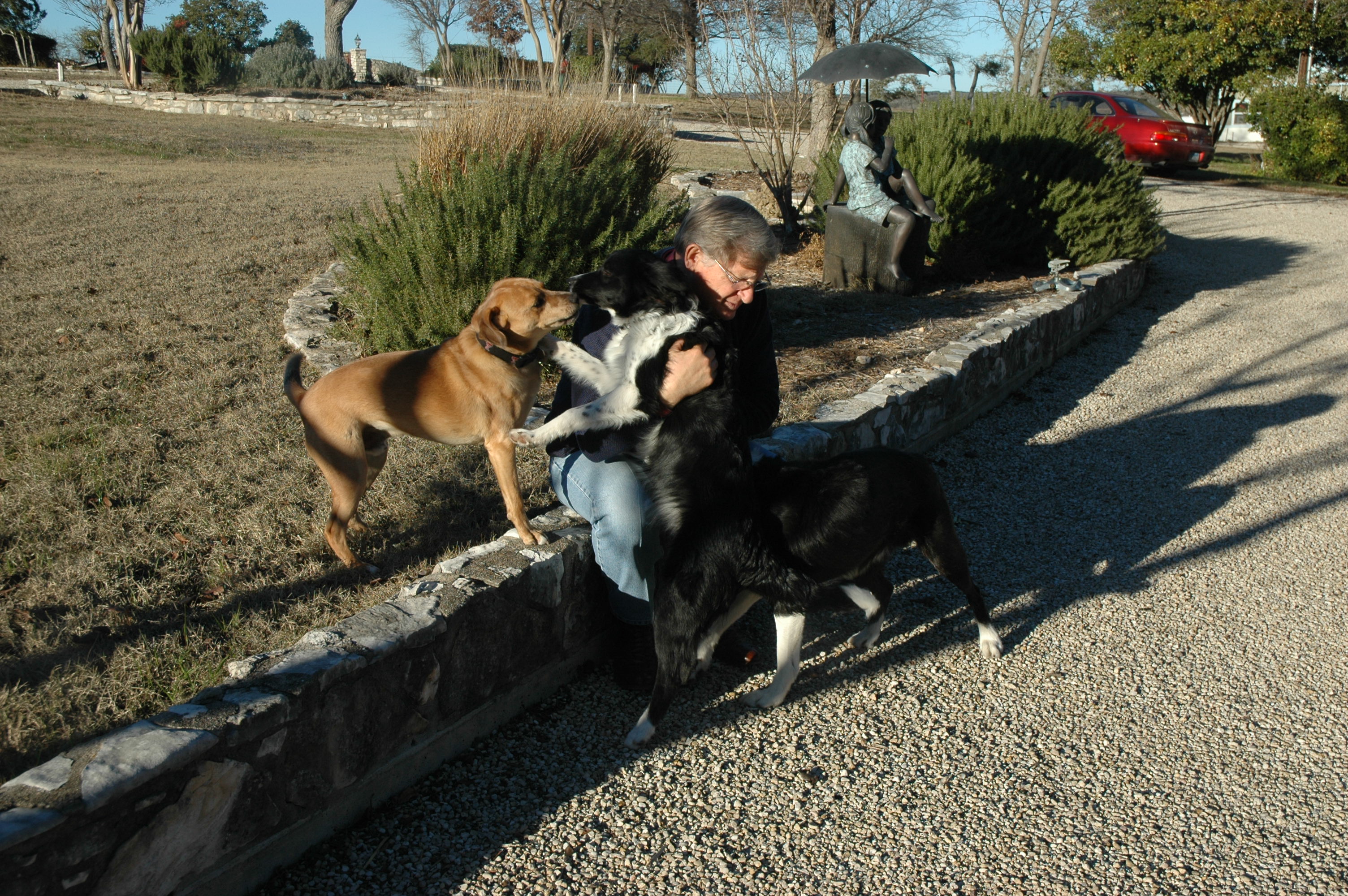
Bella and I giving each other a big hug with a jealous Jack looking on and Buddy in the shadow at my feet

If you have not had the chance to read my latest book, Hitler’s Maladies and Their Impact on World War II: A Behavioral Neurologist’s View (Texas Tech University Press), I invite you to do so. The book explores an important aspect of the Hitler story and World War II that has not been well studied. Many of Hitler’s catastrophic errors including the premature invasion of the Soviet Union in June 1941, the slowness of German forces to counterattack at the Battle of Normandy in 1944, and the highly risky Battle of the Bulge in late 1944 into 1945, can be better understood, knowing the sizeable impact that Hitler’s physical and mental conditions had on these vital battles.

Also, consider picking up a copy of my earlier book, Carrying The Black Bag: A Neurologist’s Bedside Tales (Texas Tech University Press). Please join me on my personal journey as a physician and meet my patients whose reservoirs of courage, perseverance, and struggles to achieve balance for their disrupted lives provide the foundation for this book. But step closely, as often they speak with low and muffled voices, but voices that nonetheless ring loudly with humanity, love, and most of all, courage.

Marketing My Books

The last several weeks have seen an uptick in my efforts to make my most recent book, Hitler’s Maladies and Their Impact on World War II, better known. These efforts have included a trip to Atlanta to speak before the large and well organized Atlanta Chapter of the World War II History Roundtable. Then this last weekend I served on a panel discussing D-day with two other authors at the Boerne Book Festival. Both experiences were fun and rewarding, and I met interesting people.

The experience in Atlanta has been planned for some time. My presentation was well received and prompted interesting discussion. Three World War II vets attended and while limited physically, remained interested and interactive. One of them had landed at Normandy. Wow, history alive.

Perhaps the most interesting and fortunate contact was meeting Robert Ratonyi, a Holocaust survivor. Bob Ratonyi was only a boy when the Nazis invaded Hungary, followed shortly by the Hungarian Holocaust. Bob’s family and friends kept moving him about to keep him out of harm’s way. Eventually they found a way to smuggle him out of the country and ultimately to the United States. Much of his family was not so fortunate. He has a slide in his presentation that he was kind enough to send me showing a large number of family members who were killed in the Holocaust simply because they were Jewish.

Bob Ratonyi became aware of how little the younger generation knew about those sad Holocaust days. He determined to contact high schools and make information available to the students. Bob also follows up with presentations and answers questions. What a wonderful service he provides. Bob also points out that there have been over 20 Holocausts in the twentieth and twentieth first centuries of which the WWII European Holocaust was only the third largest. I did not know that nearly so many tragic events had occurred.

Bob has studied the origins of these different Holocausts and has struggled to find how they can be prevented in the future. He believes education of the younger generations and making them aware of the circumstances that give rise to such genocidal behavior is a good first step.

In my limited inquiry, I’ve found striking ignorance among our youth regarding the Holocaust and the sacrifices made by the World War II generation. Recall the old saying attributed to George Santayana (The life of Reason, 1905), “Those who cannot remember the past are condemned to repeat it”. My hat is off to Robert Ratonyi!

The event of this past weekend was the Boerne Book Fair. This event is in its 6th or 7th year and was well attended. Numerous tents were occupied by employees of various university presses, library information, and for author talks. I participated along with two other authors, James Fenelon who is a military historian and Sherri Steward (Bringing Davy Home) who has written a deeply personal book on her family’s challenges following service during WWII and Korea. The moderator was a delightful military and commercial pilot, Tammie Jo Shults who wrote Nerves of Steel: How I Followed My Dreams, Earned My Wings, And Faced My Greatest Challenge. Her book describes her heroic efforts as captain to land Southwest Flight 1380 despite overwhelming problems with the aircraft. She is a delightful lady, skilled pilot, and a true hero.

Economic pressures on publishing houses appear to have been responsible for the authors having to do more and more of the publicizing of their books. Online information has largely replaced book presentations in bookstores. Most authors I know did not write their books to make money, but rather because they had a story to tell that they felt simply had to be told.


If you have not had the chance to read my latest book, Hitler’s Maladies and Their Impact on World War II: A Behavioral Neurologist’s View (Texas Tech University Press), I invite you to do so. The book explores an important aspect of the Hitler story and World War II that has not previously been well studied. Many of Hitler’s catastrophic errors including the premature invasion of the Soviet Union in June 1941, the slowness of German forces to counterattack at the Battle of Normandy in 1944, and the highly risky Battle of the Bulge in late 1944 into 1945, can be better understood, knowing the sizeable impact that Hitler’s physical and mental conditions had on these vital battles.

Continue reading