
A cattle trailer opened its back gate last week at our ranch and out bounded five recently purchased black baldy cows and their calves. The animals proved docile but stuck closely together. The next day I opened the gate to the adjoining pasture where our resident herd grazed. The immigrant cattle slowly were drawn into the adjoining pasture. I observed the wary interaction of the new cattle and the established larger herd of black baldy cattle and their smokey calves (cross between black baldy and Charolais). The intermingling of the new and old herds then took its familiar course that I’ve witnessed from numerous episodes of introducing new cattle to the resident herd.
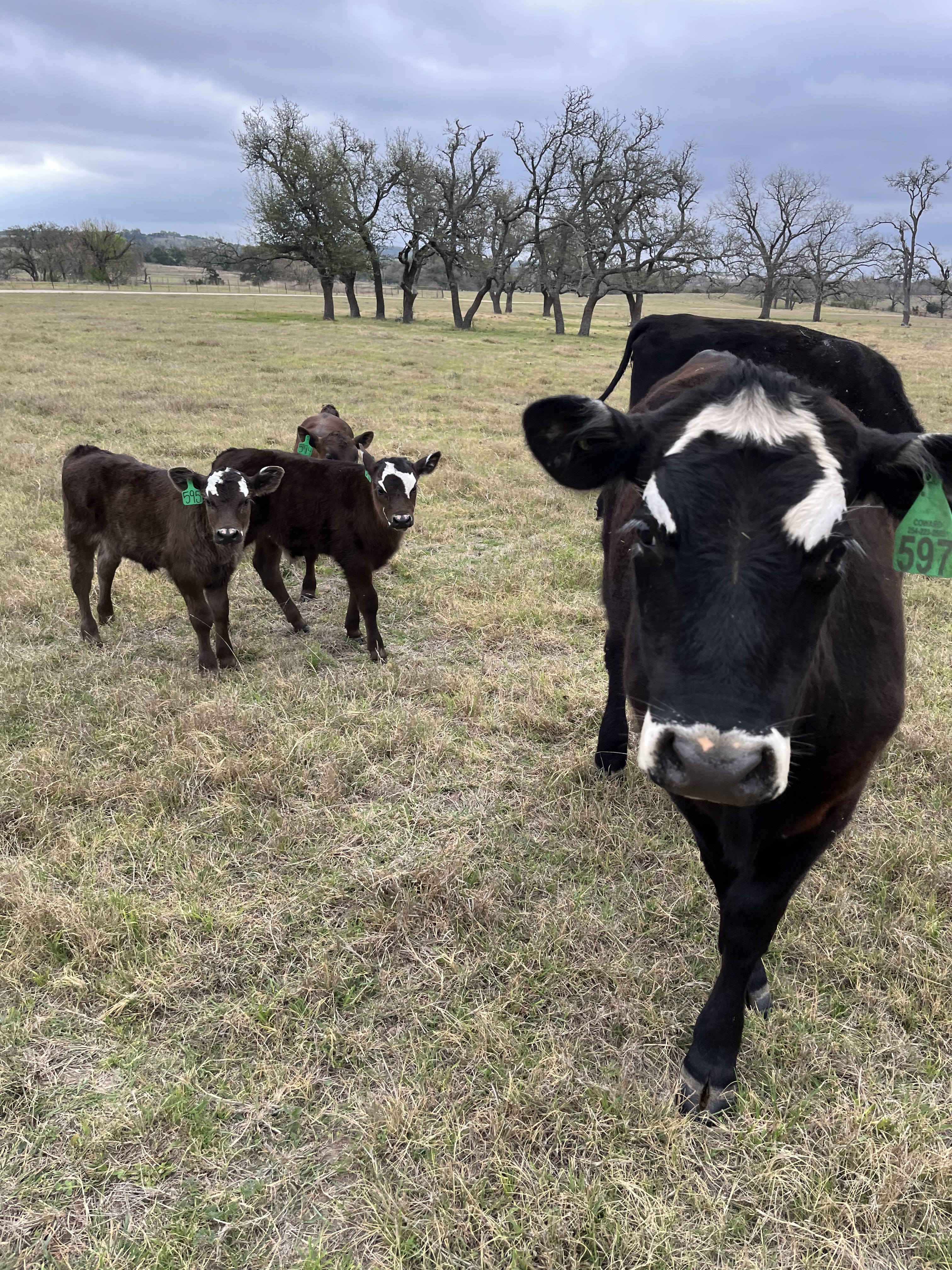
A new black baldy mother with three of the new calves
Several of the cows from the older herd approached the immigrants with a certain intent. Before long several minor altercations broke out between members of the older herd and the newer one with head to head pushing taking place. Even several of the immigrant calves became challenged to shoving matches by calves from the established herd. The smaller new cows were first time mothers and were over matched by the larger resident black baldy mothers. Likewise the calves from the resident herd were on the whole larger than the immigrant calves.
Foreheads pitted against foreheads, the pairs pushed and strained. Muscles bulged in their necks and hind quarters, eyes stared balefully. Eventually some slight movement began to occur with a dominant bovine shoving the other several paces backward. It seemed that no intent existed to harm the other cow (calf) but rather to demonstrate dominance. A new order of dominance was being developed.
For the majority of the cattle from the established herd (lets call them the citizen herd), avoidance seemed the order of the day. The separation of the lesser and newer herd from the older, larger herd developed over the next several days. The immigrants as a group initially wandered away into a nearby pasture, avoiding members of the older citizen herd. There they seemed content, languidly munching on green grass or chewing their cuds and maintaining close proximity with the members of their small herd. No doubt previously established dominance within this group continued unchanged.
On day four the larger herd wandered into the pasture occupied by the immigrants. No more shoving matches occurred and instead the cattle ever so slowly and tempted by nearby green grass began to intermingle. The immigrants still herded together but maintained position on the periphery of the citizen herd. Tolerance was being developed.
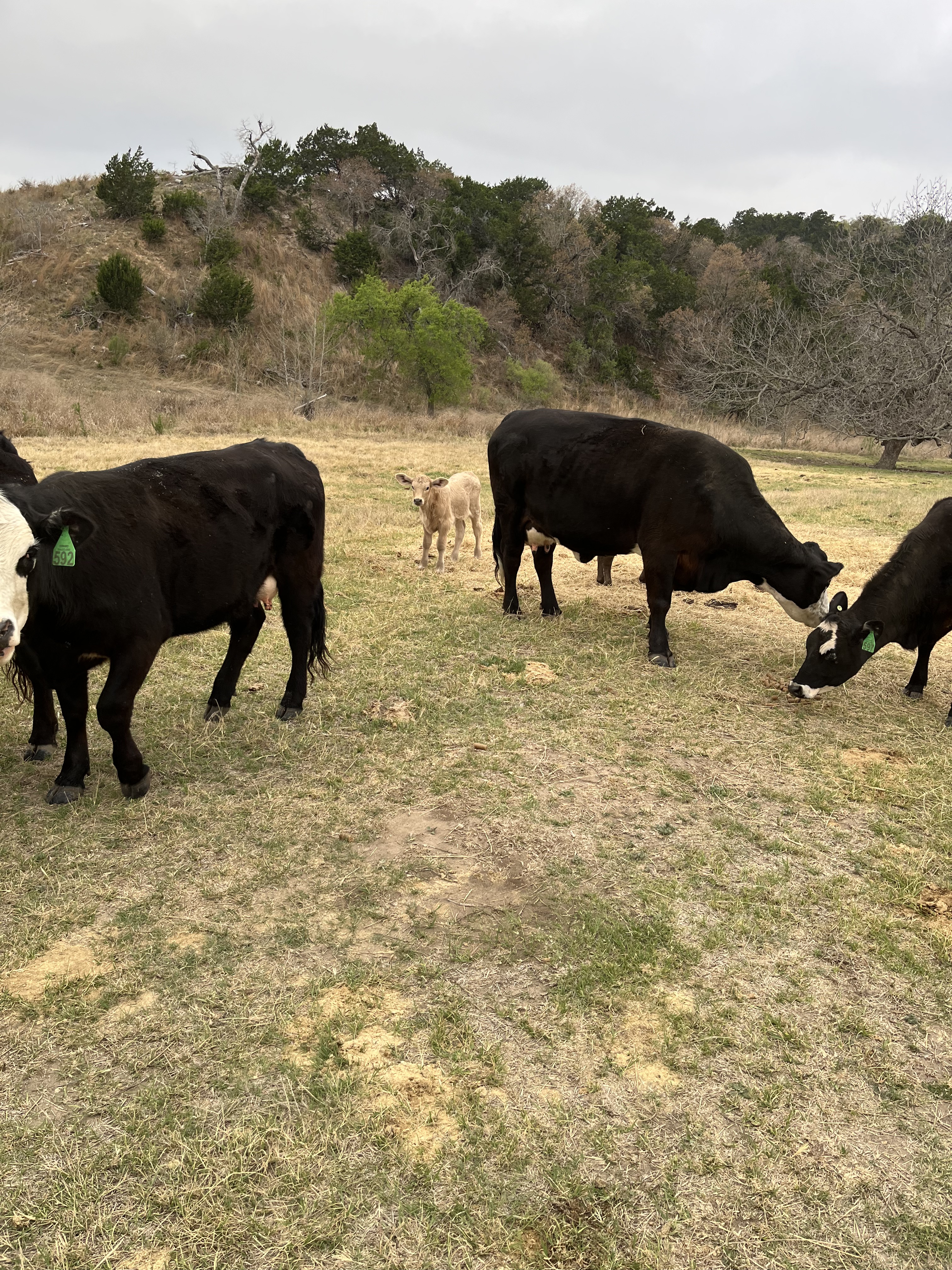
A smokey calf intermingling with the older citizen cows
As the saying goes all behavior has meaning, but the question arose as to what meant the behavior of these bovines. Did the new herd represent a potential threat to the established herd? Did their positions of dominance within the herd feel threatened. Did competition for grass bring about the shoving matches? Did the citizen cows sense competition or fear that their usual circumstances or prerogatives might be affected?
Whereas the cows were all black baldys and looked much alike, major physical differences did not divide them. Their vocalizations also sounded very similar to this observer; however, clearly calves could differentiate their mother’s call from that of the other cows. Might the immigrant cows have a different vocalization (dialect) that was perceivable from the citizen cows? Was competition for available grass (jobs) the source of concern- the greater number of cows with the same amount of grass?
A week has passed and now the cattle have intermittently integrated without signs of disagreement or competition. While still identifying with their original herd, the negative behaviors appear to have stopped. Based on prior experience integrating cattle into the resident herd, I expect no further shoving matches. And if the combined herd follows true to form, before long the cattle will pay little attention to which herd they derived. If only people could adapt to immigrants as quickly, as it appears to take years and even generations for this assimilation to occur in our society.
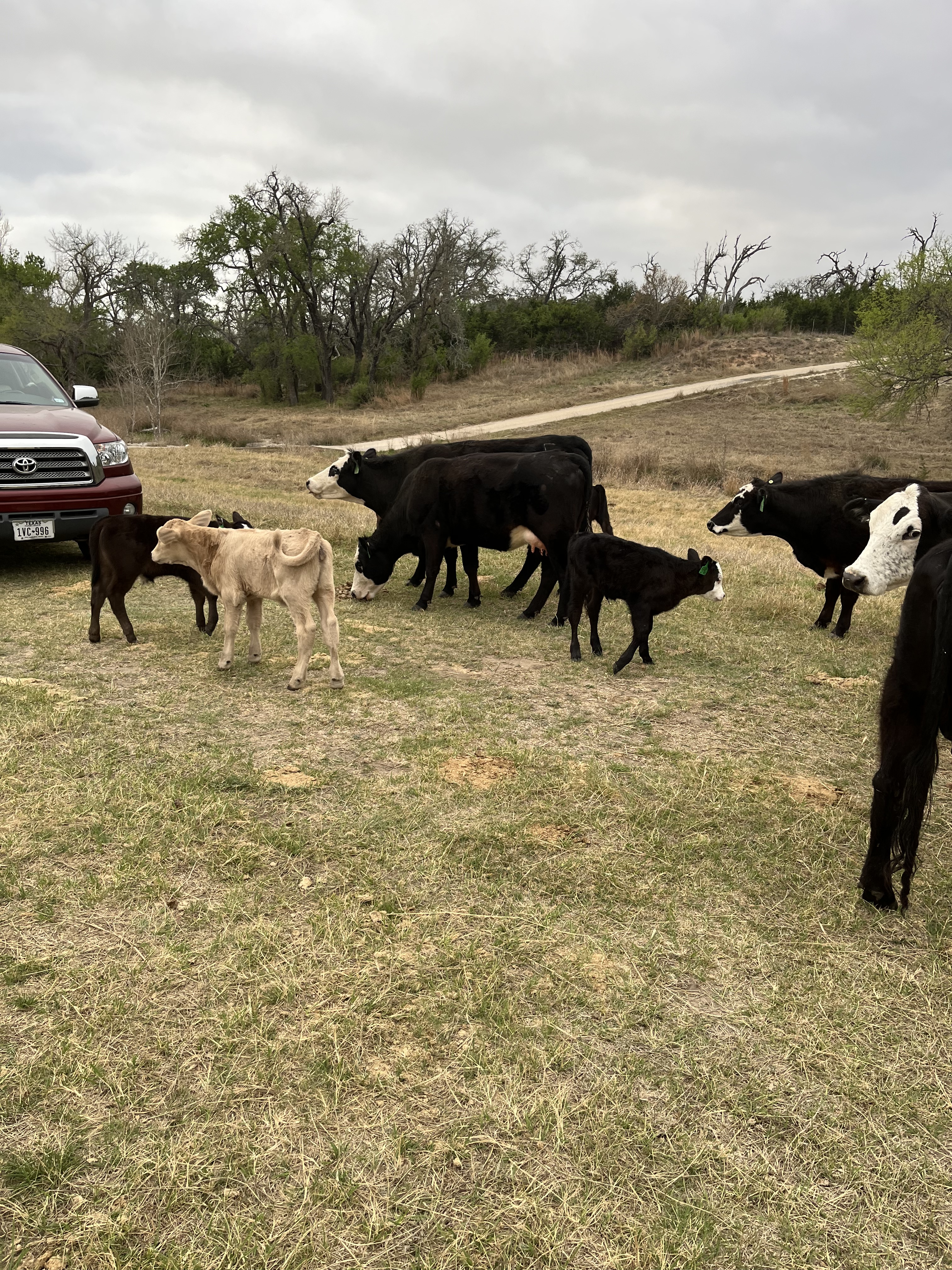
Intermingling of the mothers from both herds and a smokey calf with several of the black baldy calves
Admittedly, people have far more complex social behaviors than cows. But are there not similarities? Don’t citizens feel threatened that jobs or societal expectations might change with an influx of different folks with different customs, dialects or languages? Is that really different from the behavior shown by my cattle when confronted with immigrant cattle? Might the uncertainty of place in society or herd be threatened by newcomers? The immigrants may possess skills greater than the residents and therefore ascend in dominance (wealth) in society or within the herd.
Perhaps, just perhaps, cows can teach us something about assimilating faster with immigrants.
Tagged: agriculture, animal behavior, animals, art, assimilation of foreign cattle, Black Baldy cattle, Cattle Ranching, Charolais, farming, Ranching, smokey calves, why calves butt heads
 Views From Medicine Spirit Ranch
Excellent information, I knew nothing about integrating cows. We could learn much, but will we? Also the cows had a sensitive handler aware that behavior changes take time. La